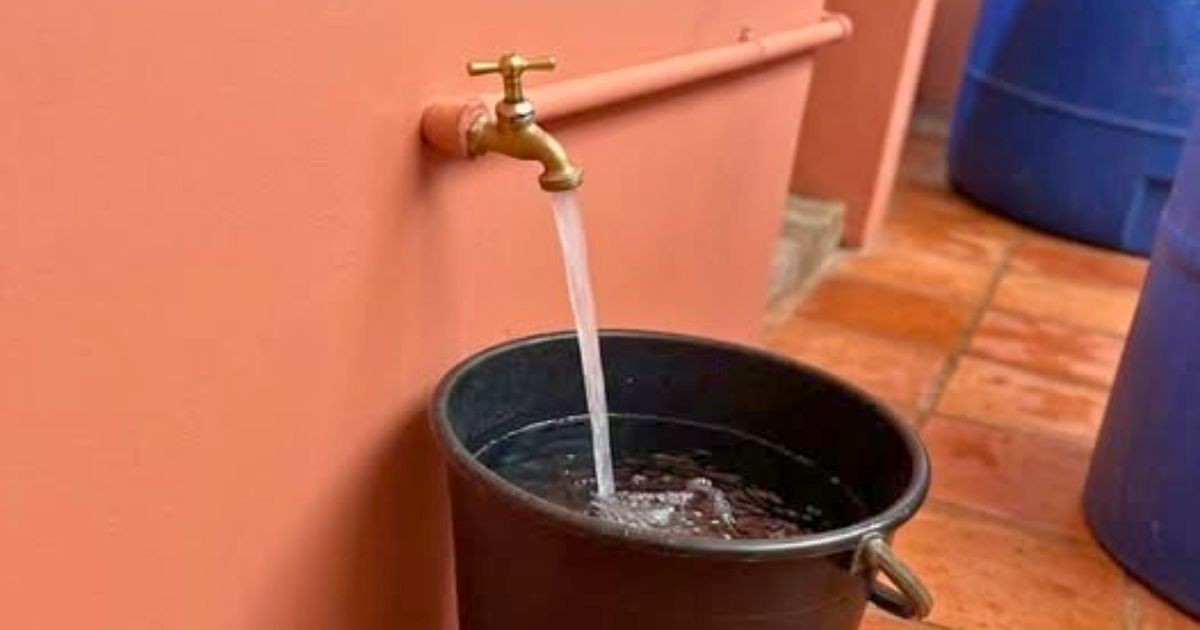
On Sunday, Holguín writer José Poveda Cruz took to Facebook with a post titled "The Philosophy of the Tiny Stream," a satirical piece that starkly portrays the challenges of water, electricity, and financial shortages facing the Cuban population.
The narrative opens with a scene that epitomizes the daily absurdities on the island: after twenty-eight days without water, a "timid trickle" finally arrives at his house, only to vanish as soon as the mere three hours of daily electricity allotted to his area in Holguín begin.
"Then, the neighbors with water pumps started to draw water, and my poor trickle disappeared," Poveda Cruz writes, pondering a question he believes no philosopher has anticipated: "What’s the point of water reaching my house if others have the means to take it before I can even fill a bucket?"
The conclusion drawn by the author encapsulates the plight of millions of Cubans: "Astonishingly, even washing your face is a competition for resources, as if survival were an Olympic event with each family vying for a medal."
The Inequity of Water Access
The phenomenon he describes is far from isolated. Suction pumps—commonly known as "water thieves"—are sold on the Cuban black market for tens of thousands of pesos. When several neighbors use them simultaneously during the limited hours of electricity, they drain pressure from the network, creating exactly the kind of unfair competition Poveda Cruz discusses.
The underlying issue is more systemic: over 80% of Cuba’s water supply system is reliant on electricity, meaning each blackout equates to a simultaneous water cut.
Compounding Crises: Electricity and Banking
In Holguín, the situation is particularly dire. Some areas went without service for 70 to 90 days in 2026, with over 200,000 residents enduring supply cycles longer than a week. The main provincial hospital, Lucía Íñiguez Landín, reported a lack of potable water in September, forcing patient families to trek nearly a kilometer to a private well.
Nationally, the regime admitted in October that 2.7 million people were dealing with complete or partial disruptions in essential services.
Poveda Cruz's piece also highlights the electricity crisis underlying everything else. Daily power generation deficits can exceed 2,000 MW, with eight total collapses of the National Electric System so far this year vividly illustrating the issue.
Adding to water scarcity and blackouts, the writer points out a third disaster: the inability to withdraw salaries from ATMs. "They deposit it punctually on a magnetic card, but withdrawing it from ATMs is impossible. It doesn’t disappear or get spent; it remains in some electronic limbo while its owner watches the month pass by. [...] One ends up wondering if they earn a salary or if they just receive periodic news of having money," he writes.
The fragility of the Cuban banking infrastructure is reflected in statistics documented over many years. In 2023, sector authorities acknowledged that 100 of the country's 168 municipalities lacked ATMs. This situation also impacts Havana, where over half of these machines were out of service in May 2026, according to news reports.
Chronicling Cuba's Crisis
This post is part of a series by Poveda Cruz focused on Cuba's ongoing crisis throughout the year. In July, he described how even basic needs seem like luxury items, providing concrete data from that time: charcoal at 2,500 pesos per sack, rice and beans at 400 pesos per pound, oil at 2,200 pesos per liter...
In September, he published "Manual for Lighting Charcoal," addressing the civilizational regression of relying on artisanal stoves following the indefinite suspension of liquefied gas in the eastern provinces months prior.
Near the end of his chronicle, Poveda Cruz delivers an image blending resignation and humor: "I suspect that if Aristotle lived in Holguín today, he would postpone his investigations into first causes and spend the morning finding out when the water would return."
FAQs on Cuba's Water and Electricity Crisis
What are "water thieves" in Cuba?
"Water thieves" refer to suction pumps used by some residents to draw water more effectively from the supply network, often outcompeting neighbors without such equipment.
How do blackouts affect water supply in Cuba?
Since over 80% of Cuba's water supply relies on electricity, blackouts directly lead to simultaneous water cuts, exacerbating the crisis.
Why is it difficult to withdraw money from ATMs in Cuba?
Cuba suffers from a limited number of ATMs, compounded by frequent outages and malfunctions, making it difficult for residents to access their funds.