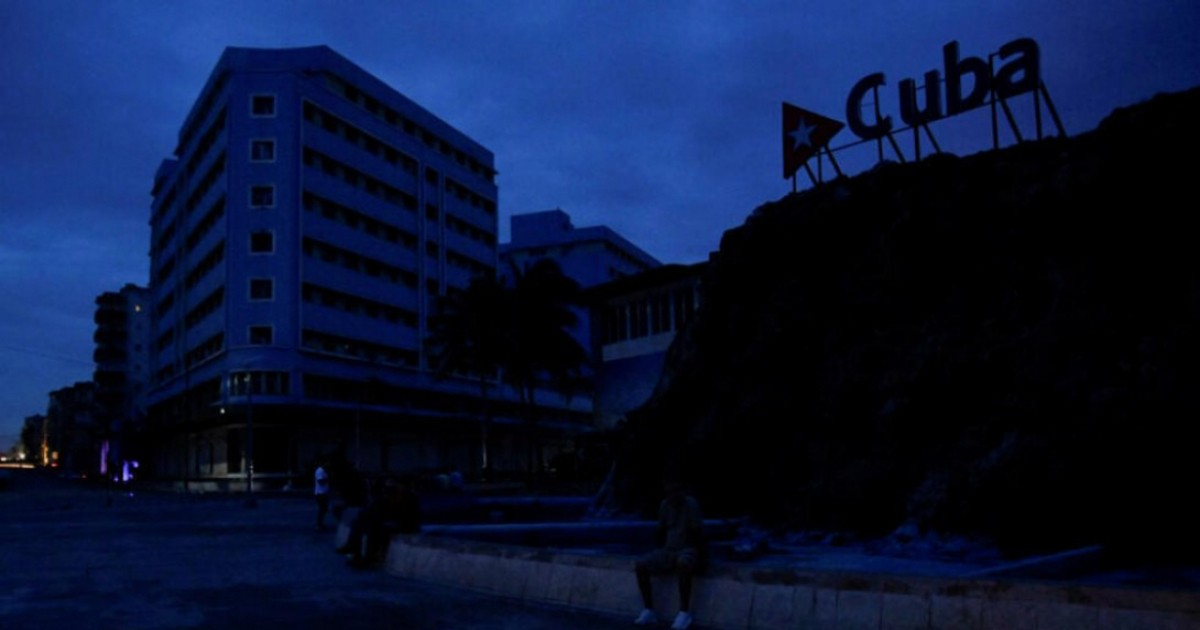
Amidst the flickering glow of candles outside and rechargeable lamps inside, actors drenched in sweat took the stage as Impulso Teatro presented the play "Ensueño" in a repurposed mansion in El Vedado. This performance unfolded while power outages in the Havana neighborhood stretched close to 24 hours each day.
A Reuters report published on Thursday highlighted the resilience of these artists in the face of Cuba's ongoing electrical collapse in 2026.
On Friday, October 2, the show went on without electricity, air conditioning, or sound systems at the Casona de Línea, the group's home since 2015 in the capital's neighborhood. The dramatic weight of the performance fell solely on the 14-member cast.
Linda Soriano, the director of the company, admitted that the power cuts had significantly dampened the group's morale. "It became impossible for the actors to arrive on time; they were exhausted and struggled to cope," she explained. "I told them they were free to leave." Yet, the ensemble chose to continue.
The most poignant statement came from 88-year-old Carlos Pérez Peña, the oldest actor in the troupe and a recipient of Cuba's National Theater Award in 2009. As a co-founder of Teatro Escambray and a key figure in Cuban theater, Pérez Peña encapsulated the struggle of those who refuse to give up: "What keeps us going is the determination not to let theater die... but it comes at a cost."
The veteran actor also noted that many performers and technicians juggle multiple jobs to make ends meet in a country where prices have skyrocketed and the Cuban peso has plummeted. "I don't know if I could have endured at 25," he admitted.
For those who attended the performance, the show was more than just entertainment. Audience member Amanda Feijó described the event as "a small spark of light amidst all the darkness" and added that it was "heartening to see an audience seeking to nourish their spirit despite the truly dire situation the country faces."
Impulso Teatro's situation is not unique. The electrical crisis has severely impacted Cuban culture: the Karl Marx Theater suspended all performances in February 2026, and the Havana International Ballet Grand Prix was postponed until July 2027 due to the inability to ensure minimal technical conditions. The National Ballet canceled Giselle performances in June because of the air conditioning system failure at the National Theater.
Musicians haven't been spared either. Carlos Alfonso and Ele Valdés from the band Síntesis described the blackouts as a "mass psychological torture." Actor Roberto Perdomo revealed that he stopped accepting theater roles because transportation costs nearly consumed his entire salary.
This Saturday, on the 158th anniversary of the Grito de Yara, the Electric Union predicted a maximum outage of 1,680 MW at peak demand, with circuits in Holguín facing over 25 hours without service. The previous day, the actual impact reached 1,886 MW.
Energy and Mines Minister Vicente de la O Levy acknowledged in May that Havana circuits were experiencing cuts of 20 to 22 hours daily, with areas like El Vedado nearing the absolute limit.
Meanwhile, Impulso Teatro continues to light its rechargeable lamps every Friday. "What keeps us alive," Pérez Peña reiterated, "is the determination that it doesn't die."
FAQs on Cuban Theater Amidst Power Outages
How are Cuban theaters coping with the power outages?
Cuban theaters, like Impulso Teatro, are adapting by using candles and rechargeable lamps to continue performances despite the lack of electricity, air conditioning, and sound systems.
What impact have the blackouts had on Cuban cultural events?
The blackouts have led to the suspension and postponement of major cultural events, such as performances at the Karl Marx Theater and the Havana International Ballet Grand Prix.
Why do Cuban actors continue to perform despite these challenges?
Cuban actors persist in their craft driven by a determination to keep theater alive, even at great personal cost, as they navigate the country's economic hardships.