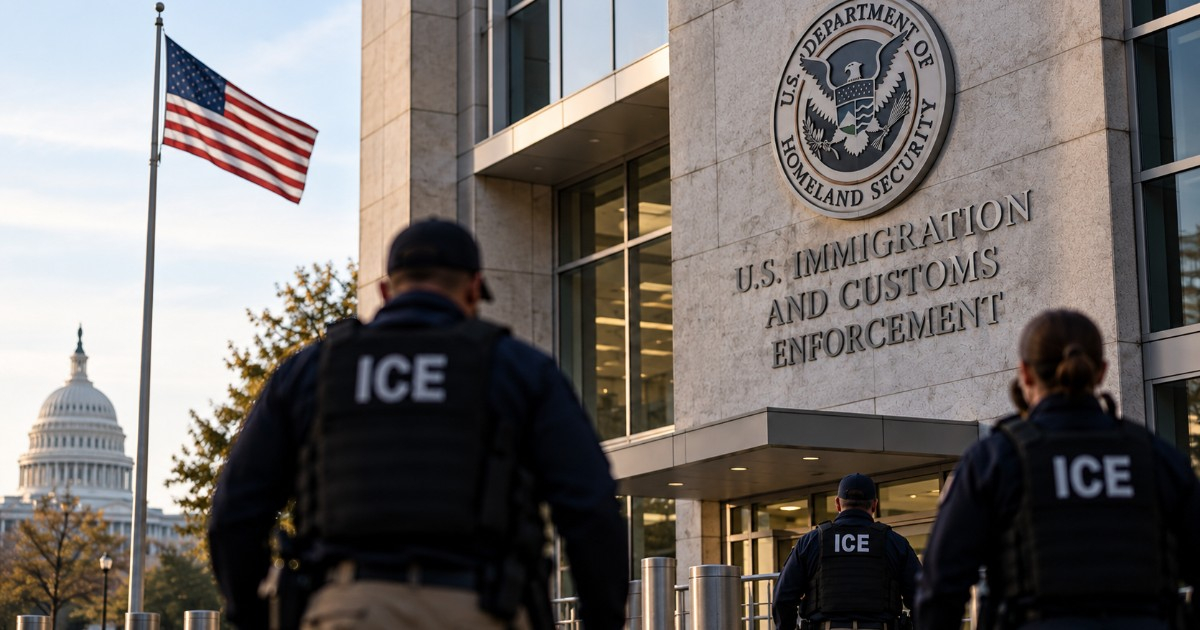
The Board of Immigration Appeals (BIA) has issued a landmark decision that significantly raises the bar for securing an immigration bond in the United States, directly impacting thousands of Cubans detained by ICE in Florida.
This ruling, titled Matter of M-S-V-, 30 I&N Dec. 130 (BIA 2026), was decided by a panel consisting of Judges Gallow—author of the opinion—Hansell, and Wang. The decision overturned a $20,000 bond that an immigration judge had granted to a Russian citizen who overstayed his tourist visa after entering the country in 2021. Not only did the BIA revoke this bond, but it also ordered the individual's detention without the possibility of bond.
Community Safety and Flight Risk: Key Considerations
The case centers on two key factors that the BIA felt the initial judge misjudged. The first is community safety: the detained individual was working as a long-haul truck driver without a valid commercial driver's license (CDL)—he presented an expired standard license—and had been arrested in Wyoming for failing to stop at an interstate checkpoint. The BIA ruled that the judge erred in concluding the detainee had "no criminal history," as the arrest counts, and driving a trailer without a valid CDL poses a genuine threat to the community. Additionally, the judge failed to consider if the detainee was working without legal authorization.
The second pillar is the risk of flight. The proposed sponsor was a friend who had known the detainee for about two years but did not provide an affidavit of support, evidence of financial capability, or any verifiable documentation of their relationship. The BIA was clear: "An ambiguous social relationship and uncertain financial capacity to provide support do not meet the stringent standards required for a valid, reliable, and credible sponsor to mitigate the risk of flight."
Immediate Impact on Cuban Community
This BIA decision has an immediate impact on the Cuban community in Florida. The ruling is binding on all immigration judges across the country, including those in Krome, Miami, and Broward. Many Cubans detained by ICE—those with form I-220A, expired parole, or no status—who are eligible to request a bond under section 236(a) of the Immigration and Nationality Act typically rely on a relative or friend as a sponsor and letters of reference. This practice is no longer sufficient.
To be considered a valid sponsor, the BIA now requires judges to evaluate "the specific nature and scope of the support offered," not merely a statement of friendship. This means presenting an affidavit of support, proof of income, documentation of the relationship, and a stable address consistent with the rest of the file. Additionally, having a relief application already filed—such as adjustment under the Cuban Adjustment Act, asylum, or others—strengthens the detainee's position.
Consequences for Cuban Truck Drivers
The decision also serves as a specific warning to the large Cuban truck driver community in Florida: driving without a valid CDL or with an expired license can cost you your bond at an immigration hearing. Since August 6, ICE has arrested Cuban truck drivers in Florida with expired CDLs and pending deportation orders.
This ruling is part of a restrictive trend by the BIA in 2026, including decisions on voluntary departure with penalties and pretermitting asylum applications, while the Supreme Court considers whether ICE can detain immigrants already in the country without bond. In this context, experts advise consulting an immigration attorney before any bond hearing.
Understanding the BIA's Impact on Cuban Detainees
What are the new requirements for a valid sponsor according to the BIA?
A valid sponsor must provide an affidavit of support, proof of financial capability, documentation of the relationship with the detainee, and a stable address that matches other records in the file.
How does the BIA's decision affect Cuban truck drivers in Florida?
Cuban truck drivers in Florida risk losing their bond if they drive without a valid CDL or with an expired license, as this is considered a significant threat to community safety and could impact their immigration hearings.