The U.S. State Department has pledged $5 million in humanitarian aid to Panama after a 7.7 magnitude earthquake rocked the nation on Friday, as confirmed by an official statement on Saturday.
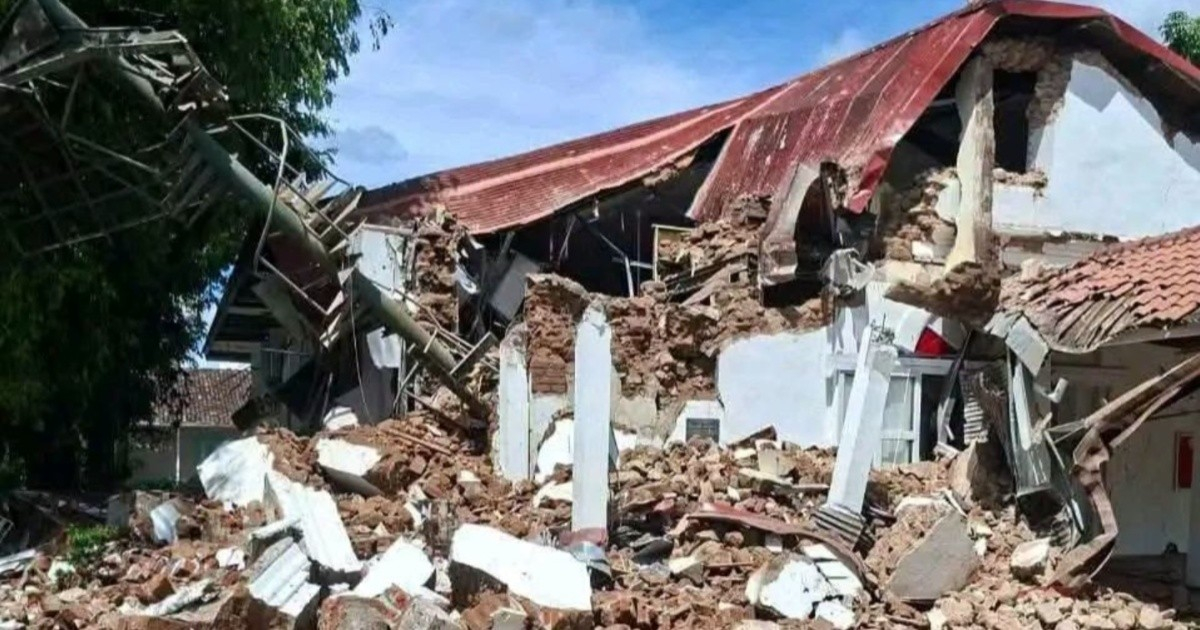
Centered in the Herrera province on the Azuero Peninsula, this earthquake is one of the strongest Panama has experienced in decades, resulting in at least 27 individuals sustaining minor injuries, with no fatalities reported thus far.
The U.S. funds will be directed to on-the-ground organizations coordinating relief operations. In addition to the financial support, Washington has dispatched a Disaster Assistance Response Team (DART) and two Urban Search and Rescue (USAR) technical teams, comprising 20 experts. These teams arrived in Panama within 24 hours of the earthquake.
The U.S. Southern Command (SOUTHCOM) has provided logistical support with a CH-47 Chinook helicopter to transport tents and supplies to the Azuero region. Furthermore, the State Department has authorized the use of two helicopters from Panama's Air and Naval Service INL program for relief efforts.
Ambassador Kevin Cabrera has been in direct contact with Panamanian President José Raúl Mulino to coordinate damage assessment and emergency response.
Secretary of State Marco Rubio expressed Washington's stance with a brief statement: "The United States stands with the people of Panama."
On Saturday, the Panamanian government declared a state of emergency and announced an initial fund of $100 million to address the crisis directly.
Presidency Minister Juan Carlos Orillac urged the public to "remain calm" and assured, "I know these are difficult times. Rest assured, we are working for you, and with the emergency declaration, we are swiftly activating assistance."
The material damage is significant, with 426 homes affected and approximately 2,130 people displaced, according to the National Civil Protection System (Sinaproc). The provinces of Los Santos, Herrera, Veraguas, and Coclé are the most impacted, particularly in rural areas.
Infrastructure has also taken a severe hit, with 419 educational centers, 20 healthcare facilities, 26 government buildings, 13 churches, seven hotels, and nine bridges damaged.
Classes and administrative activities have been suspended nationwide, with education authorities set to decide on the continuation of schooling by Monday.
As of Friday evening, around 147 aftershocks had been recorded, some with magnitudes of 6.6 and 6.1, according to the director of the Emergency Operations Center, René García.
In addition to U.S. aid, a multilateral response has been activated: the Inter-American Development Bank (IDB) has triggered a contingent financing of up to $300 million and $500,000 in non-reimbursable funds, while the CAF-Development Bank of Latin America and the Caribbean has approved an immediate donation of $250,000 and a credit line of up to $50 million for public infrastructure reconstruction.
"The IDB Group stands with the Panamanian people in this difficult time. These resources will enable the government to swiftly assist affected families and plan recovery," stated the organization's president, Ilan Goldfajn.
Key Information about U.S. Aid to Panama Post-Earthquake
What amount has the U.S. State Department committed to Panama following the earthquake?
The U.S. State Department has committed $5 million in humanitarian aid to Panama.
How did the earthquake impact Panama?
The earthquake caused significant damage, affecting 426 homes and displacing around 2,130 people. It also damaged infrastructure, including educational centers, healthcare facilities, and bridges.
What additional support has the U.S. provided to Panama?
In addition to financial aid, the U.S. has sent a Disaster Assistance Response Team and two Urban Search and Rescue teams. SOUTHCOM has provided a Chinook helicopter for logistics.