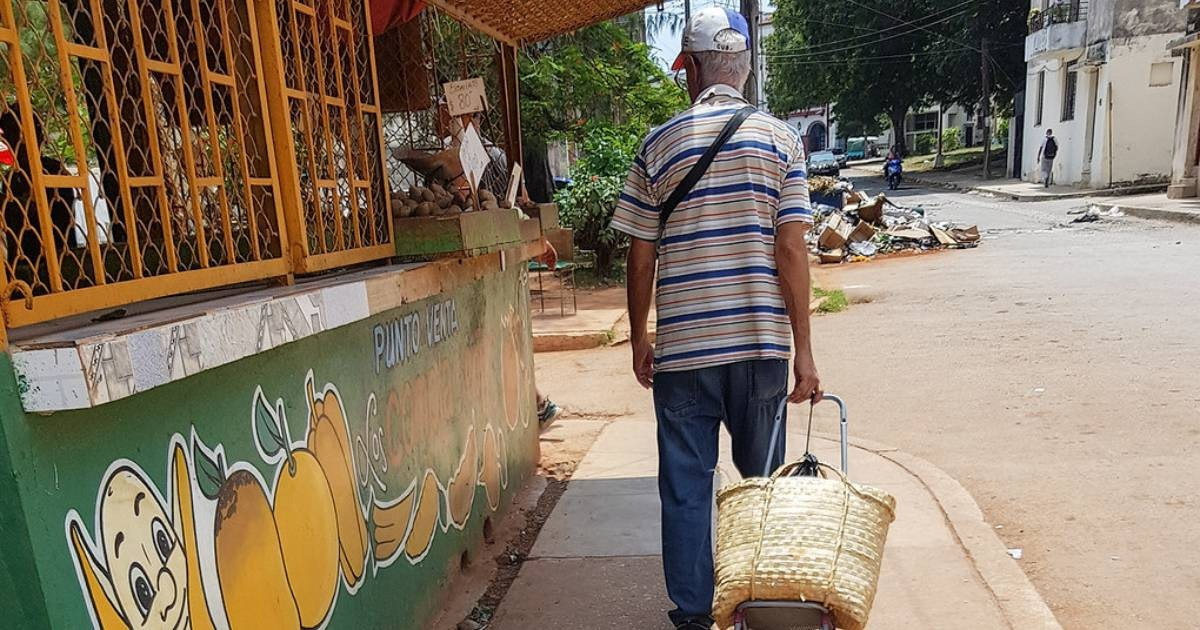
Ida Ortiz, a Cuban citizen, shared a poignant account on Facebook this past Saturday, shedding light on the severe food crisis plaguing the island. After leaving the hospital where her son is being treated for dengue, Ortiz set out to buy two pounds of chicken and two pounds of malanga to make broth for him. In the short span of 20 minutes, the price of chicken had already increased.
Ortiz traversed Mariana Grajales Street to reach a nearby non-state market. Along the way, she found chicken being sold for 900 pesos per pound at a vendor's stall. Planning to purchase it on her return to prevent thawing, she was met with a price of 950 pesos when she came back. "When I asked, the young seller's response was crystal clear: the chicken wasn't from the same source," she wrote. The malangas, however, were nowhere to be found—there were very few items available at the market.
The Economic Burden on Cuban Citizens
Ortiz, who according to her social media profile resides in Moa, Holguín, and works as a university professor, points directly to the consequences of the regime's wage increase decree in July. "After the decision to raise wages in July, prices have tripled for some products, [...] for others, like the two-liter soda, have risen by 70%. Though it's a 'lifesaver' for families with children, the price hike was timed with the start of the school year on September 1st," she observed.
The backdrop of this testimony is grim. In June 2026, the Ministry of Finance and Prices' Resolution 150/2026 removed price caps on chicken pieces, oil, powdered milk, pasta, and sausages. As a result, a package of chicken that cost between 2,000 and 3,000 pesos in June soared to over 7,000 pesos in some areas.
Inflation and Its Devastating Impact
Coinciding with these changes, the regime raised the minimum wage from 2,100 to 3,210 pesos, but inflation quickly nullified this increase. At the informal exchange rate, 3,210 pesos equate to less than five dollars a month. Independent estimates suggest that meeting the basic needs of one person in Cuba requires approximately 96,000 pesos monthly, with more than two-thirds allocated just for food.
In August 2026, formal market inflation hit 25.19%, with food and non-alcoholic beverages climbing 36.01%. The 2025 National Food Security Survey by the Food Monitor Program, based on 2,513 responses, indicated that 94.9% of respondents had experienced some degree of reduced access to food purchases, and 33.9% of households had at least one member go to bed hungry.
The Human Toll of Economic Hardships
The dengue outbreak, which has hospitalized Ortiz's son, adds another layer of distress. By October 4, Cuba had reported over 11,000 dengue cases, a number 9.2 times higher than the historical average of the past five years, according to the Global Dengue Observatory at the London School of Hygiene & Tropical Medicine.
Comments under Ortiz's post reflect a shared sentiment of exhaustion. "This is our harsh reality; we live day by day, almost without strength or will [...] the greatest pain is seeing a sick child needing proper nutrition and medication, and being unable to do much," one user lamented.
Another comment succinctly captured the situation: "Eating in Cuba has become a luxury, it seems it's no longer a necessity. Our homeland aches, and it seems no one cares anymore." A third comment summed it up tersely: "We're forced to be magicians, because it's magic what we must do to eat."
Ortiz concluded her post with a question that encapsulates the fatigue felt by millions: "Where does the life consumed by insufficient accounts go? Today's Cubans are forced to be economists because there's no other choice. No one has ever had to do more with what they don't have."
Understanding Cuba's Economic Crisis
Why are food prices rising so rapidly in Cuba?
The removal of price caps on essential goods like chicken, oil, and milk, along with inflation, has led to a significant increase in food prices.
How has the wage increase affected Cuban citizens?
While wages were increased, they have not kept pace with inflation, leaving many Cubans still struggling to afford basic necessities.
What is the current situation with dengue in Cuba?
Cuba is experiencing a surge in dengue cases, with numbers significantly higher than the historical average, adding pressure to the already strained healthcare system.