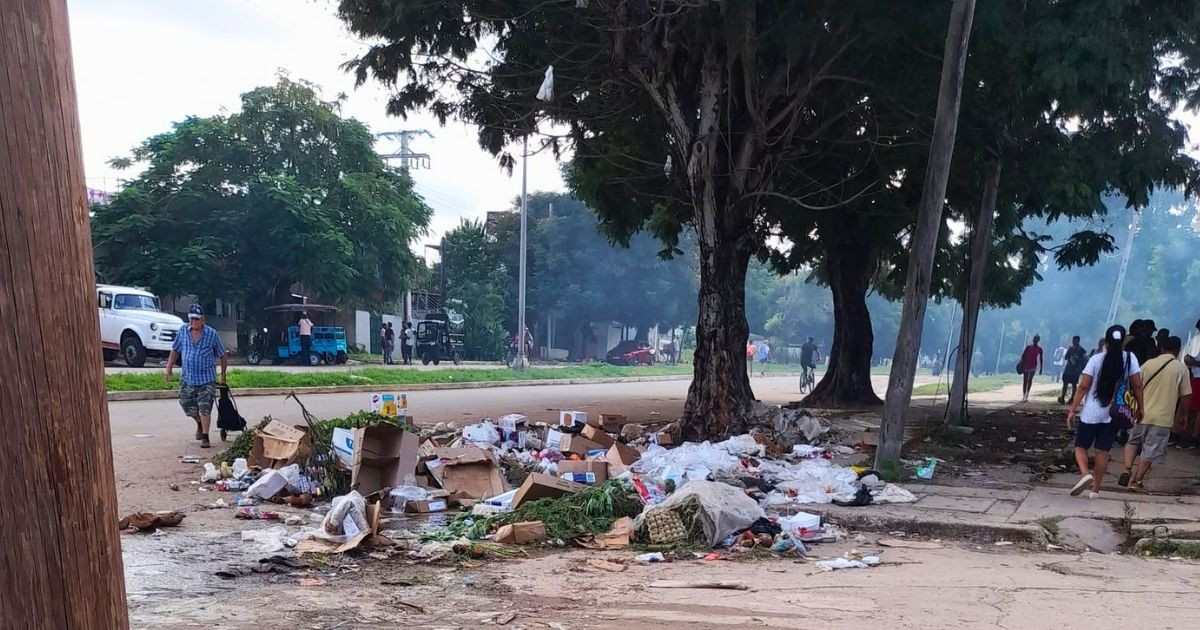
A Cuban woman named Zea Gisselle recently took to Facebook to share her harrowing account of the extreme unsanitary conditions plaguing Marianao, a neighborhood in Havana. She painted a grim picture of streets turned into garbage dumps, overflowing sewage, swarms of green flies, and scavenging birds hovering above. She described an overpowering stench that, in her words, "seeps into your lungs, clings to your clothes, and penetrates your skin."
Zea recounted suffering from chills, fever, and severe diarrhea for seven days, symptoms she couldn't attribute to the water she drinks, which she ensures is boiled and filtered, nor to a lack of personal hygiene. "The only reason I can find is that my body is beginning to react to the filth surrounding us. It reacts to the putrid smells, to the stench from overflowing sewage that floods the city, to the pervasive foulness," she expressed.
Widespread Public Outcry
Accompanying her post with a photo of a nearby dump in the Zamora neighborhood, Zea refrained from uploading more images to avoid "flooding Facebook with such unpleasant sights." Her message was clear: "Disgust, walking through Cuba now is pure disgust... It's not just one corner or two or three... it's not just Marianao, not just Zamora... all of Cuba is dying, we're being killed."
She didn't hold back from criticizing the regime: "The State is aware of the horror it's putting us through and does absolutely nothing to save us; and of course, they won't. They prefer us dead rather than giving up power."
A National Crisis
Comments on her post revealed the problem extends beyond Marianao. Residents from Santiago de Cuba, Cojímar, and El Vedado echoed similar experiences. One resident from Zamora said she no longer refers to the area by its name: "I now call it the underworld."
A health worker, who had fallen ill twice in a month, reflected, "What we're living is exhausting. It drains every bit of energy just trying to survive daily... I think it's part of their strategy. Something they rely on. Leaving us too tired to react." Another summed it up succinctly: "If it were just Marianao... It's all of Cuba."
Systemic Breakdown and Health Emergency
This testimony highlights a systemic crisis that peaked in 2026. Havana produces between 24,000 and 30,000 cubic meters of trash daily, with over 20,000 potentially left uncollected each day. Early this year, only 44 out of the 106 garbage trucks in the capital were operational due to diesel shortages and mechanical failures.
In response to the breakdown, the regime applied "band-aid" solutions, like when Prime Minister Manuel Marrero Cruz organized a cleanup drive in Havana with over 450 teams and announced measures to address the dire waste situation. Yet, the problem continued to fester like the growing piles of refuse on the streets.
The unsanitary conditions are compounded by a health crisis. According to the Global Dengue Observatory, Cuba recorded 11,235 dengue cases in 2026 — as of October 4 — which is 9.2 times the historical average of the previous five years, with all four serotypes circulating simultaneously.
The Cuban Ministry of Public Health (MINSAP) also acknowledged a rise in acute diarrheal diseases, hepatitis, and respiratory infections amidst the country's deteriorating sanitary conditions. The U.S. Embassy in Havana issued a health alert in September due to the surge in gastrointestinal illnesses across the country.
Zea Gisselle's words resonate with many as she questions, "Is this the country we want to leave to our children? Is living amidst gigantic dumps and rivers of sewage the future we desire?"
Understanding Cuba's Sanitation Crisis
What are the main causes of the sanitation crisis in Cuba?
The sanitation crisis is largely due to inadequate waste collection infrastructure, shortages of diesel, and mechanical failures of garbage trucks, leading to uncollected waste accumulating in public areas.
How is the Cuban government responding to the waste management issues?
The government has organized cleanup campaigns and announced measures to address waste management, but these actions have been criticized as insufficient and ineffective in tackling the root causes of the crisis.
What health risks are associated with the current sanitary conditions in Cuba?
The unsanitary conditions have led to a rise in dengue cases, acute diarrheal diseases, hepatitis, and respiratory infections, posing significant health risks to the population.