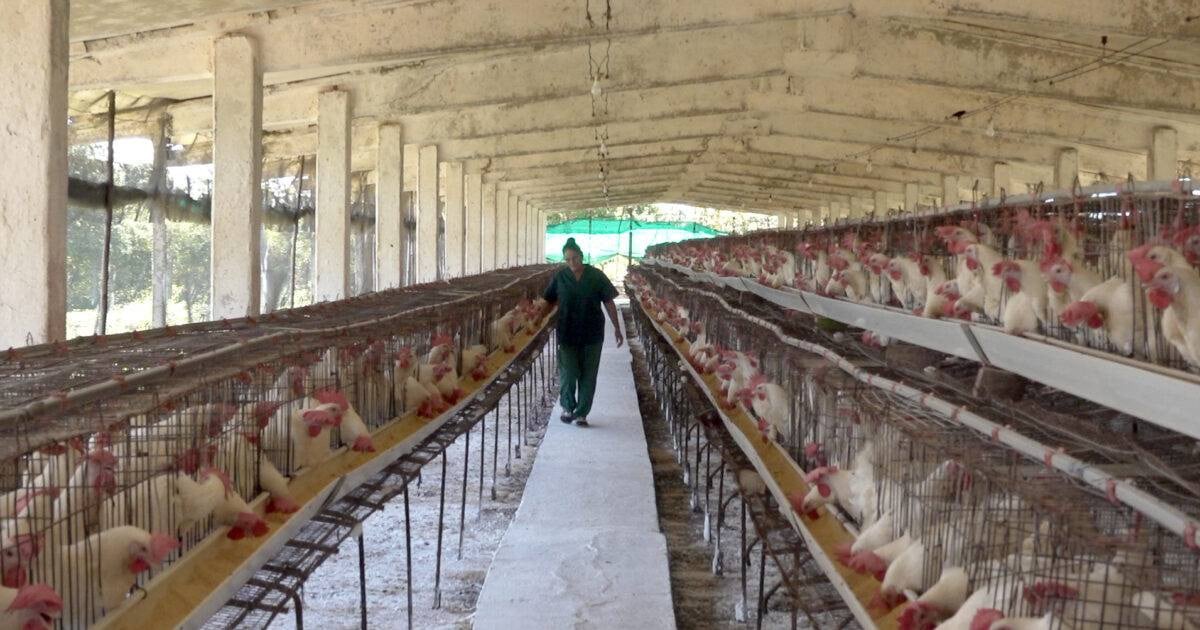
The Pinar del Río Poultry Enterprise (Pican), a state-run entity that once led Cuba's egg production, is attempting to reclaim its former glory by implementing a model that places its farms and poultry in the hands of private producers, while keeping control over breeding stock and distribution.
Edel Triana Velázquez, the general manager of Pican, admitted that shortages in feed and other supplies have diminished both flock size and egg production. However, he asserted that the enterprise remains "a national benchmark," as reported by the official newspaper Guerrillero.
"The majority of our poultry stock is now in the hands of private farm owners," stated Triana, highlighting the growing influence of the private sector in a state company eager to regain its past leadership.
The model initiated with agreements where Pican provided the birds and facilities, and producers were responsible for feed supply. Of the eggs produced, 70% went to the producer, with the remaining percentage retained by the state enterprise.
Private Collaboration and Economic Impact
In a subsequent phase, ownership of the animals transferred to the producers. One highlighted case by Guerrillero is that of tobacco farmer Reynel Rojas Medina, who took over the workforce of two farms under agreement and leased two markets, Puerto Esperanza and La Mandarina in Pinar del Río city, to sell eggs and other farm products.
Triana advocated for transferring the workforce to the private sector as "a way to protect workers and ensure they are the first to benefit from sector transformation." Reportedly, wages for all employees contracted by the enterprise have tripled.
Exploring Additional Revenue Streams
Pican is also seeking revenue through alternative means, such as leasing facilities, renting out transportation, and selling poultry manure, a byproduct previously discarded.
The entity employs over 800 workers and operates 35 units, 29 of which are dedicated to goods production and six to services, spread across five municipalities in Pinar del Río and three in Artemisa.
The enterprise continues to supply eggs to health and education centers, the Food Enterprise for making quinceañera cakes, and pregnant women, who are allowed to purchase 30 eggs per month, according to the source.
Challenges and Future Prospects
Despite these efforts, the situation at the Carlos Marx farm in San Cristóbal paints a different picture. Its 18 workers have been without poultry for an extended period, despite poultry production being the unit's primary function. Instead, they tend sheep for breeding and over 6,000 banana plants that are now being harvested.
In 2025, production in Pinar del Río barely reached 24% of 2019 levels, with only 46% of facilities restocked with animals.
Nationally, Cuba's egg production plummeted from four to five million eggs daily to just 1.2 million, as acknowledged by Agriculture Minister Ydael Pérez Brito in October 2024.
Overall production fell from 2.717 billion eggs in 1991 to 385 million in 2024, with over 1.3 million laying hens dying that year due to feed shortages.
On the informal market, egg prices soared to between 135 and 300 pesos per egg in various provinces, with cartons of 30 eggs surpassing the minimum pension for retirees, set at 4,000 pesos.
The national production goal for 2026 is 690.7 million eggs, a figure that represents less than a quarter of the 1991 output, indicating that any recovery will be slow and partial.
Understanding the Challenges in Cuba's Egg Production
What is the new model implemented by Pinar del Río Poultry Enterprise?
The new model involves transferring farms and poultry to private producers, while the state retains control over breeding and distribution.
How has egg production in Cuba changed over the years?
Cuba's egg production has dramatically decreased from 2.717 billion eggs in 1991 to 385 million in 2024, with production challenges largely due to feed shortages.
What economic challenges do egg producers in Cuba face?
Producers face high feed costs and supply shortages, leading to reduced flock sizes and production, with informal market egg prices outpacing pension incomes.