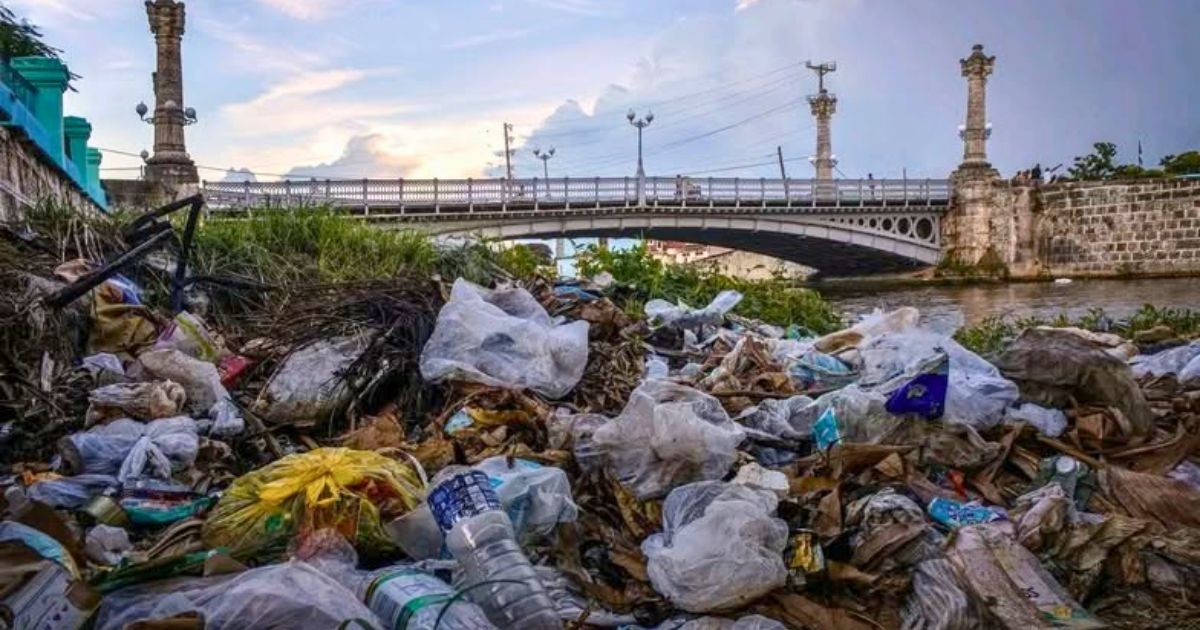
A journalist from the state-run Girón newspaper in Matanzas shared a poignant narrative on Facebook this Wednesday, vividly portraying the severe crisis gripping Cuba. The piece, which quickly gained traction, describes children wandering in groups asking for money, elderly rummaging through trash, and a cityscape that fills him with dread each time he steps outside.
Guillermo Carmona, a writer for Girón — the official publication of the Communist Party of Cuba in Matanzas — named his piece "The City Scares Me." He begins by painting a stark picture of social decay: "From the core of my humanity, I fear the overwhelming number of children who extend their hands, grinning with misaligned teeth, as they ask for money. They move in groups, one trailing the other, wearing filthy shorts and with ribs visible."
The following scene is equally harrowing: "Elderly folks, knee-deep in dumpsters, reminiscent of Vietnamese farmers in a rice field, sort the rotten and useless from the usable, later selling their finds from makeshift stalls and blankets laid out on the sidewalk."
Urban Inequality and Energy Disparities
Carmona also highlights the shifting urban landscape and newfound inequities exacerbated by power outages and solar panels: "Marx deceived me. Social classes are not defined by access to surplus value but by access to solar-powered electricity."
In Cuba, solar energy remains inaccessible for many households. Reports indicate informal market prices for a solar panel range between $990 and $1,000, while some studies cite lower prices for individual panels and more than $1,000 for systems with batteries and inverters.
This economic disparity is stark against the backdrop of the average state salary, which was 6,930 Cuban pesos per month in 2025, equating to approximately $8.9 at the informal exchange rate in early October 2026.
The Water and Waste Crisis
Regarding the water crisis, the journalist uses a metaphor of shipwreck: "Are we shipwrecked without realizing it because we're in the ship's pantry buying a bit of jerked meat from the cook to avoid starvation?" Over 300,000 Matanzas residents lacked a stable water supply as of early April, according to the National Institute of Hydraulic Resources.
The garbage crisis is similarly chronicled: The Municipal Sanitation Company operates with more than half of its garbage trucks out of service due to diesel shortages and other issues, leaving trash to block streets in the historic center for days.
Voices of a Disillusioned Public
Carmona's chronicle is not his first to stir discomfort. In June, he wrote "The Little Rest of the Just," describing a night without electricity as a "war refugee," and in February 2025, he penned "Dying is Also a Bureaucratic Process," detailing the struggle to transport his grandmother's body due to fuel shortages.
The narrative garnered numerous comments. One reader lamented: "The sad part is that those who should do something don't seem to care. Most are profiting from our 'resistance.' Thank you, journalist, for capturing our reality and for your courage in documenting truths that some refuse to acknowledge." Another summed up the collective fear: "It frightens us. It's a daily fright. Seeing such neglect is scary. The thought of no one caring about the destruction of a beautiful city is terrifying."
A City in Collapse
The Cuban Observatory of Human Rights estimates that 94% of the Cuban population lives in extreme poverty, while Prime Minister Manuel Marrero Cruz acknowledged 883,000 cases of "vulnerable situations" in the country.
Carmona concludes his piece with an image encapsulating the exhaustion felt by residents of a collapsing city: "I open the gate as if stepping into a battlefield after the battle has ended." A reader encapsulated the sentiment with a phrase that resonated with many: "Matanzas today is every city. All of Cuba."
Understanding the Social and Economic Challenges in Cuba
What is the primary cause of social decay in Matanzas as described by Carmona?
Carmona describes social decay as resulting from economic disparities, visible in the increase of children begging and elderly sifting through trash, exacerbated by inadequate access to resources like solar energy and water.
How does the energy crisis contribute to social inequality in Cuba?
The energy crisis intensifies social inequality because access to solar energy is limited and expensive, leading to a divide between those who can afford solar panels and those who cannot, further stratifying social classes.
What are the main issues faced by the sanitation services in Matanzas?
Sanitation services in Matanzas are crippled by a lack of diesel and other resources, resulting in more than half of garbage trucks being out of operation, which causes prolonged trash pile-ups in the city.