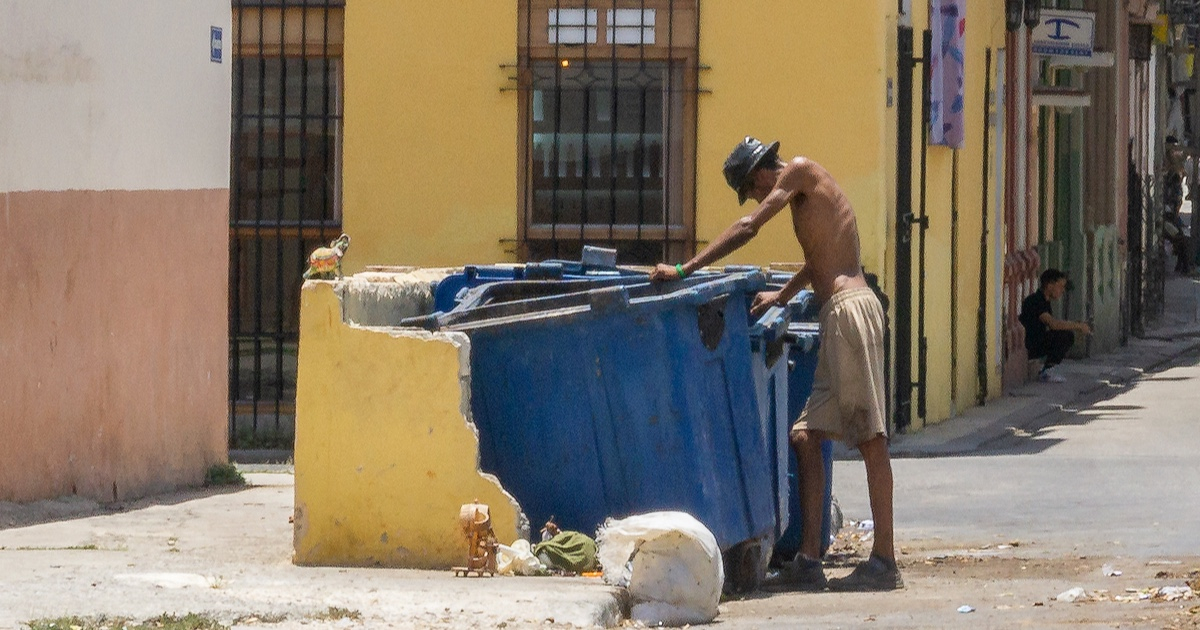
Cuban priest Alberto Reyes Pías has released the 178th edition of his weekly column, "I've Been Thinking," which delivers a poignant message distinguishing between mere survival and living with dignity. His words culminate in a direct call for civic action amidst Cuba's ongoing crisis.
Emphasizing the belief that "We were not born just to survive," the pastor from Esmeralda, Camagüey, portrays the daily life in Cuba as a struggle for basic necessities like food, medicine, and sporadic electricity, with an ever-looming uncertainty that gnaws at the soul, leaving everyone to wonder: "How much longer?"
The Struggle of Everyday Life
"Survival means waking up each day burdened with the task of securing essentials for the next. It involves endless queues, constant improvisation, the relentless search for missing medicines, soaring food prices, fuel shortages, and relentless power outages," the priest stated.
For Reyes, the gravest threat isn't the lack itself but the resignation it breeds: accepting an agonizing life as normal, celebrating as achievements what should be basic rights, and settling for crumbs because "we have forgotten our worth and dignity."
The True Cost of Resignation
Reyes warns that when mere survival becomes the sole aim, the soul begins to wither: "The desire to build dies, the ability to dream fades, hope diminishes, the soul dries up, and resignation takes root."
In response to this grim outlook, Reyes asserts that Cuba needs more than just a political overhaul. "Cuba requires children who deeply believe that this island is not doomed to remain as it is today."
A Call to Action
The column concludes with a clear call to every citizen: "We cannot wait for change to occur on its own. We must start with what we can do now: refuse to lie, do not applaud what chains us, stand by those who raise their voices, and do not abandon those who suffer alongside us."
This 178th column follows an active week for the priest. On October 1st, he remarked that the hope for change in Cuba "has significantly waned" due to unmet expectations from earlier in the year. The following day, in his 177th column, "The Blessing of Persecution," he discussed the sentencing of Anna Bensi and her mother—two years of restricted freedom for filming a MININT agent—and argued that repression has had the opposite effect: fostering interfaith unity, public solidarity, and diminishing fear.
Reyes' vocal activism has led to increased pressure from the regime. In January, State Security summoned him alongside Father Castor José Álvarez Devesa, issuing a "warning act" for their public criticisms, which Reyes described as intimidation. He later reported surveillance and veiled threats, and in July, authorities barred him from traveling to Miami. In August, he directed a message at military and regime agents: "a people cannot be chained forever."
Despite these challenges, Reyes continues to amplify his activism. His 178th column concludes with a sentiment that encapsulates his vision for change: "A people begin to reclaim their freedom when they realize that no ideology, government, or power is above their rights, and they lose the fear of speaking aloud what everyone whispers in silence."
Understanding the Crisis in Cuba Through Father Reyes' Perspective
What does Father Reyes emphasize in his recent column?
Father Reyes emphasizes the need for action and the importance of living with dignity, rather than just surviving. He calls for individuals to actively contribute to change rather than passively waiting for it to occur.
How does Father Reyes view the situation in Cuba?
He views the situation as dire, with daily life reduced to struggling for basic needs amidst growing uncertainties. He sees the greatest danger as the resignation of the people to this harsh reality.
What has been the regime's reaction to Father Reyes' activism?
The regime has responded with increasing pressure, including intimidation tactics, surveillance, threats, and travel restrictions, attempting to silence his public criticisms.