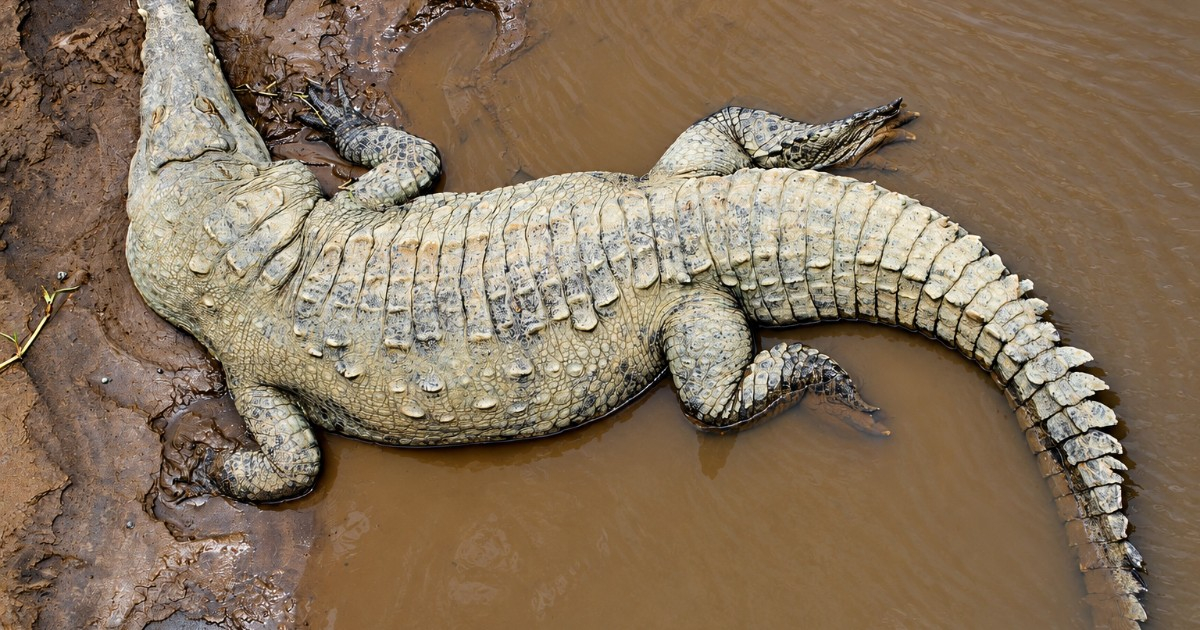
For the first time, Florida has documented the death of an American alligator linked to lead poisoning. Researchers discovered more than 22 grams of lead in the stomach of an alligator that died shortly after being captured in Miami-Dade.
The Florida Fish and Wildlife Conservation Commission (FWC) confirmed this through their research institute, marking it as the first apparent case of mortality associated with lead poisoning in an American alligator in the state.
While significant, the FWC clarified that investigators did not determine lead as the sole cause of the alligator's death. Instead, the poisoning likely weakened the animal, contributing to its inability to withstand the stress of capture and subsequent procedures.
Unraveling the Circumstances
The incident dates back to November 17, 2023, when an FWC alligator response officer was called to a residence following a report of an alligator in an outdoor pool. The captured female was about seven feet long. During the intervention, researchers fitted it with a GPS transmitter as part of the FWC's urban alligator research project.
Initially active and alert, the alligator began displaying concerning signs during the procedure. It died unexpectedly soon after being released into a nearby canal.
Findings and Implications
Field biologists conducted a necropsy and discovered 22.42 grams of lead in the stomach, including 23 air rifle pellets, a fishing weight, and other small lead fragments. They also found remnants of at least one green iguana, an invasive species prevalent in Florida.
These findings led researchers to speculate that the alligator might have ingested lead while feeding on an iguana previously shot with lead ammunition. The FWC also noted that the alligator had lost most of its teeth, a clinical sign of prolonged lead exposure. Subsequent analyses revealed elevated lead concentrations in its tissues.
Scientific Study and Broader Concerns
Published in 2026, the scientific study titled "An apparent case of Pb toxicosis in an American crocodile Crocodylus acutus in South Florida, USA" found lead concentrations of 78.06 parts per million in the liver and 0.35 parts per million in scale samples. The authors concluded that chronic lead exposure likely diminished the alligator's overall health, contributing to its death.
This case represents the first apparent lead-related mortality in this threatened species in Florida. However, researchers caution that other alligators might be affected without the full extent of the problem being known.
Contamination Pathways and Conservation Efforts
The case raises questions about potential contamination pathways associated with green iguana control. These invasive reptiles are subject to humane removal in Florida, sometimes involving air rifles that can use lead pellets. If a shot iguana is left in the environment and later consumed by predators or scavengers, the lead pellets could enter the food chain.
The fishing weight found in the alligator's stomach also suggests other sources of lead exposure beyond ammunition. Following the discovery, Florida's Fish and Wildlife Research Institute (FWRI) initiated a contaminant monitoring program for American alligators. Researchers are collecting tissue samples when possible to assess the impact of lead and other pollutants on the state's alligator population.
The FWC acknowledges that the scale of the issue is still unknown and believes more samples are needed to determine whether this is an isolated incident or a more widespread threat to the species.
American alligators (Crocodylus acutus) are federally protected, primarily found in southern Florida, occupying coastal areas, estuaries, and brackish water canals.
Recent incidents of alligators in residential areas in southern Florida have occurred. In 2024, 21 alligator hatchlings were rescued from a pool filter in Miami-Dade before being measured, tagged, and returned to their mother. Months earlier, a seven-foot alligator caused concern among residents in another Miami-Dade area, though the FWC determined it did not meet the criteria for removal.
Understanding Lead Poisoning in Florida Alligators
What led to the alligator's death in Florida?
The alligator's death was linked to lead poisoning, with more than 22 grams of lead found in its stomach, including air rifle pellets and a fishing weight.
How did the lead enter the alligator's system?
Researchers believe the alligator ingested lead while feeding on a green iguana that had been shot with lead ammunition.
What measures are being taken in response to this finding?
The Florida Fish and Wildlife Research Institute has begun a contaminant monitoring program to assess the impact of lead and other pollutants on the state's alligator population.