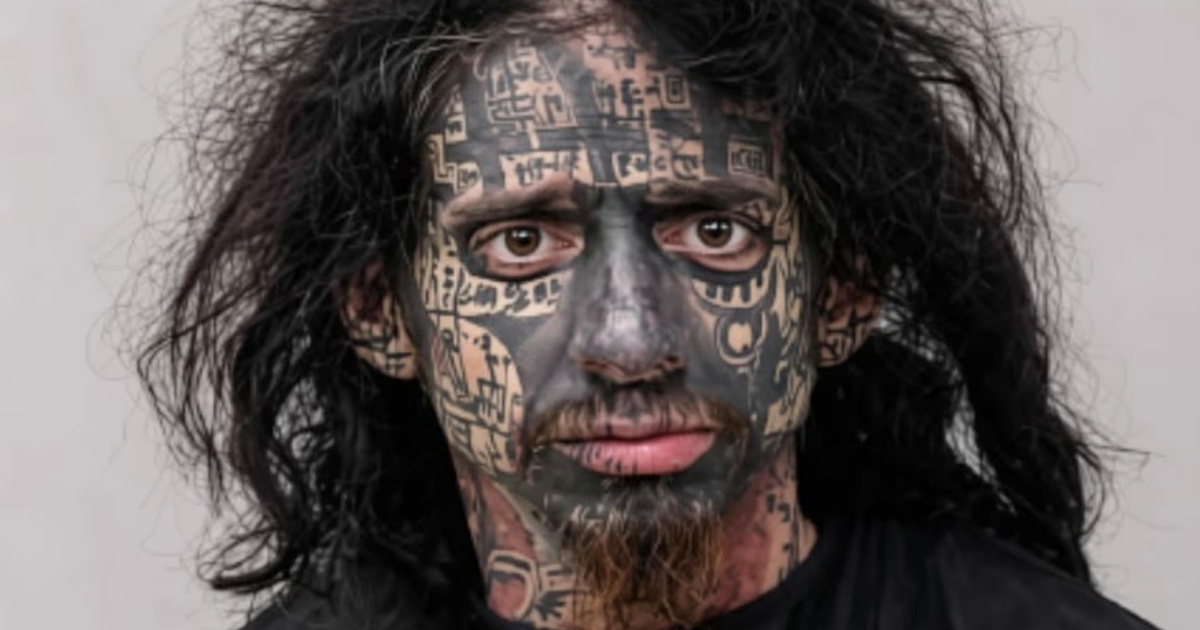
In Port St. Lucie, Florida, 36-year-old Mark Stephen Asea, who labeled himself a "demonologist" on TikTok, has been taken into custody. Authorities accuse him of unlawfully accessing the computers of two women and revealing their private information on social media, according to reports from NBC Miami and Telemundo 51.
A Bizarre Online Persona
Asea's social media presence was as eccentric as it was unsettling. His TikTok profile listed him as "demonologist," "clairsentient," "empath," "gray hat hacker," and "woodsman." Previous versions of his bio also mentioned "ex-Satanist" and "cybersecurity engineer," as noted in investigative documents.
His mugshot, featuring black geometric tattoos covering most of his face and neck, quickly spread online following his arrest.
Trust Betrayed
The two alleged victims had approached Asea seeking tech assistance, a trust that investigators say he exploited. In one instance, a woman allowed remote access to her computer in October 2025 for app troubleshooting. Asea allegedly admitted later to using this access to secretly install malware.
While briefly away from her computer, Asea reportedly planted a virus, gaining access to personal information, including messages and photos.
Another private photo received by the second victim via Telegram appeared in one of Asea's TikTok videos, which he falsely claimed was from WhatsApp. This was disproven by a screenshot she provided to investigators.
Extensive Digital Footprint
Investigators documented over 100 TikTok videos where Asea mentioned one of the women, sometimes posting up to six videos a day. In one video, he taunted, "Tell them about your real password," listing her recent online purchases—a password shared in a private TikTok group Asea wasn't part of.
In another, he bragged about tracking one of the women using her phone's GPS: "Thanks to her phone's GPS, but what did I do?" as per a sworn statement cited by Univision.
Further investigation revealed posts displaying one victim's vehicle license plate, bank details, and device identifiers, along with a website where Asea allegedly uploaded a photo of the woman getting a tattoo.
Upon his arrest, police seized computers, phones, hard drives, USBs, network equipment, an iPad, a Dell laptop, and even a PlayStation 5 as evidence.
A Legal Rollercoaster
This isn't Asea's first brush with the law. In 2026, he faced similar charges; arrested in April for computer abuse and harassment, the charges were dropped in May without explanation. Concurrently, a woman obtained a temporary protection order against him in July, which a judge rescinded on September 8.
The criminal case was reopened on September 24 with a new felony charge for unauthorized computer access, leading to his arrest outside his home six days later, captured by an officer's body camera.
During his arrest, Asea remarked calmly, "I'm fine. Much better than in April, I suppose, when I last saw you."
Legal Proceedings and Potential Penalties
Asea remains in St. Lucie County Jail on a $35,000 bond. In Florida, unauthorized computer access can escalate from a third to a second-degree felony if committed for fraud, resulting in harsher penalties.
The charges are currently pending trial, with the next court date set for November 19, 2026.
Understanding the Legal Implications of Unauthorized Computer Access
What are the potential consequences of unauthorized computer access in Florida?
In Florida, unauthorized computer access can be a serious offense. If it involves fraud, it may be elevated from a third to a second-degree felony, leading to more severe penalties.
How did the authorities gather evidence against Mark Stephen Asea?
Authorities compiled evidence from over 100 TikTok videos, GPS tracking, online posts, and seized electronic devices, which included computers, phones, and network equipment.