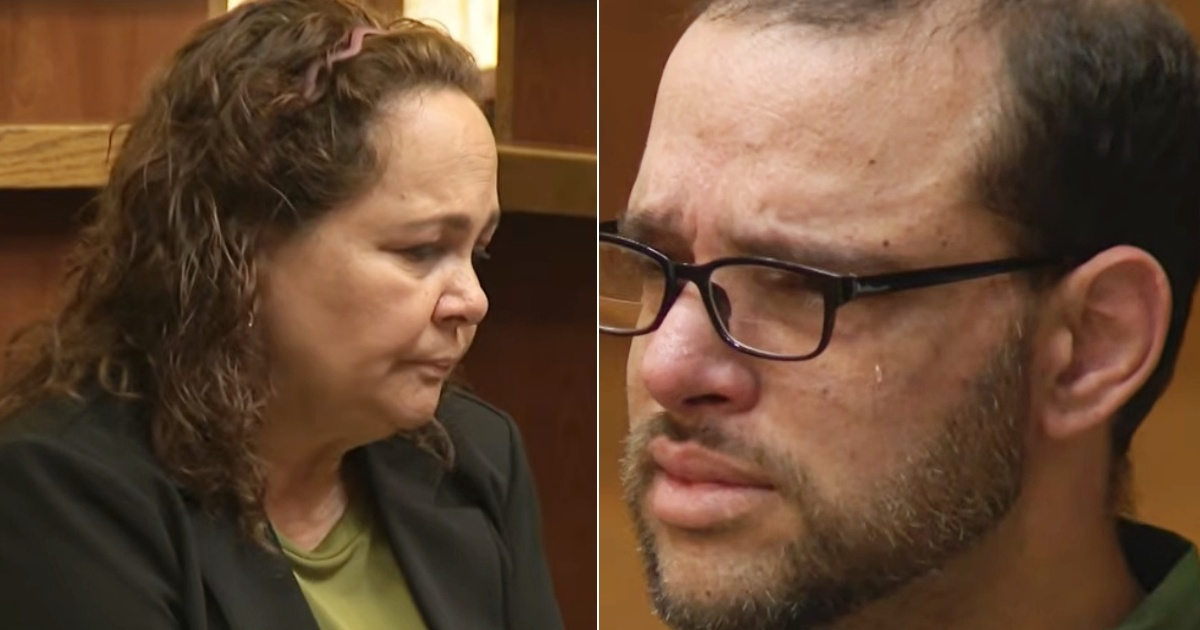
Alberto Sierra, a 42-year-old Cuban national who admitted to murdering his wife and two stepdaughters in Miami in 2012, was moved to tears for the first time in eight days of trial on Thursday. This emotional moment occurred as he listened to testimonies from his mother and brother, who recounted their shared childhood experiences in Havana to the jury.
Considering the Sentence: Life or Death
The trial isn't about determining Sierra's guilt — which he has already confessed to — but rather deciding whether he will face life imprisonment or the death penalty for the horrific events of November 10, 2012. On that day in the Flagami neighborhood, Sierra suffocated Gladys Machado, aged 29, along with her daughters, Julia Padrino, 6, and Daniela Padrino, 3, using plastic bags.
A Mother's Heartache: "He Couldn't Adapt"
Sierra's mother, Mercedes Pedraza, testified through an interpreter, breaking down while expressing her love for her son. "He was a restless, lively child, always playing with friends in the streets, as children do in Cuba," Pedraza shared, according to a Univision report. Having worked in a café in Havana, Pedraza sold her grandparents' house to fund their move to Hialeah in 1995, a transition that proved challenging for Alberto. "He couldn't adapt. He didn't want to be here," she revealed, noting his longing to return to Cuba with his father.
Childhood Memories: "We Were Just Normal Kids"
As Sierra wiped away tears, his older brother, Dayron Porrata, aged 44, painted a picture of their childhood in Havana before relocating to Florida. "He was outgoing, cheerful, more hyperactive than I was," Porrata explained in court. Describing their daily lives, he added, "We were just normal kids in Cuba. Being older, I had a different set of friends. We spent our time playing and had typical sibling arguments, but overall, we got along well."
Defense Strategy: Brain Injury and Diabetes
The defense, led by attorney Joyce Brenner, centers on the argument that a traumatic brain injury Sierra sustained in 1996 significantly impacted his impulse control. This injury, coupled with a Type 1 diabetes diagnosis at age 21, allegedly worsened his neurological condition. During cross-examination, prosecutors challenged this narrative by showing photos from the accident where Sierra's head was not bandaged. "Is your brother's head bandaged in any of these pictures?" the prosecutor asked. "In those two photos, no," Porrata replied.
A Trial of Emotional Turmoil
This Thursday's court proceedings provided a stark contrast to the previous days' raw scenes. The jury had earlier listened to a recorded confession from Sierra, where he detailed the murders and remarked, "I don't know, I just lost it." The following day, the heart-wrenching testimony of Michael Padrino Jr., Machado's surviving son — who was five at the time of the crime and is now 19 — moved several jurors to tears. "You! You took them away! You know you did it. You know what you did!" he shouted at Sierra.
Under Florida's revised 2023 law, a recommendation for the death penalty requires only eight out of 12 juror votes, rather than a unanimous decision. The trial is set to continue on Tuesday, October 13.
FAQs on Miami Triple Murder Case
What is the primary focus of Alberto Sierra's trial?
The trial aims to determine whether Sierra will receive a life sentence or the death penalty, as he has already confessed to the murders.
What key argument is the defense using in Sierra's case?
The defense argues that a traumatic brain injury from an accident in 1996, along with Sierra's Type 1 diabetes diagnosis, impaired his neurological function, affecting impulse control.
How has the Florida law changed regarding death penalty recommendations?
Florida's 2023 law revision requires only eight out of 12 jury votes to recommend the death penalty, rather than needing a unanimous decision.