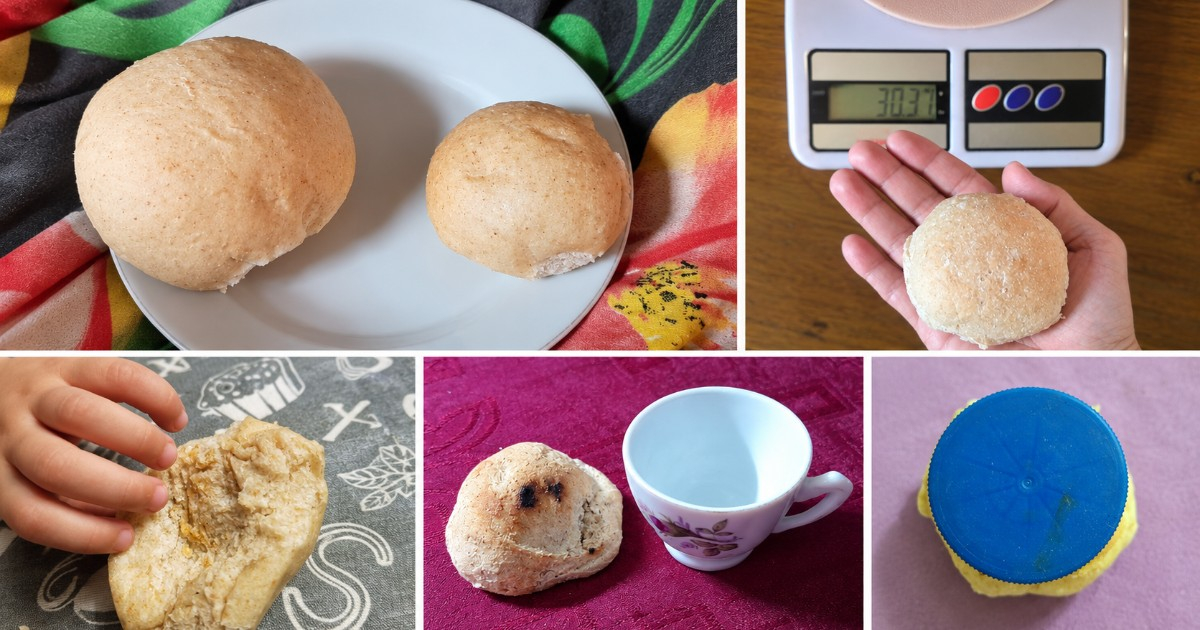
A Cuban woman took to social media to voice her frustration over the stark difference between the bread she receives through the government's ration book and another loaf sold for 50 Cuban pesos at the same bakery. Her post, which included a photograph comparing the two loaves, sparked renewed grievances about the size, quality, and erratic distribution of regulated bread in Cuba.
The photo displays two round loaves on a plate. The smaller one is labeled as "ration book bread," while the larger one is identified as "free-market bread sold for 50 pesos." Although the size difference is clear, a photograph doesn't provide details on weight, ingredients, or the actual sales conditions of the products.
In a Facebook community group, the complainant shared that after weeks without bread due to supposed electrical issues, the rationed bread only arrived once or twice a week, despite neighbors expecting it daily. When finally available, she described it as tiny and hard, unlike the larger and softer bread sold freely. She likened the rationed loaf to a "snack bread."
Her complaint encapsulates widespread frustration among consumers dependent on basic provisions who can't always afford higher prices. However, her account lacks specific measurements or a bakery's explanation for offering different-sized loaves.
Community Reactions and Personal Testimonies
The comparison prompted numerous reactions, with several users sharing photos of the bread they receive in their own areas. While these images serve as visual testimonies, they don't verify weights, production dates, origins, or the representativeness of what's distributed across Cuba.
Comments included a person from Holguín photographing their bread next to a small cup to illustrate its size, and another noting that the rationed bread at their bakery is minuscule. These are personal accounts, not independent confirmations of weight discrepancies.
Complaints also emerged from Havana neighborhoods like Luyanó, Cerro, and Regla. Participants reported days without receiving rationed bread or delays attributed to undelivered flour. One individual mentioned distribution happening once, followed by several days without supply, highlighting the need for specific verification at each establishment.
Price Variations and Quality Complaints
The discussion extended to the cost of bread sold outside the ration system. While the original post mentioned a price of 50 CUP per loaf, others cited prices of 55, 60, 80, and 85 pesos, with a resident of Alamar referencing costs between 100 and 110 CUP. These figures, shared by users, reflect personal experiences and may correspond to products of varying weight, quality, or sales method.
Some commenters expressed particular concern for the elderly and low-income individuals, for whom the irregularity of rationed bread forces a choice between buying more expensive alternatives or going without. Others questioned the oversight of bakeries and alleged irregularities without providing evidence to substantiate these claims.
Ongoing Supply Crisis and Reduced Bread Size
The reported size discrepancy follows several reductions and challenges acknowledged by the authorities. In September 2024, the Ministry of Food Industry announced that the rationed family bread would weigh 60 grams and cost 75 cents as a response to flour shortages. The official emphasized that the weight reduction should not mean a drop in quality. However, there's no current verification to determine the expected weight of the photographed loaves.
Complaints about insufficient weight aren't new. In May 2025, the official newspaper Juventud Rebelde published a consumer's grievance about weighing several rationed bread loaves, which didn't meet the expected gram weight. These were personal measurements, not a comprehensive inspection of all bakeries.
Flour shortages, power outages, and production organization continue to exacerbate the issue. In September 2026, CiberCuba reported the governor of Guantánamo questioning why some bakeries ceased production during power outages despite having flour and called for a reorganization of work. This official statement suggests that service management, in addition to resource availability, must be scrutinized.
Just a week ago, CiberCuba detailed the difficulties in purchasing bread in Las Tunas, where local media reported long lines and complaints about reseller activities. These are distinct issues, yet they all impact daily access to a staple food.
Understanding the Bread Supply Issues in Cuba
Why is there a difference in bread quality and size in Cuba?
The discrepancies in bread quality and size are attributed to supply chain issues, such as flour shortages and production challenges. Additionally, different pricing structures for rationed versus free-market bread influence quality and size variance.
What are the current challenges facing bread supply in Cuba?
Current challenges include flour shortages, inconsistent production due to power outages, and logistical issues in distribution. These factors contribute to the irregular availability and quality of bread.
How do bread prices vary in Cuba?
Bread prices in Cuba can vary significantly, with reports of prices ranging from 50 to over 110 CUP, depending on the region, bread type, and purchase method. These variations reflect differences in weight, quality, and available resources.