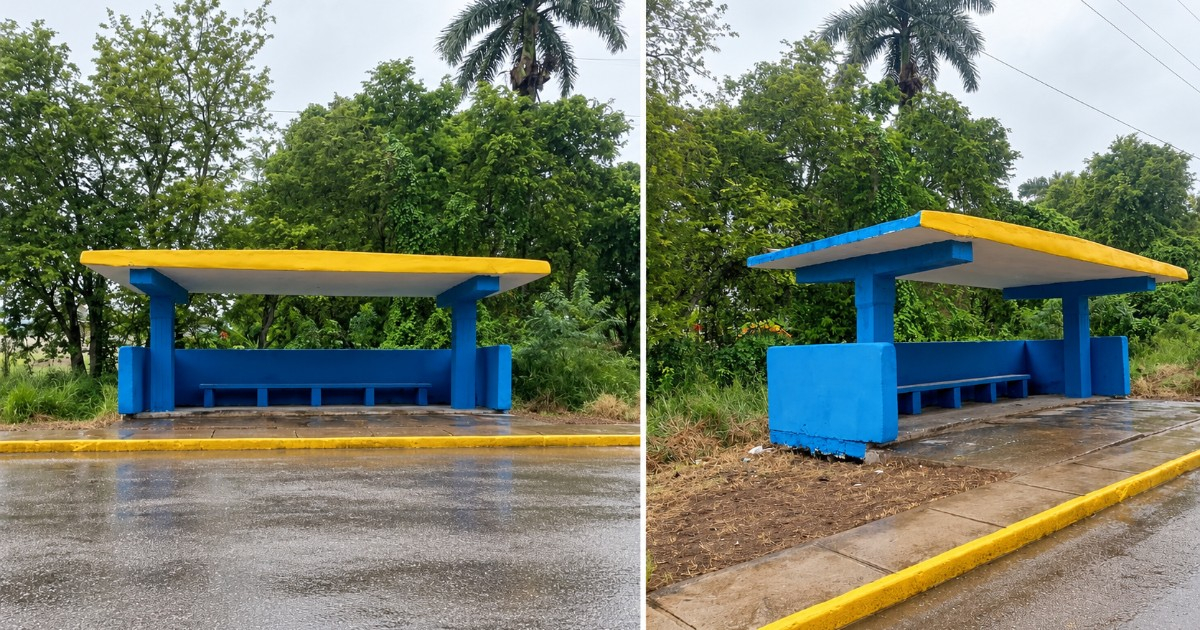
Recent announcements regarding the refurbishment of bus stops in Havana have provoked public criticism, highlighting what many perceive as misguided priorities by the authorities amidst a severe shortage of buses. For numerous residents, enhancing the waiting areas without simultaneously addressing the inadequacies in public transportation routes and schedules seems illogical.
This controversy arose following a post in the Facebook group "Dirección General de Transporte Prov. La Habana." The post, intended as an informative note from the Provincial Directorate of Transport in Havana, stated that the organization is actively involved in "repairing bus stops throughout the city."
However, the announcement lacks specific details on the number of stops to be repaired, which areas will take precedence, the cost of these projects, and their expected completion dates. There is also no mention of plans to introduce more buses into urban routes, improve service frequency, or the current number of operational vehicles.
The Demand for More Buses, Not Just Improved Stops
The response from many participants was critical. Some questioned the logic behind fixing bus stops when there are hardly any buses in service. They urged the authorities to focus on restoring vehicles and routes. One commenter simply asked where the buses were that should be utilizing these stops.
Another individual suggested that even getting a single bus operational would be more beneficial to passengers than repairing a stop. A local resident lamented that no buses have passed through her area since mid-2025, presenting a personal account rather than an official statement about that route.
Some comments resorted to irony, questioning the point of repairing facilities where, according to participants, buses rarely stop. Others requested improvements to seating, cleanliness, and road conditions. While these observations highlight other maintenance concerns, the dominant critique remains the shortage of buses.
A Transportation Crisis Beyond Bus Stops
This debate unfolds against a backdrop of prolonged transportation restrictions in Cuba. In May 2026, the Ministry of Transport itself acknowledged that state operators had to adjust services due to fuel and lubricant shortages. Minister Eduardo Rodríguez Dávila then instructed local governments to prioritize essential urban and suburban routes based on available resources.
Plans to rehabilitate vehicles have also been announced. In January, state media reported a program to repair 100 buses for Havana's transport needs by 2026, including 60 rigid and 40 articulated models. This goal reflects a target for repair, not the number of buses confirmed to be operational.
The fleet's deterioration became evident with images of abandoned buses at La Fortuna depot, circulated in March and covered by CiberCuba. More recently, criticism of an operation against private transporters in Central Havana reignited the debate about the real alternatives available to passengers when state services fall short.
Not Just Where to Wait, but How to Get There
Having safe, clean, and weather-protected bus stops is essential for those reliant on public transport, especially the elderly, children, and individuals with mobility challenges. Yet, reactions to the announcement reveal significant frustration centered on the lack of vehicles, irregular service, and long waits.
The comments articulate a clear demand for Havana's transport authorities: besides reporting on bus stop repairs, they need to clarify how many buses are in service, which routes are operational, their frequency, and the outcomes of the fleet recovery programs.
As it stands, the Facebook post about bus stop repairs fails to address these concerns. This discussion highlights the gap between improving waiting infrastructure and delivering the transport service that Havana's residents urgently require for their daily commutes.
Understanding Havana's Public Transportation Issues
Why are bus stop repairs controversial in Havana?
Bus stop repairs are controversial because many residents feel that improving waiting areas is pointless without addressing the underlying issues of bus shortages and irregular service schedules.
What is the main concern of Havana residents regarding public transport?
The primary concern is the lack of sufficient buses, leading to long waits and unreliable service, which makes daily commuting challenging for many residents.
What steps has the Cuban government announced to address transport issues?
The government has announced plans to repair 100 buses for Havana by 2026 and has urged local governments to prioritize essential routes due to resource constraints.