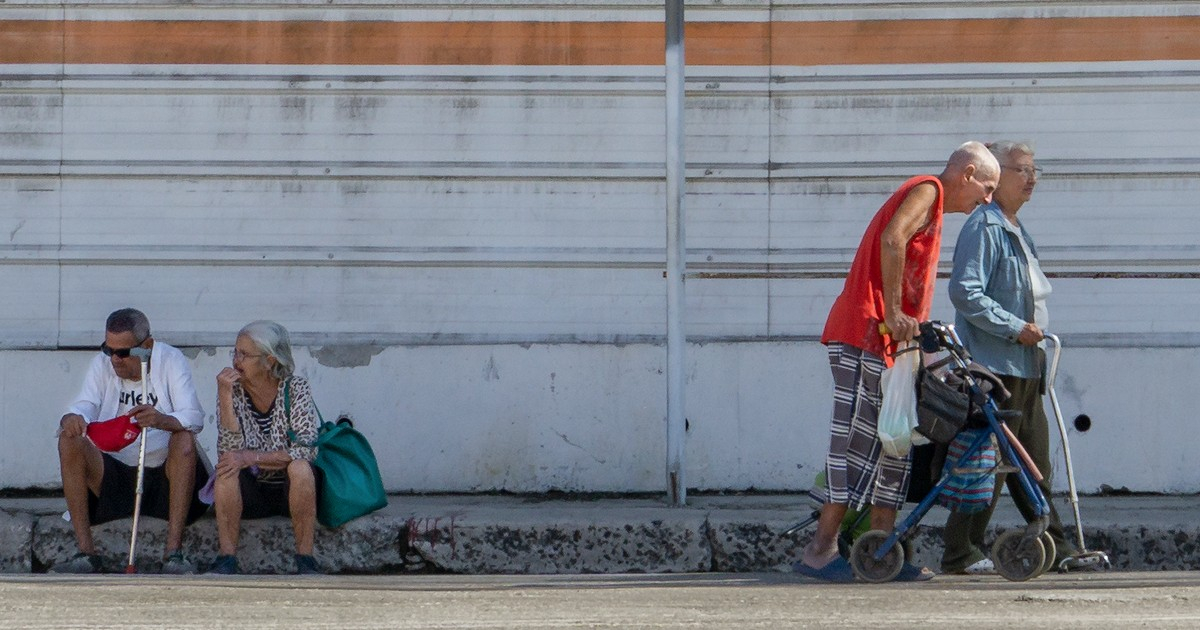
A retired Cuban has voiced his disappointment with the pledges made during the 1959 Revolution, highlighting the dire conditions many elderly citizens endure in the country. These conditions include inadequate pensions, food shortages, and limited freedoms. In a heartfelt Facebook post addressed to fellow seniors, he expressed how his generation once believed in a brighter future that has never materialized, even after more than 60 years.
The author of this account, referred to by the initials C. N., shared that he is part of the generation of Cubans who were swayed by the promises made in 1959. Reflecting on the past expectations versus today's harsh reality, he stated, "We see we're worse off now," using the term "Year of Freedom" to describe 1959.
Poverty and Hunger Among the Elderly
The retiree highlighted several issues that depict the decline in daily life. He mentioned "widespread hunger" and noted that many older adults are forced to beg or scavenge through refuse for food. He also lamented the struggle many Cubans face in affording clothing, eyeglasses, or adequate dental care. His description of retirees with worn-out clothes and dental issues aimed to underscore the loss of well-being among those who dedicated much of their lives to work.
While these observations are part of his personal testimony, not a comprehensive statistical analysis, the struggles faced by the elderly and the inadequacy of pensions have been documented in other instances. In September, set designer Luis Lacosta revealed receiving just 3,800 pesos monthly after a career spanning over 65 years. That same month, a photo captured elderly individuals sleeping on the ground outside a bank in Santiago de Cuba, hoping to collect their pensions the next day.
The crisis extends beyond pension figures: lines, cash shortages, power outages, and rising costs of food and medicine further complicate the daily lives of many elderly individuals.
Limits on Freedom and Expression
The retiree's testimony also addressed more than just economic hardships. He criticized the lack of freedom of expression, restrictions on peaceful protest, and what he described as the Cuban regime's oppressive response to dissenters.
His remarks align with issues highlighted by international organizations. Human Rights Watch's 2026 World Report noted that the Cuban government continues to punish dissent and public criticism, citing arbitrary detentions and a lack of judicial safeguards. Amnesty International also reported on restrictions to expression and peaceful assembly throughout 2025.
In concluding his post, the retiree echoed concerns shared by another Cuban citizen who also criticized the government's economic promises and described the hardships faced by his retired father.
This testimony challenges Prime Minister Manuel Marrero Cruz's optimistic assertion that the population will start to see the benefits of the government's announced economic reforms by 2027.
Understanding the Struggles of Cuban Seniors
What are the main issues faced by retired Cubans today?
Retired Cubans are dealing with inadequate pensions, food shortages, difficulty accessing clothing and medical care, and restrictions on freedoms such as expression and protest.
How do international organizations view the situation in Cuba?
International organizations like Human Rights Watch and Amnesty International have documented issues such as arbitrary detentions, lack of judicial safeguards, and restrictions on freedom of expression and peaceful assembly in Cuba.