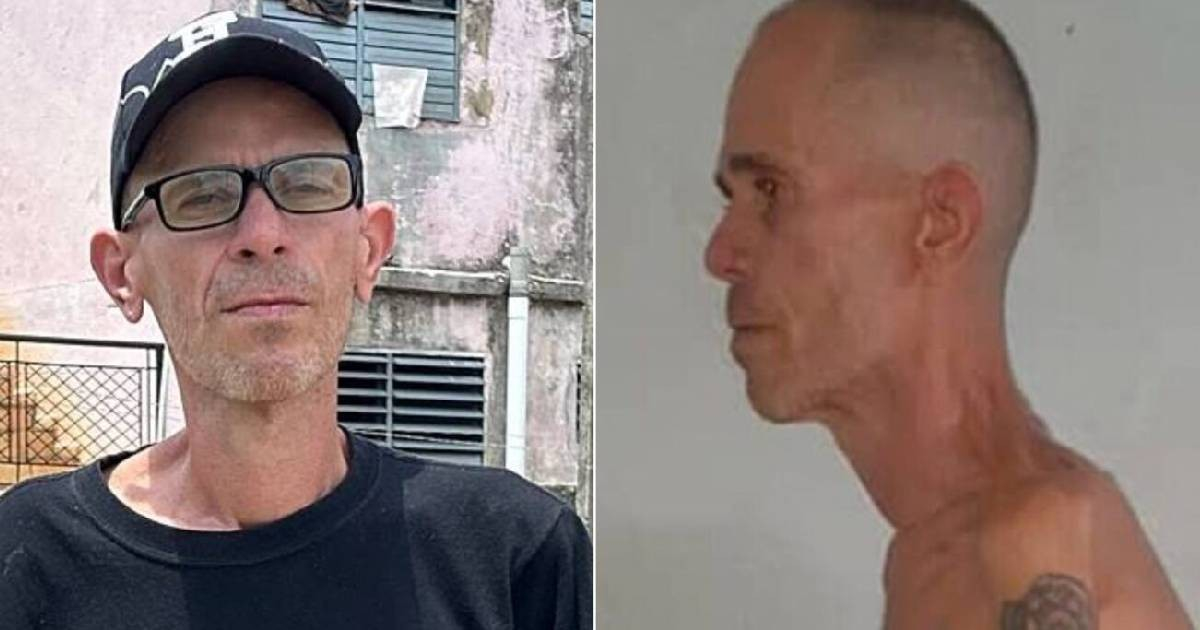
In a troubling development reported by Telemundo 51, the Cuban government has once again detained Alexander Díaz Rodríguez, a former political prisoner from the July 11 protests who is battling cancer. This arrest occurs amidst efforts to secure a humanitarian visa from the U.S. to enable him to receive critical cancer treatment outside of Cuba.
The specifics of this latest detention remain unverified independently as of this report's publication. It marks at least the third arbitrary arrest Díaz Rodríguez has faced since his release in April, following a documented pattern of systematic harassment against former July 11 protest detainees.
Background of Díaz Rodríguez's Imprisonment
Alexander Díaz Rodríguez, a 45-year-old resident of Artemisa, was imprisoned for five years at Kilo 5 and a Half Prison in Pinar del Río. He was arrested during the protests on July 11, 2021, in Cárdenas, Matanzas, and convicted of "sedition" and "disrespect."
Upon his release on April 12, Díaz Rodríguez was in a dire physical state, having plummeted from 81 kilograms to just 37 kilograms—a staggering loss of 44 kilograms over five years. During his incarceration, he was diagnosed with malignant thyroid cancer, contracted hepatitis B, and suffered from severe anemia and malnutrition. He has also alleged systematic torture, including beatings that fractured his ribs and teeth, multiple punishments in isolation cells, a hunger strike lasting over 30 days, and prolonged solitary confinement.
Continued Persecution Following Release
The repression did not end with his release. In July, State Security agents detained Díaz Rodríguez and another activist as they headed to an event at the U.S. Embassy celebrating American Independence Day. He was held incommunicado for nearly three days and reported being beaten, forcibly stripped, and subjected to mock executions.
"They kidnapped me. Stripped me. Beat me. Pointed a gun at me in a mock Russian roulette," he recounted in a video shared by Prisoners Defenders.
International Response and Humanitarian Visa Efforts
The case has garnered significant diplomatic attention from Washington. Mike Hammer, head of the U.S. Embassy in Cuba, personally visited Díaz Rodríguez in Artemisa on June 1, despite State Security agents monitoring the area. "What this man has endured is inexplicable. The United States will continue to press for the release of all those unjustly imprisoned," Hammer stated.
Since mid-April, the U.S. Embassy has been considering a humanitarian visa to allow Díaz Rodríguez to receive treatment in the U.S. A Change.org petition supporting this visa has amassed over 500 signatures, arguing that staying in Cuba poses a life-threatening risk due to cancer progression and the island's chronic shortage of cancer medications.
The humanitarian visa mechanism is a viable option and has been used for other July 11 detainees. For instance, activist Sissi Abascal was granted entry to Miami in May through this process, facilitated by the Legal Rescue Foundation and the State Department. However, approval for Díaz Rodríguez remains uncertain.
Between January and September 2026, Cubalex documented 86 repressive incidents related to the U.S. Embassy, with increased activity surrounding diplomatic events. As of October 7, 2026, Prisoners Defenders reported 1,356 political prisoners in Cuba, with 338 individuals jailed directly for their involvement in the July 11 protests as of late June.
Alexander's mother, Morayma Rodríguez Batista, has faced consistent pressure from State Security to cease her advocacy for her son. She remains resolute, declaring, "It's pointless with me; I won't stop speaking out and protesting for Alexander."
Key Questions About Alexander Díaz Rodríguez's Situation
What led to Alexander Díaz Rodríguez's imprisonment?
Alexander Díaz Rodríguez was arrested during the July 11, 2021, protests in Cuba. He was subsequently charged with "sedition" and "disrespect," resulting in a five-year prison sentence.
What health issues has Díaz Rodríguez faced during and after his imprisonment?
Díaz Rodríguez has been diagnosed with malignant thyroid cancer, hepatitis B, severe anemia, and malnutrition. He also experienced torture and harsh prison conditions that significantly impacted his health.
How has the international community responded to Díaz Rodríguez's situation?
There has been notable diplomatic attention from the U.S., with efforts to secure a humanitarian visa for Díaz Rodríguez. The U.S. Embassy has been actively involved, and there is international advocacy for his release and medical treatment.