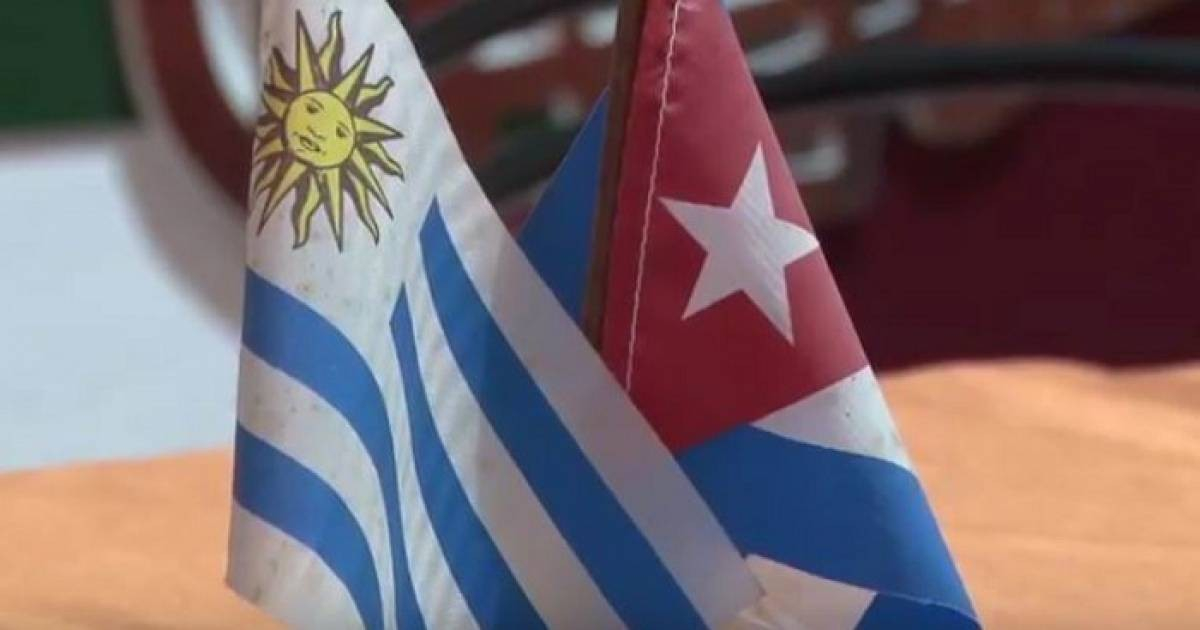
On Thursday, Venezuelan writer and human rights advocate Marisol Johana Díaz Reyes de Córdova issued a statement to the editorial team at CiberCuba, demanding transparency and concrete actions from Uruguayan authorities regarding the backlog of Cuban refugee applications. She described the situation as an unacknowledged humanitarian crisis.
Her call for action follows an Infobae report highlighting a huge disparity: nearly 30,000 pending Cuban refugee applications compared to only 52 Cuban nationals officially recognized as refugees.
"I demand that the authorities clarify how long these individuals have been waiting, what obstacles are delaying the process, and what measures will be implemented. Human dignity should not remain on a waiting list," asserted Díaz de Córdova.
A trans migrant living in Uruguay, Díaz de Córdova emphasized that she is not advocating for automatic refugee status but rather for timely and well-founded decisions for each case.
"Each case must be examined seriously. No one should be left indefinitely without a clear response. Behind each case file is a person needing to rebuild their life," she stressed.
The numbers highlight the urgency of the issue. According to the Refugee Commission (CORE), by the end of June 2026, there were 30,715 unresolved cases, with approximately 89% belonging to Cubans. On average, 1,300 monthly applications are submitted, yet effective recognitions are scarce: only two Cubans were granted refuge in 2025, six in 2024, and seven in 2023.
Uruguay's Deputy Foreign Minister and CORE President, Valeria Csukasi, attributed the backlog to "a structural imbalance between the volume of applications and the institutional and operational capacity of the Commission." However, despite decades of mass exodus from the island, Uruguay has only recognized 52 Cubans as refugees.
Cuban-born Leydis Aguilera, a substitute deputy for the National Party, was more straightforward, stating, "Leftist governments have not acknowledged this as a human rights issue." Sources close to CORE suggested that recognizing applications based on political persecution would mean officially admitting such situations occur in Cuba, a stance that could affect the Uruguayan government's position on the island.
The contrast with the treatment of Venezuelans is striking: of the 3,244 recognized refugees in Uruguay by the end of 2025, 2,543 were Venezuelans, who benefited from an expedited process resulting in 842 approvals in 2023 and 659 in 2024.
Díaz de Córdova highlighted this inequality: "Human rights should not depend on a government's favor or a party's convenience. I demand consistency: the same dignity we defend for some must be defended for all."
The strain on Uruguay's system is unlikely to ease soon. Over 22,000 Cubans arrived in Uruguay during 2025, and the collapse of the Darién route — with a more than 99% drop in crossings during the first half of 2026 — has redirected even more Cuban migration flows toward South America.
"It's not enough to talk about dignity in speeches. I demand answers, transparent procedures, and decisions that prioritize individuals," concluded the advocate, signing her statement personally, without claiming to represent the Cuban community in Uruguay formally.
Addressing the Backlog of Cuban Refugee Applications in Uruguay
Why is there a significant backlog of Cuban refugee applications in Uruguay?
The backlog is attributed to a structural imbalance between the high volume of applications and the limited institutional and operational capacity of Uruguay's Refugee Commission.
How many Cuban refugees have been officially recognized by Uruguay?
As of now, only 52 Cuban nationals have been officially recognized as refugees by the Uruguayan government.
What actions are being demanded from Uruguayan authorities?
Advocates are demanding transparency, timely decision-making for each application, and measures to address the backlog, ensuring that human dignity is not compromised.