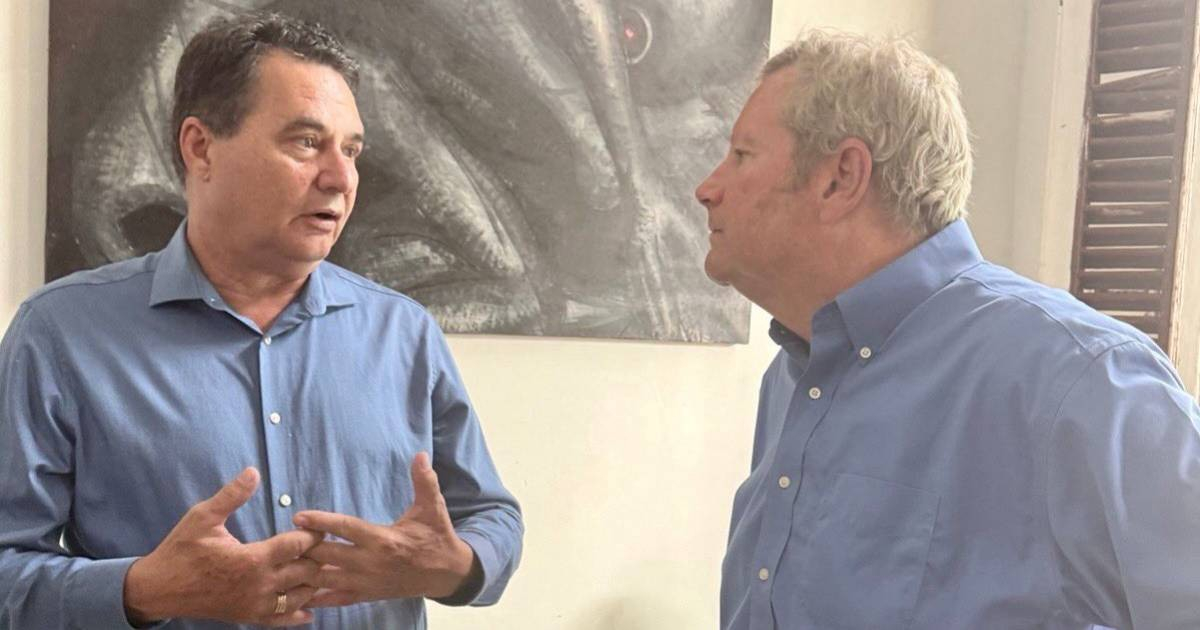
The head of the U.S. diplomatic mission in Cuba, Mike Hammer, recently held a meeting with writer and former political prisoner Ángel Santiesteban-Prats, who has been newly appointed as the Sovereign Grand Commander of the Supreme Council of the 33rd Degree for the Republic of Cuba. The discussion aimed to explore the potential role of Freemasons in distributing American humanitarian aid to the island's most vulnerable families.
The U.S. Embassy highlighted the meeting on its official X account, emphasizing the historical significance of Cuban Freemasonry and its potential contribution to humanitarian efforts.
"Acknowledging that Freemasonry has a long and important history in Cuba, they discussed the possibility of Masons participating in the distribution of U.S. humanitarian aid to those most in need," the diplomatic representation stated.
The Embassy also reiterated its support for the independence of civil organizations: "The United States values the role of Freemasons in Cuba's development and supports a free and independent civil society."
New Leadership and Government Pressure
This meeting comes shortly after Santiesteban-Prats was elected as the Sovereign Grand Commander of the Supreme Council of the 33rd Degree on September 26, securing 19 votes in favor and one against.
The writer, who has been part of the Masonic tradition for nearly 40 years, took on the role amidst ongoing conflict between the institution and the Cuban Ministry of Justice.
Back in 2025, the Ministry of Justice issued Resolution 342, which dismissed Viñas Alonso's leadership of the Supreme Council. The Freemasons contested this decision, but Cuba's Supreme People's Court rejected their appeal in March 2026.
Santiesteban-Prats himself has faced legal challenges. In June, authorities charged him and placed him under house arrest for allegedly exchanging $200 in donations for the National Masonic Asylum Llansó on the informal market, an accusation he denies.
Following his election, the Supreme Council reported that their new leader's residence remained under surveillance and their bank accounts were frozen, hindering even the payment of salaries to their staff.
U.S. Aid for Vulnerable Cuban Families
The potential involvement of the Freemasons is part of a broader $100 million humanitarian aid program announced by the United States, designed to deliver food and essential items to Cubans hardest hit by the crisis.
Out of the total amount, $60 million is being distributed via Catholic Relief Services and Caritas Cuba, while the remaining $40 million is allocated to independent non-governmental organizations. The initiative aims to distribute resources without the Cuban government's interference.
The distribution began in July with an initial shipment of 18 tons of food and hygiene products from Miami, and it has gradually expanded to various provinces.
On October 6, another U.S. shipment arrived in Cuba, targeting vulnerable families in Ciego de Ávila, coordinated by Caritas.
The program aims to benefit between 100,000 and 120,000 Cuban families, prioritizing the elderly, people with disabilities, pregnant women, and households with young children.
Frequently Asked Questions about U.S. Humanitarian Aid in Cuba
What role might Cuban Freemasons play in the aid distribution?
Cuban Freemasons could potentially help distribute U.S. humanitarian aid to families in need, leveraging their historical presence and influence in Cuban society.
How is the U.S. aid program structured?
The aid program involves a $100 million package, with $60 million distributed through Catholic Relief Services and Caritas Cuba, and $40 million earmarked for independent NGOs, avoiding Cuban government intervention.
Who are the target beneficiaries of this aid?
The aid is intended for 100,000 to 120,000 Cuban families, focusing on seniors, individuals with disabilities, pregnant women, and households with small children.