The Board of Immigration Appeals (BIA) has established a binding precedent affirming the Department of Homeland Security's (DHS) authority to impose fines on immigrants who agree to voluntary departure but fail to leave the United States within the specified timeframe.
Known as Matter of R-P-L-, 29 I&N Dec. 859, this decision, signed on August 28, 2026, now serves as a mandatory precedent throughout the U.S. immigration system.
The case centers on an Indian national who was granted voluntary departure in 2003—extended by the BIA in 2004 for an additional 30 days—yet never exited the country. Over twenty years later, DHS notified him of an impending fine, ultimately imposing a $3,000 penalty, which the BIA upheld.
Impact on Cuban Immigrants
This precedent could significantly impact Cuban nationals with pending immigration cases. Stay updated on court proceedings, fines, and immigration procedures in our U.S. Immigration section.
The BIA's ruling, delivered by judges Volkert (author), Chaban, and Terrien, outlines five critical principles that now govern similar cases:
Key Points of the Ruling
Firstly, the fine notifications are valid even if presented solely in English; there is no legal requirement to translate immigration documents into an immigrant's native language.
Secondly, notifying the registered attorney is considered equivalent to notifying the immigrant directly, even if the attorney hasn't personally explained the order's contents.
Thirdly, the imposition of fines doesn’t require proof of intentional non-compliance; the law doesn’t demand evidence of willful misconduct by the immigrant.
Fourthly, pending immigration applications, such as an approved family petition, don’t automatically halt the departure deadline or excuse failure to leave.
Lastly, the BIA cannot provide equitable relief.
Legal and Practical Implications
The legal foundation for this is found in section 240B(d) of the Immigration and Nationality Act (INA), which mandates a fine ranging from $1,000 to $5,000 and imposes a ten-year ineligibility for status adjustments, removal cancellations, status changes, registration, and any future voluntary departures.
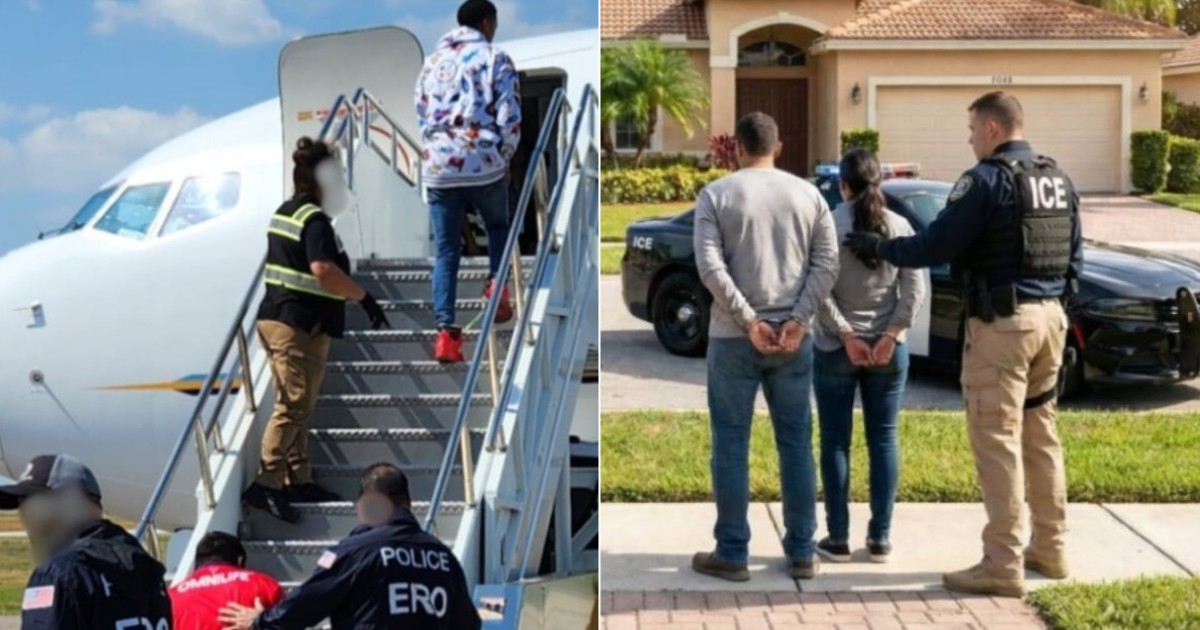
This decision carries significant implications for Cuban immigrants in the United States. Increasingly, Cubans detained by ICE or those with an I-220A form face pressure to accept voluntary departure, and this ruling clarifies that failing to depart on time can result in fines and a decade-long reentry ban imposed by DHS.
Immigration attorneys have repeatedly highlighted this risk. Attorney Liudmila Marcelo has pointed out the legal contradiction of accepting voluntary departure to Cuba while seeking asylum, noting, "If I request voluntary departure to Cuba, how can I later claim fear of returning to Cuba? These are the consequences of voluntary departure."
Moreover, Cuba has refused entry to those who accepted voluntary departure from the U.S., leaving them in a legal limbo without a clear resolution.
It's important to distinguish this fine from the substantial penalties outlined in section 274D of the INA—up to $998 daily for failing to depart under a final deportation order—which a federal judge in Boston temporarily suspended in late September. The fine for unfulfilled voluntary departure, confirmed by the BIA, remains fully enforceable and unaffected by that suspension.
FAQs About Immigration Fines and Voluntary Departure
What is the BIA's role in immigration cases?
The Board of Immigration Appeals (BIA) is responsible for interpreting and applying immigration laws, often setting precedents that guide future cases.
How does the BIA's decision affect Cuban immigrants?
The decision can impact Cubans with open immigration cases, as it clarifies the consequences of not adhering to voluntary departure agreements, including fines and reentry bans.
Can pending immigration applications delay voluntary departure deadlines?
No, having pending immigration applications does not automatically extend the deadline for voluntary departure or serve as an excuse for non-compliance.