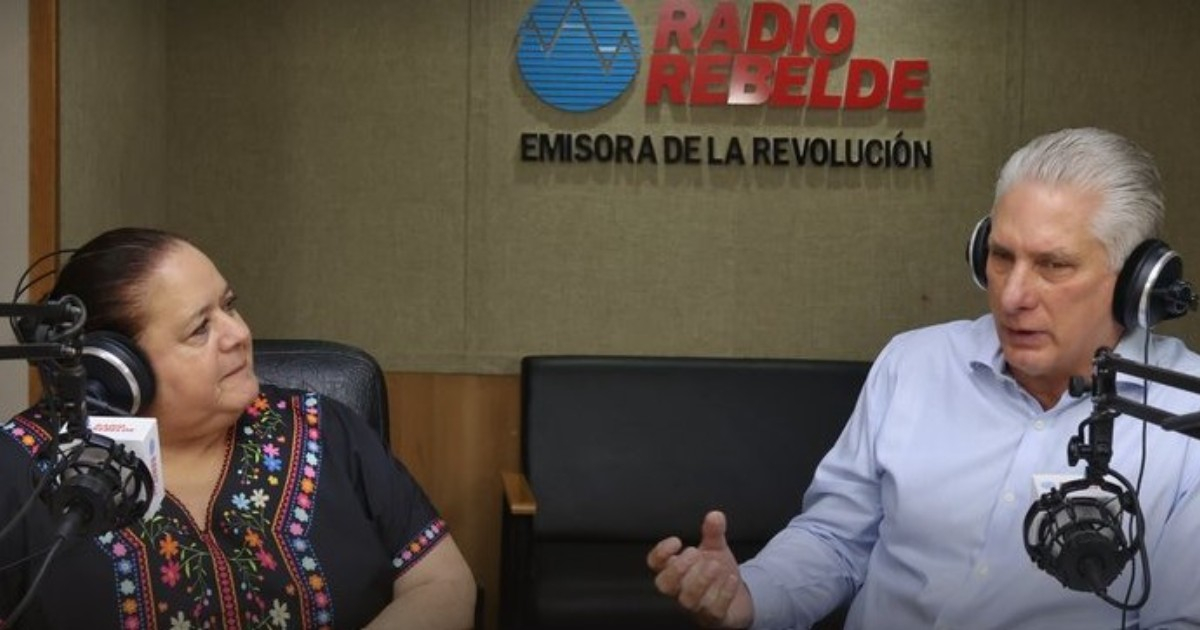
A Cuban mother took to the airwaves on the "Shared Criteria" radio show to demand recognition and compensation as the caregiver for her amputee son. During the live broadcast, Miguel Díaz-Canel assured her, "You will receive attention in the coming days, and a solution will be provided."
This exchange occurred on Wednesday during the second edition of the biweekly program, which was broadcast nationally from Radio Rebelde's studios.
In response to the mother's plea, the leader posed a rhetorical question, "How can we not ensure that a mother serves as a caregiver for her child and receives all the necessary benefits?" He promised intervention from the relevant institutions.
Interestingly, the right this mother is fighting for is already established within Cuba's legal framework. The Council of Ministers' Decree 121 of 2025, approved in February and published in the Official Gazette in April of that year, officially acknowledges family care for children with severe, permanent, and irreversible disabilities as paid work.
This decree allows mothers, fathers, grandparents, guardians, or other supportive individuals to be hired by the Local Administration Unit of Assurance and Support, granting them labor rights and social security funded by the State Budget.
Challenges in Implementing Existing Legislation
However, real-world application faces bureaucratic hurdles: the disability must be certified by the municipal Public Health system, and the family caregiver must be authorized by the Municipal Directorate of Labor and Social Security. This process often leaves many families unable to access the intended benefits.
The fact that a mother needed to appeal on a radio show to claim a legally recognized right, which has been in place for over a year, starkly illustrates the barriers to implementing this legislation.
During the conversation, no details were disclosed regarding the woman's identity, her province, the nature of her son's amputation, or the specific amount of the promised benefit.
Cuba's Ongoing Economic and Social Crisis
Cuba is experiencing an unprecedented social and economic crisis. The Economic Commission for Latin America and the Caribbean (ECLAC) forecasts a 10.3% GDP contraction in 2026, marking the steepest decline in Latin America. Year-over-year inflation reached 25.19% in August, with food prices soaring over 36%.
In the same broadcast, Díaz-Canel also provided updates on the program's debut on September 23: of the 24 calls received, 16 individuals were visited by officials, five could not be located, and two remain pending attention.
"Out of the calls, eight were complaints. Among these, five were justified, and three were partially justified, meaning the callers had valid points in their concerns," he acknowledged.
The second broadcast received over 50 calls regarding social vulnerability, medicine shortages, inadequate basic services, pricing issues, banking, and bureaucracy, as reported by the program itself.
The leader made a controversial statement: "The crisis also generates citizen creativity," which the population interpreted as an attempt to shift the blame for the economic collapse onto the Cuban people themselves.
The program has sparked criticism on social media, where it has been dubbed "the circus," with citizens questioning the government's intent to dismantle the bureaucratic obstacles it has erected over the years.
Understanding Cuba's Caregiver Rights and Economic Challenges
What legal rights do Cuban caregivers have?
Cuban caregivers for children with severe, permanent, and irreversible disabilities are entitled to be recognized and compensated for their work, as outlined in the Council of Ministers' Decree 121 of 2025.
What are the main challenges in implementing caregiver compensation in Cuba?
The primary challenges include bureaucratic procedures requiring certification by the municipal Public Health system and authorization by the Municipal Directorate of Labor and Social Security, which can prevent families from accessing these benefits.
How is Cuba's current economic situation impacting its citizens?
Cuba is facing a severe economic downturn, with a projected 10.3% GDP contraction in 2026 and high inflation rates, severely affecting the cost of living and access to basic goods and services.