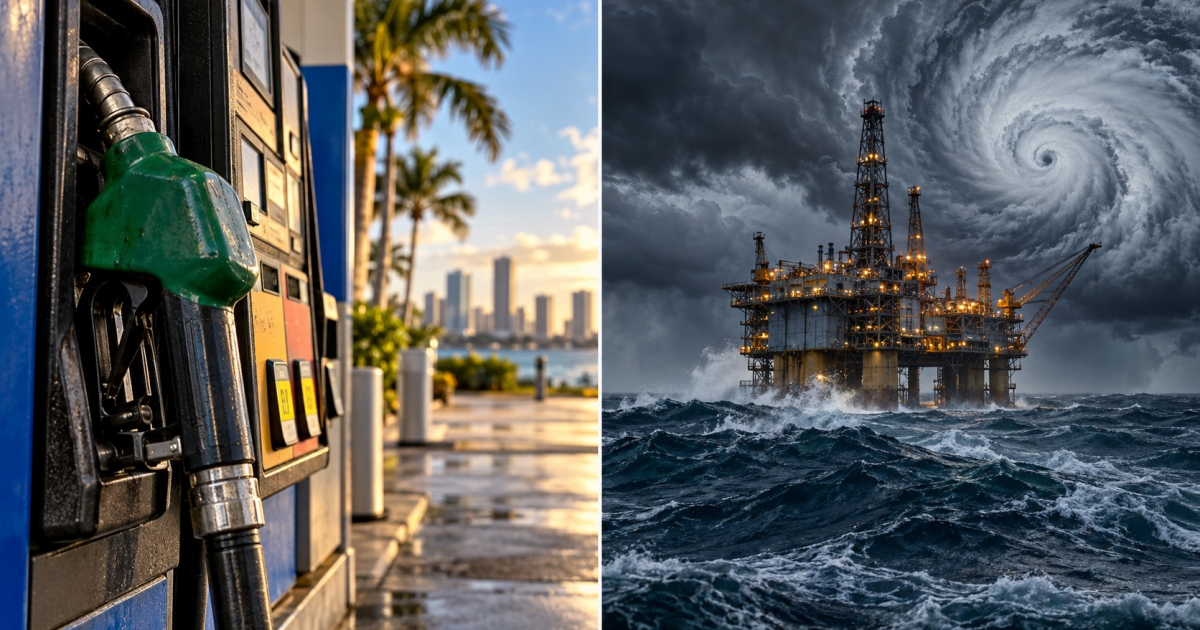
Hurricane Isaías is already causing significant disruptions in the U.S. energy sector. Oil companies have preemptively halted 25.08% of crude production in the Gulf of Mexico's U.S. waters, a cutback that could put pressure on fuel markets if it persists in the coming days.
According to an official report released by the Marine Minerals Administration (MMA) on Wednesday, October 7, the shutdown amounts to 511,619 barrels of oil per day, with 16.37% of the region's natural gas production also remaining offline.
These precautions were taken while Isaías was still a tropical storm. Hours later, the U.S. National Hurricane Center (NHC) confirmed that it had escalated to a Category 1 hurricane, with maximum sustained winds reaching 75 mph.
Impact on Fuel Supply Chains
The concern now is that the energy disruption might extend and impact fuel supply chains, particularly in states like Florida, which heavily rely on maritime gasoline shipments.
Over half a million barrels per day are currently not being produced. The MMA, a federal body overseeing offshore energy activities, confirmed that companies had evacuated workers from eight production platforms, accounting for 2.16% of the 371 staffed installations in U.S. waters of the Gulf.
Personnel were also evacuated from two drilling rigs, and a dynamically positioned unit was moved out of the risk area.
The suspended natural gas production reached 350.25 million cubic feet per day. These figures are based on reports received by federal authorities up to 11:00 a.m. Central Time on Wednesday, reflecting the estimated production companies had planned for that day.
The temporary shutdown of wells is a standard safety measure in anticipation of hurricanes. It doesn’t imply any damage to the facilities or a permanent loss of production.
Shell and Chevron's Preventive Measures
Once the storm passes, companies will inspect their facilities and resume operations at undamaged sites. Affected platforms might need more time to become operational again.
Among the major companies taking preventive actions are Shell and Chevron, two key players in the American oil industry.
According to Reuters on Wednesday, Shell announced the evacuation of personnel and suspension of production at its Mars, Olympus, Ursa, Vito, and Appomattox facilities. The company had also previously evacuated non-essential workers from its Stones facility.
In contrast, Chevron reported that it had begun production suspension procedures at four of its Gulf installations while maintaining normal operations at five others.
These measures underscore the industry's concern over the potential intensification of the hurricane, as its winds, waves, and maritime conditions could jeopardize worker safety and infrastructure integrity.
Potential Gasoline Price Increase in Florida
The suspension of a quarter of offshore U.S. oil production in the Gulf raises a crucial question for Florida drivers: Will gasoline prices surge?
As of now, there is no proven link between Isaías-related disruptions and a specific increase at the state's pumps.
According to AAA data from October 7, the average price for regular gasoline in Florida was approximately $4.19 per gallon, still below the level recorded a week earlier.
However, a prolonged disruption in oil production might add pressure to crude prices, especially if it coincides with other supply issues.
The outcome will depend on how long the facilities remain idle, whether the hurricane affects refineries and distribution terminals, and the overall behavior of international oil markets.
Therefore, it’s not a given that gasoline prices will rise immediately, nor is it certain how much they might increase.
Florida's Vulnerability to Supply Issues
Florida's situation makes it particularly vulnerable to hurricane developments: it lacks its own refineries and significantly relies on fuel transported by ship from other U.S. regions and international markets.
The U.S. Energy Information Administration (EIA) has explained that much of the gasoline consumed in Florida arrives through ports such as Tampa, Port Everglades, Jacksonville, and Port Canaveral, from where it is distributed to various areas of the state.
The agency has also documented how past hurricanes disrupted port operations, maritime routes, and distribution chains, causing temporary supply difficulties.
In an analysis of hurricane risks to the refining industry, the EIA noted that the Gulf concentrates a substantial portion of U.S. refining capacity.
Hence, the economic consequences of a hurricane do not solely depend on the oil wells that cease production. The continuous operation of refineries, ports, and transportation systems is also critical.
If Isaías leads to prolonged closures or distribution difficulties, price increases or localized supply issues could occur. However, this scenario remains a possibility rather than a confirmed outcome of the current interruption.
Post-Hurricane Outlook for Oil Production
The main factor will be how quickly companies can inspect and reactivate their facilities once the danger has passed.
If most platforms resume operations without significant damage and fuel transport remains stable, the impact on supply might be minimal.
Conversely, if infrastructure damage, power outages, or prolonged interruptions at refineries and ports occur, the energy market consequences could last longer.
As a precedent, the EIA has documented that Hurricanes Harvey and Irma caused significant supply disruptions and gasoline price hikes in Florida during 2017, although current conditions are different.
CiberCuba reported on Thursday that Isaías has become the first Atlantic hurricane of 2026, with hurricane and storm surge warnings issued for parts of the northern Gulf Coast.
The threat has also prompted Florida authorities to order evacuations and announce airport closures in northwest areas of the state.
As the hurricane progresses, the energy sector remains vigilant regarding both its path and subsequent inspections, which will determine how long oil production remains disrupted.
For Florida residents, the critical information in the coming days will be whether these interruptions also affect gasoline supply to service stations or are limited to a temporary suspension of maritime operations.
FAQs on Florida's Fuel Supply Amid Hurricane Isaías
Will the disruption in oil production cause gas prices to rise in Florida?
As of now, there's no confirmed link between the disruptions caused by Hurricane Isaías and a specific increase in gasoline prices in Florida. However, prolonged production interruptions could potentially add pressure to crude prices.
How does Hurricane Isaías affect Florida's fuel supply?
Florida relies heavily on fuel transported by ship since it lacks its own refineries. Disruptions in maritime shipments due to the hurricane could impact the state's fuel supply.
What precautions are oil companies taking in response to Hurricane Isaías?
Companies like Shell and Chevron have evacuated personnel and suspended production at several facilities in the Gulf of Mexico as a precaution against potential intensification of the hurricane.