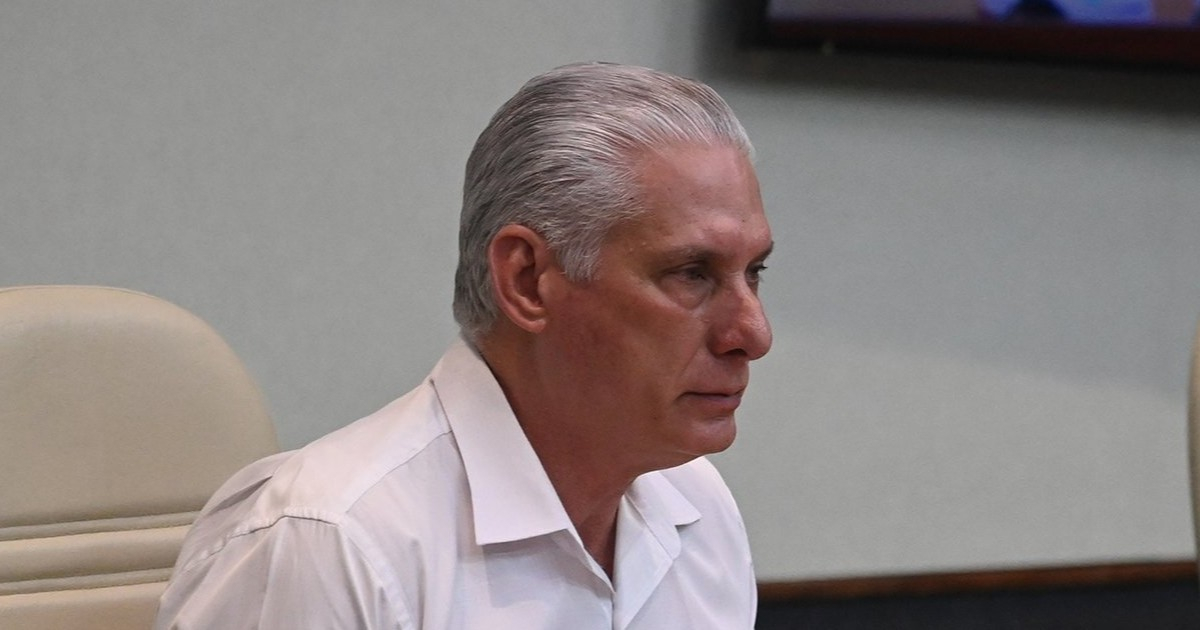
On Wednesday, Miguel Díaz-Canel returned to the airwaves of Radio Rebelde, hosting the second installment of his biweekly program "Shared Criterion." He articulated a phrase that encapsulates his approach to the ongoing collapse in Cuba: "Crisis also sparks citizen creativity."
He elaborated, "That citizen creativity, combined with popular participation, yields results."
This notion is not new in the leader's rhetoric. Back in February 2026, he urged overcoming challenging times "with creative resistance, alongside the population's effort and talent." By June, during an Extraordinary Plenum of the Communist Party Central Committee, he acknowledged the limits of this strategy: "We owe the nation to resistance, but mere resistance is no longer sufficient."
The "citizen creativity" he now advocates is essentially a variation of the same narrative that shifts the burden of the crisis onto the Cuban people themselves.
The program, which was broadcast nationwide alongside journalist Bárbara Betancourt, received over 50 calls from citizens addressing social vulnerabilities, medication shortages, inadequate basic services, and bureaucratic hurdles.
Díaz-Canel acknowledged the medication shortages on the island, blaming them on a lack of foreign currency and the "tightened blockade" by the United States, while conveniently omitting the regime's management as a determining factor.
According to official data, the Cuban medication system includes 651 drugs, with 250 imported and 401 produced domestically.
The leader also accounted for the results of the first episode, which aired on September 23. Of the 24 calls received then—from 23 different individuals—16 were subsequently visited by officials.
Out of eight formal complaints, five were deemed valid, and three were partially justified, as stated by the regime's representative.
"Of the calls, eight were complaints. Five were justified, and three were partially justified. Thus, individuals had valid points to some extent in their statements. Nine were categorized as concerns," he argued.
The most frequently mentioned issues included water, electricity, sanitation, wages, social equity, and food production.
Concerns about pricing also emerged during the public calls. Regarding this, Díaz-Canel was clear: "The issue of prices isn't solved merely by capping them," implicitly admitting that inflation—which hit 25.19% year-over-year in August 2026, with food prices surging over 36%—cannot be addressed through administrative controls.
In his view, the solution lies in boosting production: "And above all, we'll solve it by producing and offering more goods and services to our population."
Public reactions to the program have been largely critical, questioning the usefulness of a radio segment in the face of structural problems that the regime has failed to address for decades.
The Economic Commission for Latin America and the Caribbean (CEPAL) forecasts a 6.5% GDP contraction for Cuba in 2026, with a cumulative decline of 10.3% over 2025-2026. Meanwhile, the National Electric System has collapsed at least six times since the beginning of the year, leaving millions of Cubans without power.
Understanding Cuba's Economic Challenges and Citizen Responses
What did Díaz-Canel emphasize about citizen creativity?
Díaz-Canel emphasized that crisis situations can inspire citizen creativity, which, when combined with popular participation, can yield positive results.
How did Díaz-Canel explain the medication shortages in Cuba?
He attributed the medication shortages to a lack of foreign currency and the intensified U.S. blockade, while not addressing the regime's management issues.
What are the most common issues faced by Cuban citizens according to the program calls?
The most common issues raised were related to water, electricity, sanitation, wages, social equity, and food production.
What does CEPAL forecast for Cuba's economy in 2026?
CEPAL forecasts a 6.5% GDP contraction in Cuba for 2026, with a cumulative decline of 10.3% over 2025-2026.