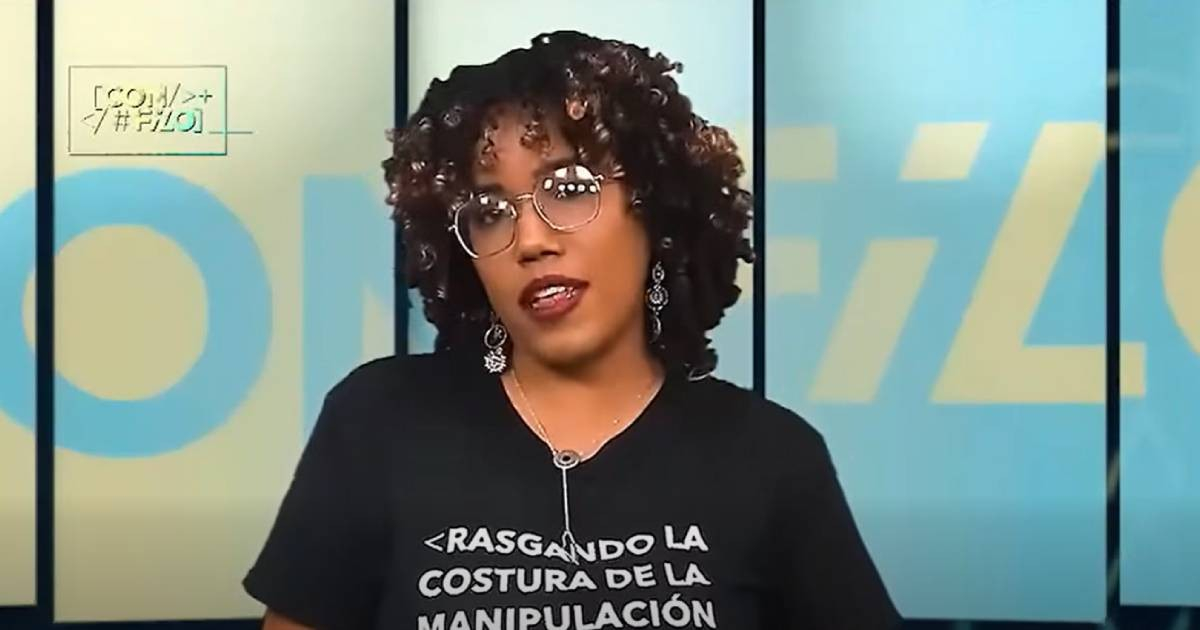
Two exiled Cubans raised concerns on Wednesday with the Universidad Autónoma de San Luis Potosí (UASLP) regarding the acceptance of Gabriela Fernández Álvarez, a writer and host of the pro-government program "Con Filo," into their Master's program in Human Rights for the 2026-2028 cohort.
The actions were taken separately. Cuban journalist José Luis Tan Estrada, currently residing in Mexico, reached out via Facebook to the Master's program, while activist Avana De La Torre, based in Madrid, sent a letter to UASLP's rector, Alejandro Javier Zermeño Guerra.
Both individuals questioned whether Fernández's role on "Con Filo" aligns with the values of a program dedicated to human rights.
“I write as a Cuban citizen, independent journalist, and political exile, but also as someone who has been publicly targeted by the official program Con Filo, where Gabriela Fernández Álvarez serves as host and scriptwriter,” Tan Estrada expressed.
He posed a direct question to the university:
“How does the human rights discourse taught at UASLP reconcile with public participation in a program that has ridiculed and criminalized individuals for exercising rights such as freedom of expression, protest, and political dissent?”
Tan Estrada clarified that he is not advocating to deny Fernández her right to education, but he urged the university to also consider the voices of those who claim to have been targeted by the program.
“When discussing human rights in those classrooms, let those who were targeted for defending them be heard as well,” he emphasized.
Activist Raises Concerns Over Media Practices
Avana De La Torre, associated with La Gran Familia Opositora – Sociedad Civil Cubana, formally addressed the rectorate, questioning Fernández's history on state television.
The activist described "Con Filo's" tactics as “media terrorism,” using state communication channels to “intimidate, harass, stigmatize, and publicly tarnish the reputation of dissenters.”
Her letter referenced an academic investigation into the program's content and mentioned a broadcast from October 13, 2021, partially scripted by Fernández, which allegedly linked an activist to terrorists and the U.S. government without evidence.
De La Torre also pointed out Fernández's public stances on Cuban political prisoners and asked if her professional background was considered during her admission process.
Public Reaction and Criticism
Fernández's admission to the Human Rights Master’s program was announced this week. She is listed 14th among 30 admitted candidates for the 2026-2028 class, following the program's announcement on July 2. Her acceptance has sparked criticism among journalists, activists, and Cuban exiles.
Cuban Senia Vidal criticized on Facebook, noting that “the same person who defended the Cuban regime's discourse on official television and discredited those denouncing repression now enjoys freedoms in Mexico that millions of Cubans do not.”
Vidal sarcastically suggested Fernández’s history could serve “as an example of what NOT to do regarding human rights.”
Journalist and academic José Raúl Gallego also reacted, highlighting Fernández's involvement in content targeting opponents, activists, and independent journalists on "Con Filo."
He contrasted this with the academic environment she now joins in Mexico, where she will interact with students and professors who exercise freedoms of expression, question governments, and engage in public protests.
“For Gabriela, all those people, if they were Cuban, should be imprisoned,” Gallego stated, sharing a recent segment of the program where Fernández discusses cases of dissenters.
“Con Filo” began airing in August 2021, following the anti-government protests of July 11 that year. Since its inception, it has faced accusations from opponents, activists, and independent media for campaigns against critics of the Cuban government.
This is not the first time Fernández’s presence outside Cuba has sparked protests. In May 2025, the Sede Universitaria Ciudad de Alicante in Spain canceled a scheduled talk with the host after complaints from Cuban exiles.
Tan Estrada concluded his message by contrasting academic study of human rights with the lived experiences of those who have fled Cuba for political reasons:
“For some, human rights may be a university subject. For those of us who left our country to exercise them, they are our life.”
Key Concerns About "Con Filo" Host's University Admission
Why are exiled Cubans questioning Gabriela Fernández's admission to UASLP?
Exiled Cubans are challenging her admission due to her role in "Con Filo," a program accused of targeting and ridiculing dissenters, which they argue is incompatible with the values of a Human Rights program.
What specific actions have the exiles taken to express their concerns?
José Luis Tan Estrada sent a message via Facebook to the Master's program, while Avana De La Torre sent a formal letter to the rector, questioning the alignment of Fernández’s public role with human rights education.
How has Gabriela Fernández's admission been received by others?
Her admission has faced criticism from journalists, activists, and Cuban exiles who see a contradiction between her past actions and the principles of the academic program she joins.