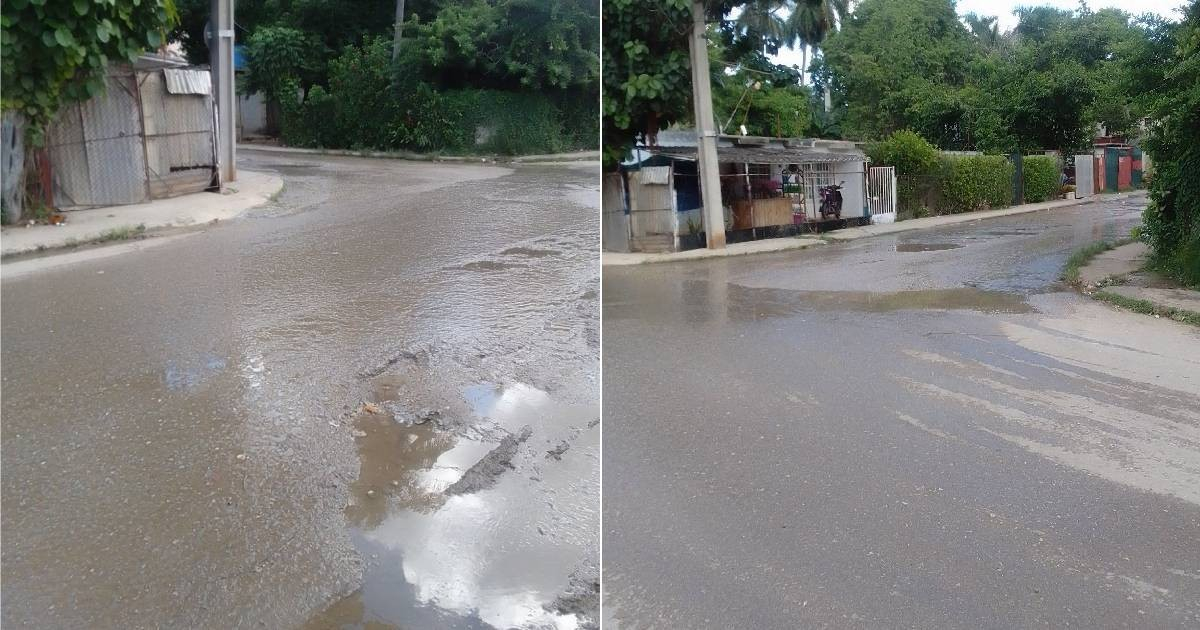
A resident from the San Agustín neighborhood in La Lisa, a municipality in Havana, took to Facebook on Wednesday to express her frustration over streets that resemble rivers due to ongoing leaks in the water supply system, while homes have been left without water since September 29.
Elizabeth González Aznar shared pictures showing completely flooded streets and addressed her complaint to the National Institute of Hydraulic Resources with a direct message: “To the INRH, look, these are rivers... This is how several streets of San Agustín Lisa look, while many homes have been without water since September 29, and we still can't get water in our homes.”
What outraged González Aznar the most was the response from an INRH official who visited her home. He claimed that the leaks were not the reason water wasn't reaching households.
“You need to have a cold heart not to react while watching a basic human right being wasted that this people doesn’t have. And even colder when an INRH official tells you to your face that the leaks are not the cause of water not reaching your home,” she lamented.
The Cuban resident admitted she lacked the technical expertise to challenge the argument but found it unacceptable coming from someone who should safeguard this resource: “I am not a hydraulic engineer to dispute, but even if it's true, it’s inhumane and painful to see so much water wasted when thousands of people don’t have it.”
Urgent Call for Action
Her message was also a direct appeal to the authorities: “Cuban leaders, it is not the people who need to understand, it’s you. Problems arise, breakdowns happen, but with them come solutions.”
This is not the first time González Aznar has raised this issue. In January 2026, she reported that San Agustín had been without water for 22 days, with water trucks arriving only every ten days when residents complained. In September, she again pointed out leaks that had been unrepaired for over two years at several intersections in the neighborhood, including the streets of 240 and 39, and in front of two local schools.
The water outage that began on September 29 was due to the interruption of the Ariguanabo source for electrical maintenance. Aguas de La Habana promised a gradual restoration that has not materialized for thousands of residents.
On Wednesday, Yosvani Rubí Bazail, the general director of Aguas de La Habana, acknowledged the water deficit throughout the capital's municipalities and stated that recovery would be gradual. Official figures indicate that over 282,000 people remain affected in Havana, although the peak figure reached 577,000.
Infrastructure Challenges and Future Plans
The deteriorating infrastructure partially explains the paradox highlighted by González Aznar: losses due to leaks exceed 40% of the pumped volume before it reaches homes, and some main pipelines have not undergone comprehensive rehabilitation in 60 to 70 years. Nationally, around 2.7 million Cubans experience complete or partial service interruptions.
The proposed structural solution — installing 200 megawatts of photovoltaic solar energy to make water pumping independent from the electrical grid — is not expected until the early months of 2027.
“Even if I understand everything they explain, that doesn’t give me the ability to live without water, because it’s a basic need. Therefore, it’s not about coming and giving explanations, we know those by heart, it’s about coming and providing solutions, ideas on how we are going to live. That is what the people expect,” González Aznar concluded.
Frequently Asked Questions about Water Crisis in Havana
What is causing the water shortage in San Agustín?
The water shortage in San Agustín is primarily caused by ongoing leaks in the hydraulic system and the interruption of the Ariguanabo source for maintenance, which has not yet been resolved for many residents.
How are the authorities addressing the water crisis in Havana?
Authorities have acknowledged the deficit and promised a gradual recovery. Additionally, a structural solution involving the installation of photovoltaic solar energy for water pumping is planned for implementation by 2027.
What has been the community's response to the water shortage?
The community has expressed frustration and demanded action. Residents like Elizabeth González Aznar have used social media to voice their concerns and appeal directly to authorities for solutions.