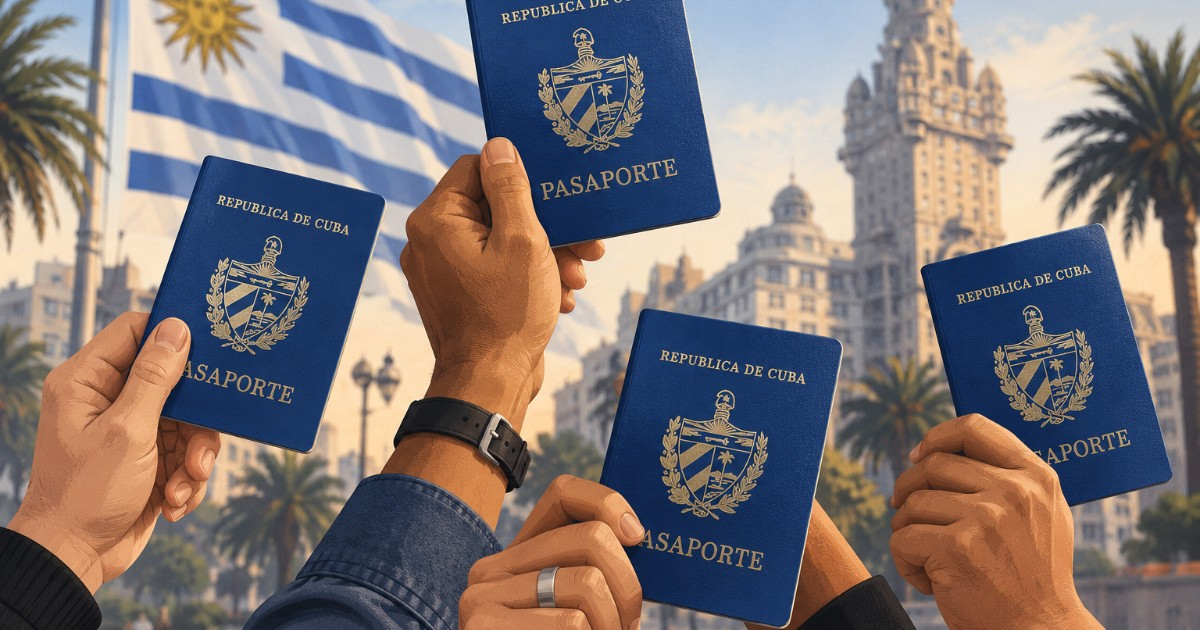
Amid a significant backlog, Uruguay currently faces nearly 30,000 pending refugee applications from Cubans. However, only a mere 52 individuals from the island have been officially granted refugee status, sparking criticism over the effectiveness of the system and the political will to address these cases.
This information was highlighted by El País of Uruguay, which reported a dramatic increase in applications from Cubans in recent years, contrasting sharply with the minimal number of recognized refugees.
Approvals have been sporadic over the past decade. For instance, only two Cubans were acknowledged as refugees in 2025, six in 2024, seven in 2023, and the highest number was in 2019, with 13 approvals.
Meanwhile, the influx persists. Approximately 30 Cubans cross the border at Rivera each month seeking asylum, contributing to the growing backlog of applications.
Underlying Causes of the Delays
Uruguay's Deputy Foreign Minister, Valeria Csukasi, attributes the delays to a structural mismatch between the volume of applications and the Refugee Commission's (CORE) capacity to process them. She emphasized this point in a statement to BBC Mundo, explaining the institutional limitations.
However, others suggest a lack of political will is to blame. Leydis Aguilera, a deputy from the National Party with Cuban roots, criticized the leftist governments for not recognizing the issue as a human rights concern.
The Political and Humanitarian Dimensions
Aguilera pointed out that many Cubans, who endure waiting periods exceeding three years, find themselves in precarious situations, denied housing, loans, and essential services for their children. She described these individuals as "political, economic, humanitarian exiles" who often sell their possessions and traverse multiple countries to reach Uruguay.
The complexity is further compounded by CORE's structure, which includes representatives from various Uruguayan ministries and non-governmental organizations. Some members fear acknowledging political persecution or human rights violations in Cuba could strain Uruguay's political stance towards the island.
Moreover, the law in Uruguay recognizes refugees as those with well-founded fears of persecution based on race, religion, nationality, social group, gender, or political opinion, as well as those fleeing threats from widespread violence or human rights abuses.
Comparative Treatment with Venezuelan Applicants
The disparity in the treatment of Cuban applicants becomes evident when compared to Venezuelans. Uruguay housed 3,244 refugees by the end of 2025, with 2,543 being Venezuelans. The previous government had established an expedited process for Venezuelans, waiving certain requirements, which led to a significant number of approvals.
In contrast, Cubans face additional hurdles, including the necessity of an entry visa to Uruguay. Consequently, many have remained in the country for years, waiting for their immigration status to be resolved.
In 2024, President Luis Lacalle Pou initiated a residency program for about 20,000 foreigners already in Uruguay, but the program concluded in 2025, leaving many unresolved cases.
This backlog of nearly 30,000 applications coincides with a shift in Cuban migration routes. As crossings through the Darién Gap decrease, South American countries, including Uruguay, are becoming more attractive destinations for Cubans seeking stability or legal status.
Understanding Uruguay's Refugee Policies
Why are so few Cubans recognized as refugees in Uruguay?
The low recognition rate is due to a combination of structural limitations within the Refugee Commission and an alleged lack of political will to address human rights issues related to Cuban applicants.
What challenges do Cuban asylum seekers face in Uruguay?
Cuban asylum seekers often encounter long waiting periods, limited access to housing, loans, and essential services, and the necessity of an entry visa to Uruguay, which complicates their legal standing.
How does Uruguay's immigration policy differ for Venezuelans and Cubans?
Venezuelans benefit from an expedited process that waives certain requirements, resulting in higher approval rates. Cubans, however, face a more stringent process requiring entry visas and longer waits.