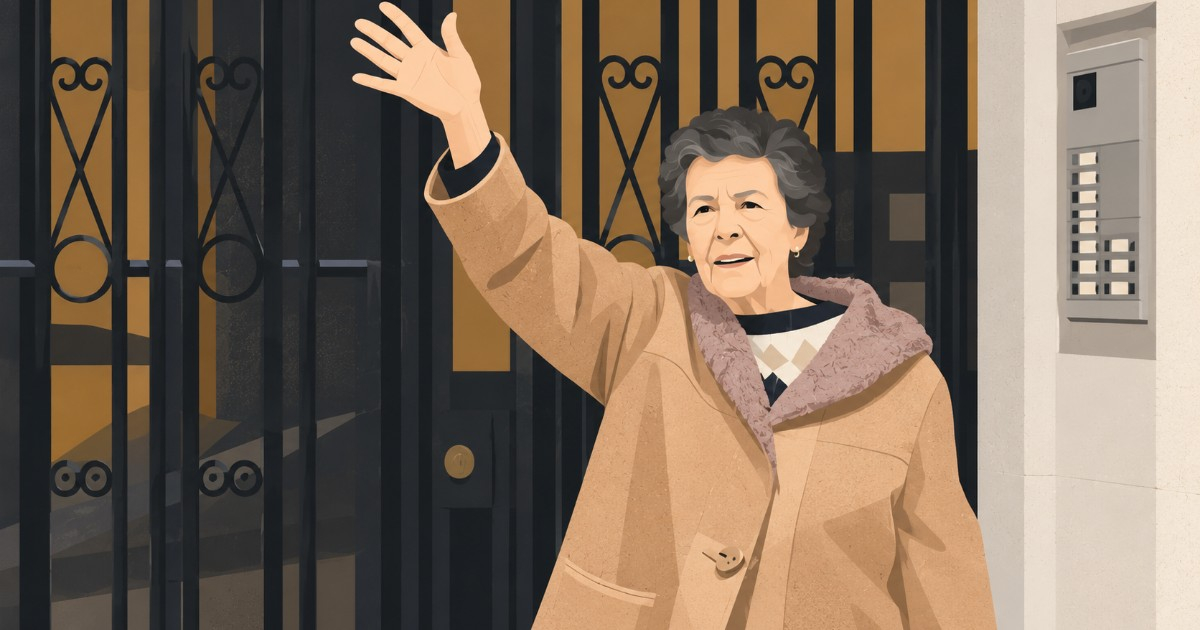
At 87, María del Carmen Abascal Martín, affectionately known as Maricarmen, passed away in Madrid this Wednesday, just two weeks following her eviction from the Retiro neighborhood home she had resided in for around 70 years.
Since September 23, Maricarmen had been admitted at the Gregorio Marañón Hospital, the same day she was forced to leave her home. Her passing was reported by the Madrid Tenants' Union, the organization supporting her fight to remain in her residence.
No specific medical reason for her death has been disclosed, leaving the connection between her eviction and passing uncertain. What is known is she was taken to a medical facility on the day of her eviction and had been hospitalized since.
Hours before her death was announced, the Tenants' Union representatives indicated her health was fragile, with ongoing medical evaluations being conducted.
The Agreement That Came Too Late
Maricarmen's death came after an agreement was finally reached between her representatives, the property owners, and the Madrid City Council, which would have allowed her to return home post-hospital discharge.
This agreement was finalized while Maricarmen remained in the hospital, and she never got the chance to return to the place where she spent nearly her entire life.
The Tenants' Union expressed their sorrow and emphasized Maricarmen's legacy, which recently became a significant symbol in the protests for housing rights in Spain. "We will continue fighting for you and for all, as you always wished," the organization declared following her death, as reported by several Spanish media outlets.
A Lifetime in Retiro
Since 1956, Maricarmen had lived in an apartment on Alcalde Sainz de Baranda Street in Madrid's Retiro district. Her father had originally signed a long-standing rental agreement, and the family stayed in that home for decades.
After a lengthy legal battle over the contract's continuation, the real estate company Urbagestión Desarrollo e Inversión successfully obtained a ruling to reclaim the property.
Maricarmen had been paying an old rent of approximately 500 euros monthly, while the property owners proposed a new rent of about 1,650 euros, exceeding her pension.
The legal struggle went through various judicial levels, with several eviction attempts before the judicial commission ultimately carried out the eviction on September 23.
On that day, Maricarmen was taken out on a stretcher by medical services, surrounded by dozens of people gathered nearby to try to prevent the eviction.
A National Outcry Against Evictions
The footage of Maricarmen's eviction sparked widespread social outrage, reigniting the housing crisis debate in Spain.
Thousands participated in demonstrations and rallies, and shortly thereafter, a camp was set up in Madrid's Puerta del Sol to demand action against evictions and high rental prices.
Maricarmen's situation quickly transcended her personal ordeal, becoming a rallying cry for tenant organizations and social groups advocating for more protections for vulnerable individuals.
Earlier reports from CiberCuba highlighted how her eviction became a major catalyst in the renewed discussion on Spain's rental laws.
Spain's Revised Housing Policies
The vast impact of Maricarmen's case coincided with an intensified political focus on housing. The government under Pedro Sánchez initiated new decrees aimed at strengthening tenant protections, regulating certain rents, and enhancing safeguards for those in vulnerable situations.
An initial attempt to pass these measures was blocked in Congress amid the ongoing protests across the country. However, with the announcement of early general elections on November 29 and the dissolution of Parliament, the government enacted two royal decrees on housing.
Published in the Official State Gazette this Wednesday, these new rules must now pass through the Congress's Permanent Deputation.
Among the new provisions are updated regulations for specific rental contracts, extraordinary lease extensions, caps on some rent increases, and enhanced protections for certain tenants.
Unfortunately, Maricarmen will not benefit from these initiatives. Her passing, occurring just as an agreement was reached for her return home, concludes a personal story that, in a matter of weeks, became one of the most prominent cases illustrating Spain's housing crisis.
Understanding Spain's Housing Crisis and Maricarmen's Legacy
What led to Maricarmen's eviction?
Maricarmen's eviction resulted from a legal dispute over an old rental contract, where the property owners successfully claimed the right to reclaim the home she had lived in for decades.
How did Maricarmen's case impact housing policies in Spain?
Her case brought significant attention to Spain's housing challenges, prompting the government to introduce new decrees aimed at enhancing tenant protections and regulating rental agreements.
What measures has Spain introduced to protect tenants?
Recent measures include new guidelines for rental contracts, limits on rent increases, extraordinary lease extensions, and better protections for vulnerable tenants.