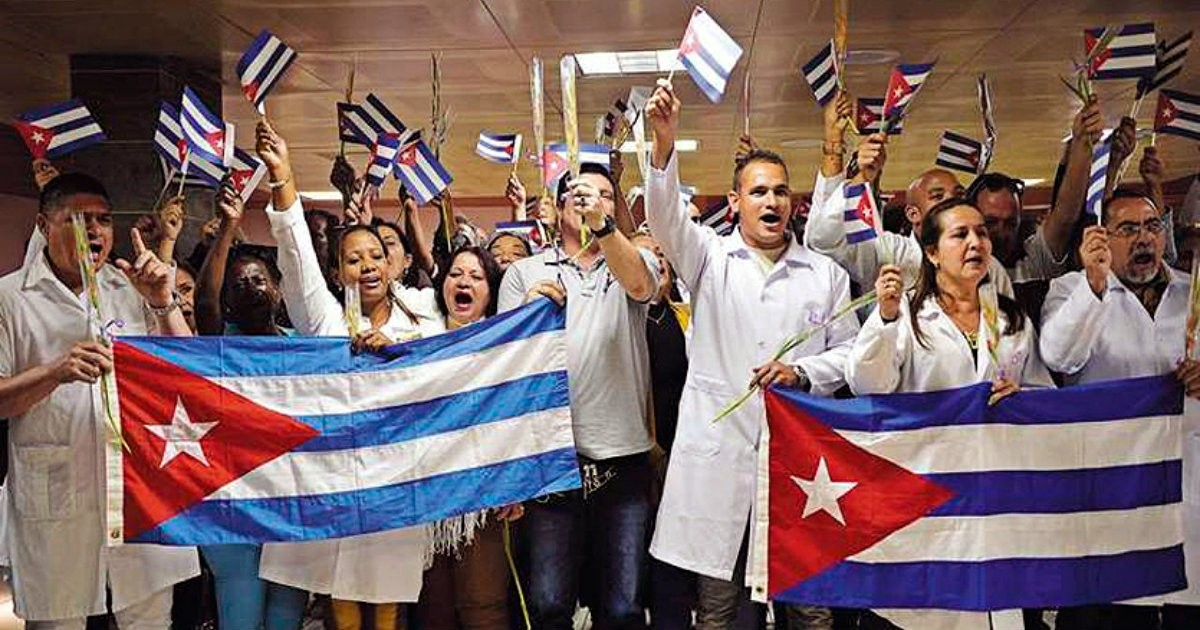
On Wednesday, the Uruguayan government finalized a new payment system for Cuban healthcare professionals working at Montevideo's José Martí Eye Hospital. Now, funds are sent directly to each doctor and technician in the brigade, rather than to the Cuban government, as confirmed by the hospital's director, Alejandro Fischel, to the national outlet Subrayado.
Fischel described the brigade as comprising 10 doctors and 20 technicians, including nurses, a cook, and a driver. He emphasized that this change has not altered the daily operations: "The medical brigade's work remains unchanged; everything continues as before."
Impact of U.S. Pressure on Payment Changes
This shift was driven by pressure from the United States, which included Uruguay for the first time in its annual report to Congress on forced labor in Cuban medical missions at the end of August. Washington identified 15 countries that pay the Cuban state directly for these services, noting 21 Cuban professionals linked to the program in Uruguay as of 2026.
The U.S. Embassy in Montevideo had previously cautioned that "payments are directed to the Cuban embassy, and there is no evidence that the doctors themselves receive payment for their work serving the Uruguayan people."
New Payment Structure for Cuban Doctors
Foreign Minister Mario Lubetkin confirmed the new arrangement in an interview with El Observador, stating, "The substantial change now is that instead of paying the country, we provide social protection and stipends directly to the professionals." Lubetkin also mentioned that Cuban doctors will have individual accounts at Uruguay's Banco de Previsión Social (BPS).
The Uruguayan diplomat highlighted that the agreement was negotiated with both the U.S. and Cuban authorities: "We talked with both U.S. and Cuban officials and achieved our goal: to keep the 20 Cuban doctors performing eye surgeries in our country."
Historical Context of the Medical Program
The previous agreement, signed in 2011 between the Ministry of Public Health, the Administration of State Health Services (ASSE), and BPS, allocated up to $250,000 annually for stipends, travel, and transfers, deposited into a brigade account. Jimena Pardo, president of BPS, clarified in September that these funds were not salaries—managed by the Cuban government—but rather "expense reimbursements."
The program, part of the so-called Operation Miracle, has been active in Uruguay since 2007. Up until August 2026, it has facilitated over 956,000 consultations, 222,000 screenings, and 122,000 surgeries, involving more than 160 Cuban doctors across seven brigades.
U.S. Policy and Sanctions
Washington's scrutiny of such agreements is part of a broader policy. In July 2026, the U.S. sanctioned Cuban Minister of Public Health José Ángel Portal Miranda and the Central Unit of Medical Cooperation (UCCM), accusing the regime of withholding 50% to 95% of salaries paid by host countries for their overseas professionals' services.
Lubetkin acknowledged that Uruguay cannot control what the doctors do with their earnings afterward, including the possibility of transferring funds to the Cuban government. According to U.S. law, if a country appears in these reports for two consecutive years, the Secretary of State is restricted from providing certain international assistance, meaning Uruguay would need to be listed again in the 2027 report for this measure to take effect.
FAQs on Uruguay's Payment System for Cuban Doctors
Why did Uruguay change the payment method for Cuban doctors?
Uruguay altered the payment method due to pressure from the United States, which highlighted concerns about forced labor in Cuban medical missions.
What impact does the payment change have on the medical brigade's operations?
According to hospital director Alejandro Fischel, the payment change has not affected the daily operations of the medical brigade.
What is the role of the U.S. in this new payment structure?
The U.S. played a significant role by pressuring Uruguay to ensure Cuban doctors are paid directly, avoiding payments to the Cuban state.