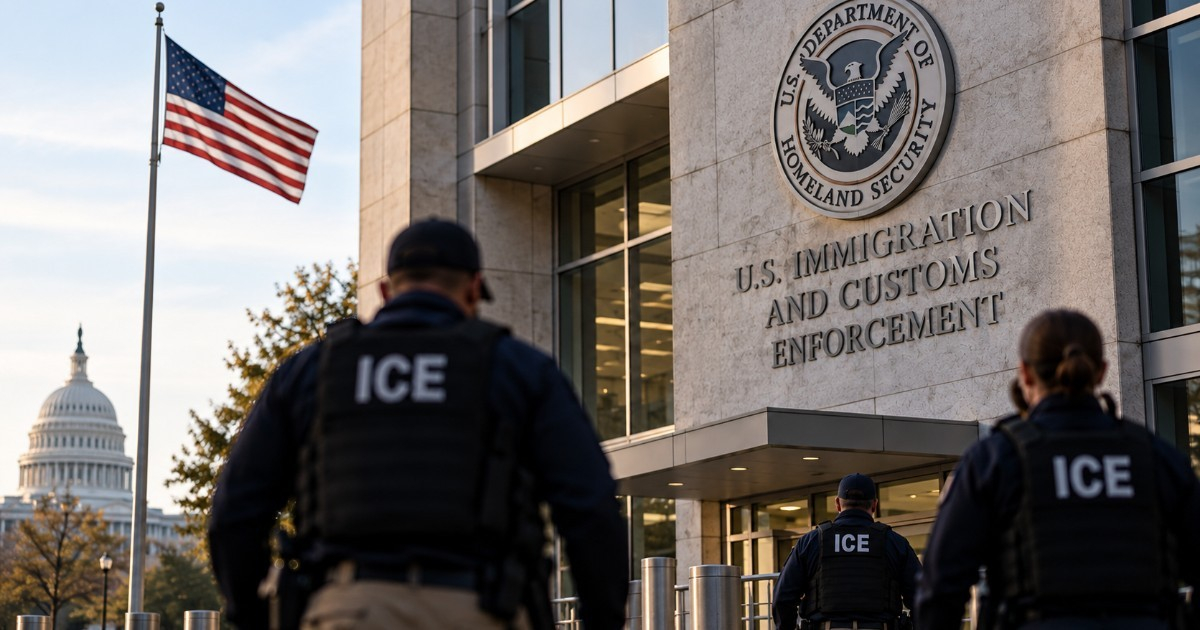
In an unprecedented surveillance operation, the investigative branch of U.S. Immigration and Customs Enforcement (ICE) scrutinized over 99 million voting records. This revelation comes from 166 pages of internal documents released by Democracy Forward, obtained through a Freedom of Information Act lawsuit.
Massive Data Analysis Initiative
Homeland Security Investigations (HSI), a division within ICE, internally described this effort as a "phased national initiative." It involved acquiring voter rolls, conducting extensive data analysis, and engaging in field operations across multiple states.
According to an internal report dated June 1, HSI processed 50.6 million records from a Department of Justice database, alongside an additional 48.4 million records gathered by Heather Honey, a senior advisor to Homeland Security Secretary Markwayne Mullin, from "independent sources" not specified in the documents.
Focus on Fraudulent Voting
This ICE operation is part of a constantly evolving immigration landscape. For ongoing updates on agencies, raids, and policies, visit our U.S. Immigration section.
The data scrutinized likely included public voter lists from California, New Jersey, Pennsylvania, and Nevada, analyzed by the Department of Homeland Security. To handle the voter lists, ICE utilized the ELITE tool from Palantir, originally designed to locate foreign nationals subject to deportation.
Network-Based Investigative Approach
Instead of simply tracking individual voters, investigators employed a "network-based investigative approach," focusing on examining organizations and facilitators rather than isolated cases.
The majority of the documents detail how HSI and other DHS components concentrated efforts on uncovering electoral fraud in New Jersey, Michigan, Pennsylvania, Minnesota, and Ohio, with intentions to prosecute any findings.
Dozens of nonprofit groups were reviewed, though many investigations did not yield evidence of wrongdoing. The documents also reveal that HSI considered deploying undercover agents to infiltrate organizations suspected of facilitating illegal non-citizen voter registrations, particularly in New Jersey and Pennsylvania.
Controversy and Criticism
A DHS spokesperson defended the operation, stating, "The DHS has been incredibly transparent about acquiring and analyzing publicly accessible voter files. DHS and DOJ are fully committed to prosecuting and deporting non-citizens who vote."
In contrast, Skye Perryman, president of Democracy Forward, criticized the effort: "It seems the president and his allies want to choose their voters, rather than having voters choose their leaders as it should work in a democracy."
In July, Mullin announced that his department had identified approximately 250,000 non-citizens registered to vote in California, New Jersey, Pennsylvania, and Nevada alone—claims repeatedly challenged by officials from those states, as reported by CNN.
Legal Implications and Recent Cases
An internal ICE legal guide from December 2025 stated that illegal voting could lead to deportation even without a criminal conviction. The document clarified, "There is no requirement for the alien to have known they voted illegally, nor is a conviction required."
This operation unfolds amidst a surge in prosecutions ahead of the November 2026 midterm elections. Recent cases with Cuban connections include the arrest of Andrés García, a 64-year-old permanent resident in Kansas City accused of participating in at least 15 elections over 20 years, and Pedro Pablo Ruiz, a 68-year-old Cuban permanent resident in Louisiana charged with allegedly voting without being a U.S. citizen in the 2024 general elections.
Key Questions About ICE's Voter Investigation
What tools did ICE use for voter record analysis?
ICE used the ELITE tool from Palantir, designed for locating foreign nationals subject to deportation, to analyze voter records.
Which states were primarily targeted in the investigation?
The investigation focused on electoral fraud in New Jersey, Michigan, Pennsylvania, Minnesota, and Ohio.
How did Democracy Forward obtain the internal ICE documents?
Democracy Forward acquired the documents through a lawsuit under the Freedom of Information Act.