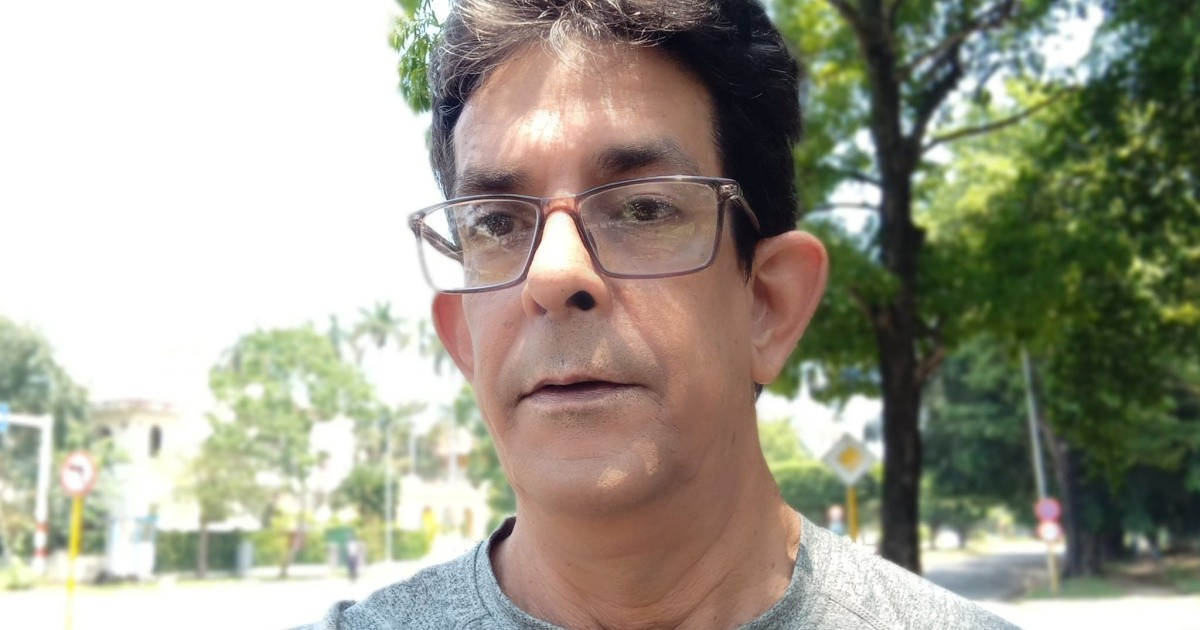
In a candid conversation on the podcast "Todos Hablan," hosted by Cubamastv, Ulises Toirac engaged with actor Jorge Martínez, delivering some of his most impactful statements on the harsh realities facing Cuba. His firm stance against accepting a life of scarcity and his personal philosophy of resilience were laid bare as he described Cuba as a "sixth world" country.
When Martínez inquired about what keeps his spirits up, Toirac listed the everyday struggles of living in Cuba with a powerful clarity:
"I refuse to get used to being without power for 20 hours a day. I refuse to normalize scarcity. I refuse to rely on makeshift transportation like riquimbilis. I refuse to walk just to save money. I refuse to accept living in a sixth world country."
The comedian explained that his determination doesn't stem from desperation but from a deliberate choice: "I refuse to get used to this because when I finally have the chance to live in a normal country, I don't want to have to adapt again."
Rejecting a Life of Negativity
This sentiment is encapsulated in a mantra he has reiterated in various forums: "I refuse to merely survive. That's why I reject a life that's just a collection of negative experiences."
The Decline of Cuban Television
The creator of "¿Jura decir la verdad?" was frank about the current state of Cuban television: "Talking about television in Cuba today is pointless because there’s no power to watch it, no power to produce it, and no conditions to create it."
Faced with these limitations, Toirac turned to writing. His second book, "Locos de barrio. Segundo round," was entirely written on his mobile phone due to the lack of a computer and frequent blackouts. The book is available on Amazon.
Facing Health Challenges
Toirac disclosed a significant health challenge, describing his struggle with macular degeneration, a condition that affects the retina's center and has already damaged the central vision in one eye.
"I live with the constant threat of becoming partially blind or, as I put it, 'occupationally blind,' because it would prevent me from reading and writing," he confessed.
The treatment involves intraocular injections to halt the disease's progression, though it cannot cure it. In response, he explored mobile dictation tools to continue his work.
Freedom and Self-Censorship
Reflecting on his years under Cuban television's pressure, Toirac was forthright: "In an environment of fear, self-censorship is inevitable because you worry about your work."
He also pondered intellectual freedom: "When you stop thinking for yourself and borrow others' opinions, you're simply becoming part of the herd." He added, "Freedom begins in the mind, and it's the hardest to achieve."
He was equally firm on the danger of silence: "The most dangerous thing, first for one's mental peace and second for existence itself, is remaining silent because it will ultimately harm you."
The Demographic Disaster of Cuban Emigration
Toirac described post-1959 Cuban emigration as "the worst demographic disaster in Cuba's history," highlighting the irreversible family separations it causes: parents and children who never reunite, siblings who keep old resentments alive.
These statements come amid a year of sustained criticism of the regime. In July, he vividly described the power crisis with an image that went viral: "it's not a light at the end of the tunnel; there is no tunnel." On Tuesday, he posted on social media, "Want less dissent? Invest in electricity, water, and gas."
Understanding Ulises Toirac's Perspective on Cuban Issues
Why does Ulises Toirac refuse to accept the current conditions in Cuba?
Ulises Toirac refuses to accept the current conditions because he believes that normalizing scarcity and hardships only perpetuates a cycle of negativity. He wants to maintain hope for a better future where he can live in a "normal" country.
What challenges does Toirac face with his health?
Toirac is battling macular degeneration, which threatens to impair his vision further. He is undergoing treatment with intraocular injections but is also exploring technology solutions to continue his work despite potential vision loss.
How does Toirac view the state of Cuban television?
Toirac sees Cuban television as virtually non-existent due to the lack of electricity and resources to produce and broadcast content. This has pushed him towards alternative creative outlets like writing.