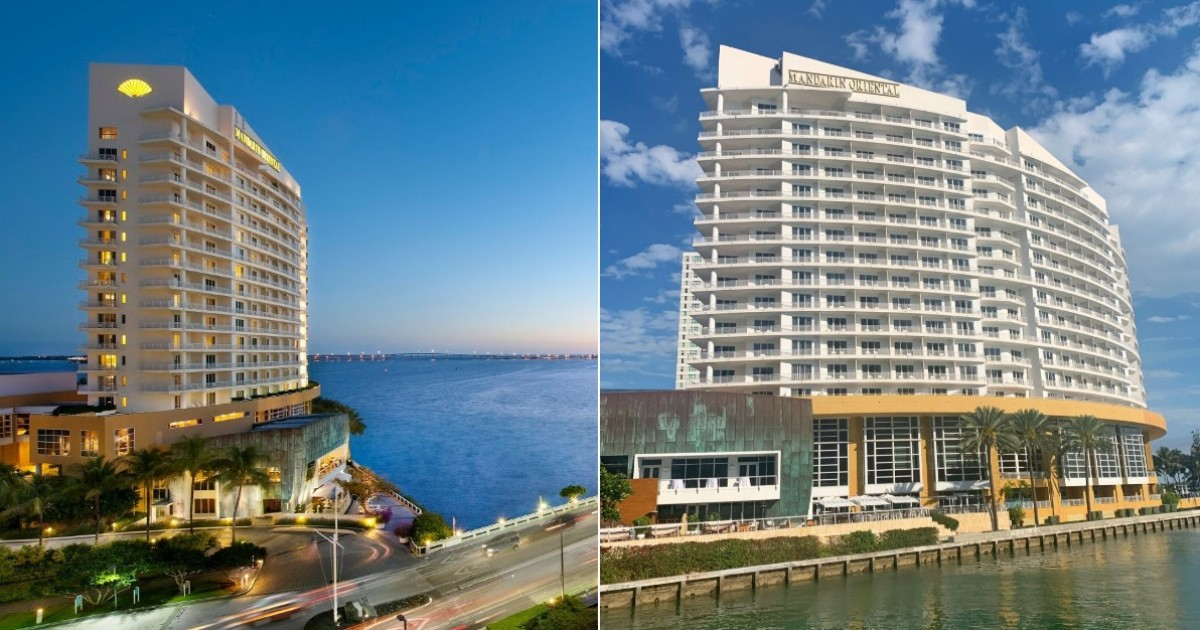
This week, Swire Properties, a global firm specializing in real estate development, investment, and management, officially commenced construction on The Residences at Mandarin Oriental, Miami, located at Brickell Key.
This significant milestone comes after the project amassed $1.7 billion in condominium sales without laying a single brick, as confirmed by David Martin, president of the development company, in an interview with Bloomberg.
The new complex will rise on the site of the former Mandarin Oriental hotel in Miami, which was brought down by a controlled implosion on April 12. The 23-story building fell in under 20 seconds, marking what authorities called the largest implosion in Miami in over a decade.
The pre-sale numbers are remarkable, even for the ultra-luxury market. Among the closed deals are two record-setting penthouses, each priced around $50 million. The 66-story south tower, featuring 228 residences, has already sold 80% of its units, while the 33-story north tower, which will also house a 121-room hotel, has 25% of its residential units committed.
Since sales for the south tower began in 2024, prices have increased by 30%, with units ranging from $4.9 million to $100 million.
The profile of the buyers is unusual for Miami. Approximately 65% are Americans, a higher percentage than typically seen in the city's ultra-luxury segment, which usually relies more heavily on international clients. Many buyers hail from California, New York, and Massachusetts, often working in the finance and tech industries, with many paying in cash. About 30% plan to use the condo as their primary residence, while 60% intend it to be a secondary home.
"Miami's economy has evolved at the high end almost beyond recognition," Martin stated. "People are just starting to grasp what that means."
Swire is funding the construction internally with proceeds from the sale of assets at Brickell City Centre and a portion of the buyer deposits. The development is slated for completion by 2030.
Martin also noted two major office projects in Brickell as drivers of demand: the Banco Santander tower at 1401 Brickell Avenue and the future headquarters of Citadel, Ken Griffin's hedge fund, located just a few blocks south, both approximately 50 stories high.
The commencement of construction stands in stark contrast to the reality of the real estate market for the majority of Miami-Dade residents. By 2026, the metropolitan area surpassed New York in overall cost of living, with consumer prices rising 37% since 2019 and average homeowners insurance costing $8,292 annually. The average individual income in Miami-Dade is approximately $39,000 per year.
In the condominium market, the disparity is equally apparent: luxury sales over five million dollars increased by nearly 30% year-over-year in coastal areas during the second quarter of 2026, while resale inventory surged by 119.2%, and the value of new construction in Miami-Dade fell from $8.6 billion in 2025 to $5.1 billion.
Swire has had a presence in Miami for over 40 years, having acquired land on what was then known as Claughton Island—later renamed Brickell Key—in 1978, and opening the five-star, 326-room Mandarin Oriental in 2000.
The hotel closed on May 31, 2025, laying off 430 employees before being demolished to make way for this new project.
"We're competing with single-family homes in the eight to ten million dollar range," Martin noted. "That speaks volumes about how people are living."
Understanding the Impact of Miami's Real Estate Development
What is the significance of the new Mandarin Oriental project in Miami?
The construction of The Residences at Mandarin Oriental, Miami, signifies a major development in the luxury real estate market, showcasing the city’s evolving economic landscape and increased demand for high-end living spaces.
How has the profile of luxury real estate buyers in Miami changed?
The profile has shifted towards a higher percentage of American buyers, particularly from states like California, New York, and Massachusetts, marking a departure from the historically international clientele.
What economic factors are influencing Miami's real estate market?
Factors include a rising cost of living, significant increases in consumer prices, and a growing demand for luxury properties, driven by developments in key commercial areas like Brickell.