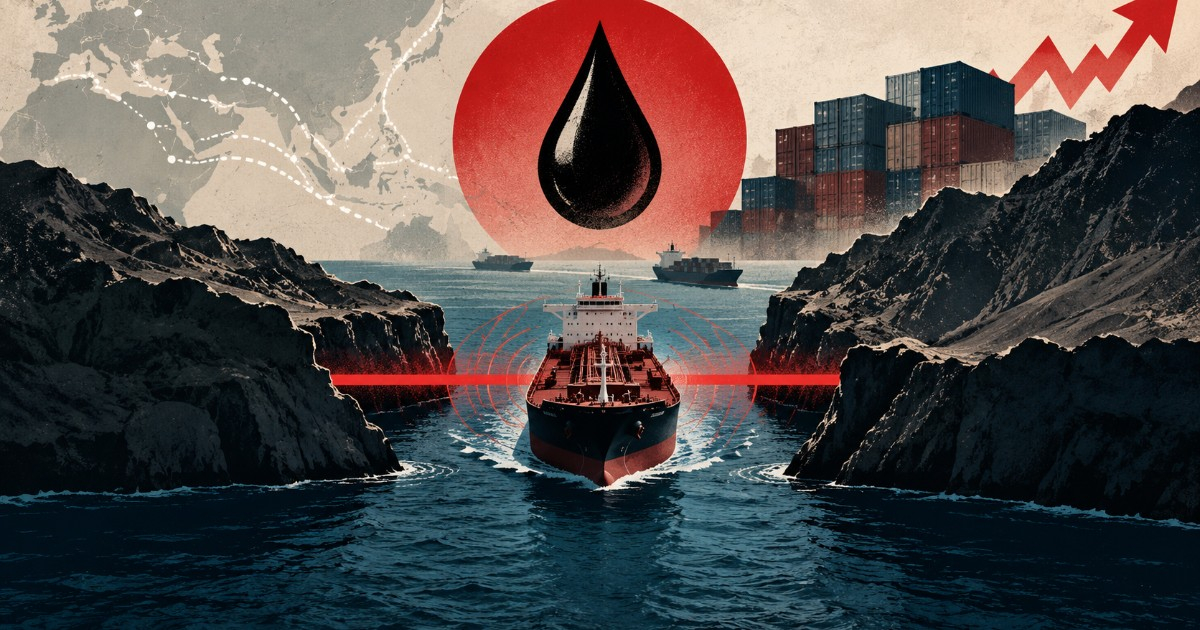
The intensifying military conflict in Yemen has once again brought global focus to a narrow yet crucial strait for the world economy: Bab el-Mandeb, the vital gateway from the Gulf of Aden to the Red Sea.
Saudi-backed Yemeni government forces are engaged in fierce battles against the Iranian-supported Houthi rebels near the strait. In retaliation, the rebels have launched missile and drone attacks targeting Saudi Arabia.
This conflict raises concerns beyond Yemen’s borders. Bab el-Mandeb is a critical maritime corridor connecting Asia and Europe through the Red Sea and the Suez Canal, transporting substantial volumes of oil, fuel, containers, and goods.
According to the Associated Press, the most intense fighting in years is currently centered around Bab el-Mandeb, with Brent crude oil prices hovering near $100 per barrel.
The Strategic Importance of Bab el-Mandeb
Located between Yemen on the Arabian Peninsula and Djibouti and Eritrea in the Horn of Africa, Bab el-Mandeb links the Gulf of Aden with the Red Sea, extending northward to the Suez Canal.
This makes it one of the world's major maritime highways for ships traveling between Asia, the Middle East, and Europe. The United Nations Conference on Trade and Development (UNCTAD) estimates that this route handles approximately 12% to 15% of global trade.
Energy Significance of the Strait
In 2026, the energy significance of Bab el-Mandeb has surged. The U.S. Energy Information Administration (EIA) reported that around 8.1 million barrels of crude oil, condensates, and petroleum products transited the strait daily in the second quarter of this year.
This volume includes about 6.1 million barrels of crude oil and condensates, with the remainder being petroleum products. This is a noteworthy increase from the 3.9 million barrels per day in early 2025, when attacks and ship diversions reduced traffic.
No Immediate Closure, But Risks Loom
Currently, Bab el-Mandeb remains open to international maritime traffic, although combat proximity, Houthi attack capabilities, and potential shipping company security concerns pose significant threats.
The U.S. Maritime Administration has issued an active alert for the Red Sea, Bab el-Mandeb, and the Gulf of Aden, warning of resumed Houthi attacks on commercial vessels and highlighting risks to ships associated with the United States, United Kingdom, Israel, or Saudi Arabia.
Houthi Attacks: A Proven Threat
Since late 2023, the Houthis have used missiles, drones, and explosive boats to target vessels crossing the Red Sea. U.S. maritime authorities have recorded over 100 separate attacks on commercial vessels between November 2023 and October 2025, affecting ships linked to more than 60 countries.
This past summer saw an escalation in attacks, with the International Maritime Organization condemning an August assault on the freighter Tihamah near Al Mokha, Yemen, which resulted in multiple crew fatalities.
Potential Diversions: The Consequences
If shipping companies opt to avoid Bab el-Mandeb, they could reroute around Africa via the Cape of Good Hope, leading to significantly longer journeys. This would increase fuel consumption, navigation times, crew wages, insurance premiums, and vessel rental costs.
UNCTAD documented that such diversions during previous Red Sea crises raised global maritime capacity demand and drove up transport rates, potentially affecting countless sea-transported products, from electronics to consumer goods.
Oil Prices: Uncertain Outcomes
The impact on oil prices depends on the duration of the escalation and whether maritime traffic can continue. As long as ships traverse Bab el-Mandeb, the main effect might be a risk premium: higher insurance, transportation, and security costs.
A prolonged closure or significant flow reduction could have more severe consequences, forcing companies to reroute shipments, alter paths, and use alternative transportation systems, potentially reducing supply in some markets and pushing prices higher.
However, an escalation in Yemen does not automatically trigger a spike in oil prices. Prices also depend on global production, reserves, demand, OPEC+ decisions, the Strait of Hormuz's status, and other geopolitical factors.
Broader Implications for Consumers
For consumers in the United States, Europe, or Latin America, a prolonged crisis might initially manifest as higher transportation costs rather than empty store shelves. Increased fuel for ships, pricier insurance policies, and longer routes elevate transport costs.
If oil prices rise, the impact could spread to gasoline, diesel, aviation, industrial production, and energy-dependent goods. For import-reliant economies like Cuba, a general increase in global transport and fuel costs might exacerbate pressure on imported food and goods.
The critical variable remains Bab el-Mandeb's operational status and how long shipping companies consider it safe. Currently, the route remains open, but the resurgence of conflict along its banks has put one of the world's key commercial chokepoints under intense scrutiny.
Understanding the Impact of Yemen's Conflict on Global Trade
How does the conflict in Yemen affect global trade?
The conflict threatens the Bab el-Mandeb strait, a crucial maritime route handling 12% of global trade, including significant oil volumes. Disruptions here could impact shipping routes, increasing costs and affecting global supply chains.
What might happen if Bab el-Mandeb is closed?
If closed, ships may reroute around Africa, leading to longer trips, increased fuel consumption, and higher transport costs, potentially driving up prices for transported goods worldwide.
Could oil prices rise due to the Yemen conflict?
Oil prices could rise if the conflict prolongs or disrupts maritime traffic, resulting in higher insurance, transport, and security costs. However, global production and geopolitical factors also influence oil prices.