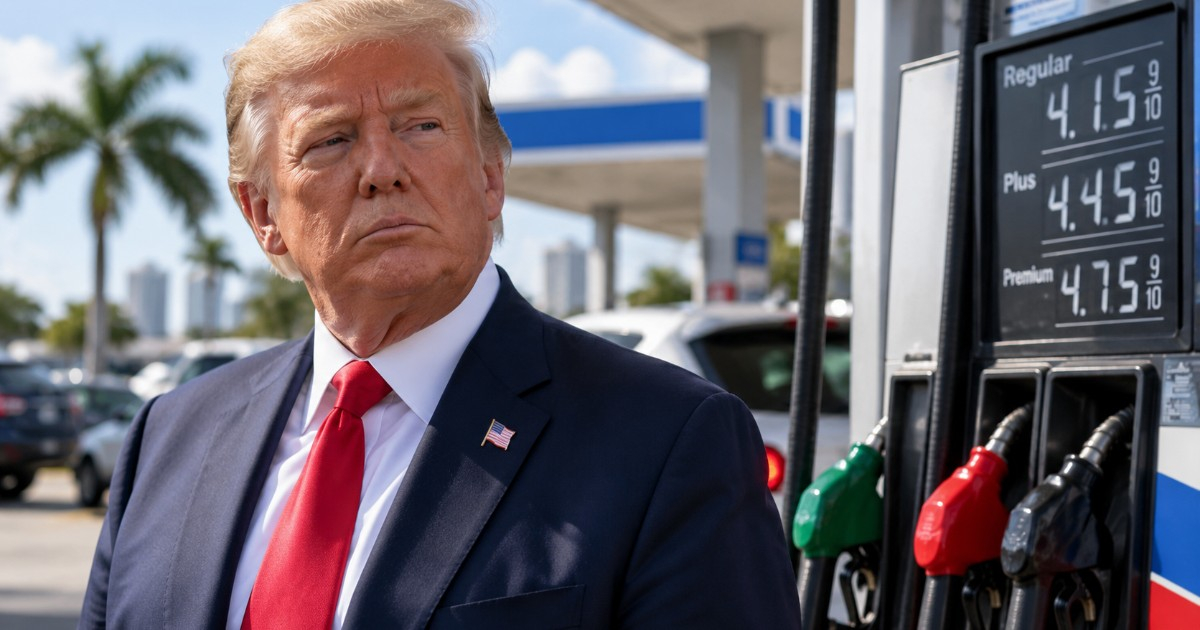
President Donald Trump has acknowledged that his administration is evaluating a possible temporary suspension of the federal gasoline tax in the United States. If approved by Congress, this move could lower the cost of fuel by up to 18.4 cents per gallon.
"We're considering it," Trump stated on Tuesday when asked by reporters about the possibility of suspending the federal gas tax.
This proposal emerges as fuel prices remain significantly higher than they were a year ago, despite a recent decline.
Current Federal Gasoline Tax Rates
According to the U.S. Energy Information Administration (EIA), the national average for regular gasoline was $4.354 per gallon during the week of October 5, a decrease of 11.1 cents from the previous week.
Currently, the federal gasoline tax stands at 18.4 cents per gallon, a rate that has been unchanged since 1997, as noted by the Federal Highway Administration. Of this, 18.3 cents is the general gasoline tax, while an additional 0.1 cents funds the federal program for addressing underground fuel tank leaks. This rate is codified in Title 26, Section 4081 of the United States Code.
Potential Savings for Drivers
If Congress were to suspend the entire 18.4 cents per gallon and this savings was fully passed on to consumers, the financial benefits would vary based on tank size and fuel purchased:
- 10 gallons: up to $1.84 savings
- 12 gallons: up to $2.21 savings
- 15 gallons: up to $2.76 savings
- 18 gallons: up to $3.31 savings
- 20 gallons: up to $3.68 savings
A driver consuming 50 gallons monthly could theoretically save about $9.20, while a 100-gallon monthly consumption could result in savings of approximately $18.40. However, these figures represent maximum potential savings. The removal of a tax does not guarantee that each cent will be immediately reflected in gas station prices, as producers, distributors, or wholesale price fluctuations might absorb part of the benefit.
Legislative Hurdles and Economic Implications
It's important to note that Trump cannot unilaterally eliminate the tax through an executive order, as it is established by federal law. Congressional legislation would be necessary to temporarily amend this fiscal obligation.
Trump had previously suggested reducing or suspending this tax during a period of high prices. He reiterated on Tuesday that his administration is examining this option, although he has not specified how long such a suspension might last or which legislative proposals he would support.
Purpose and Impact of the Gasoline Tax
The revenue from the federal gasoline tax primarily funds the Highway Trust Fund, which is vital for financing roads, bridges, public transportation systems, and other infrastructure projects. Taxes on gasoline, diesel, tires, and certain heavy vehicles constitute the main funding sources for this federal fund.
A potential suspension would pose the challenge of how to replace the lost infrastructure funding. Congress might temporarily use alternative resources, as some states have done with their own fuel taxes.
Distinction from Diesel Tax Measures
The proposal to suspend the gasoline tax is distinct from another measure Trump enacted earlier this week. On October 5, he signed an emergency executive order related to diesel prices, allowing increased use of "red diesel" for road travel, which is typically designated for agricultural and off-road work and taxed differently.
Trump directed the Treasury Department to assess the legal feasibility of deferring certain obligations related to the diesel tax between October 5 and December 31. Furthermore, he instructed the IRS not to impose certain federal penalties for on-road use of red diesel during this period, aiming to temporarily lower costs for farmers, truckers, and other workers impacted by diesel price hikes. However, this action does not equate to a general suspension of the federal gasoline tax for private vehicles.
Price Trends and Regional Impacts
Despite recent declines, gas prices remain considerably higher than a year ago. This situation is particularly relevant for Florida residents, where many families rely on cars for daily commutes. CiberCuba reported a significant drop in gas prices in South Florida, with the state average at approximately $4.06 per gallon, as noted by AAA. In Miami-Dade, the average was around $4.15, Fort Lauderdale $4.16, and West Palm Beach and Boca Raton about $4.26.
Taking Miami-Dade's average price of $4.15 per gallon, filling a 15-gallon tank costs approximately $62.25. If the federal gas tax were completely removed, the price would drop to about $3.97 per gallon, reducing the cost by roughly $2.76. While not a substantial cut per visit, the cumulative savings could be significant for high-mileage drivers, delivery workers, rideshare drivers, or families with multiple vehicles.
Congressional Approval Required
As it stands, drivers should not expect the 18.4-cent tax to disappear from gas stations immediately. The suspension is under consideration, but a legislative proposal must be approved by Congress and signed by the President. The duration of the suspension, compensation for the Highway Trust Fund's revenue loss, and whether the savings will actually reach consumers are yet to be determined.
Meanwhile, gas prices are decreasing from their September peaks, but they remain high enough to keep fuel costs a major economic concern for many American families.
Understanding the Federal Gasoline Tax Proposal
What is the current federal gasoline tax rate?
The federal gasoline tax is currently 18.4 cents per gallon, a rate that has remained unchanged since 1997.
How might the suspension of the gas tax affect drivers?
If the gas tax is suspended and savings are fully passed on to consumers, drivers could save between $1.84 and $3.68 per fill-up, depending on tank size.
Why can't Trump suspend the gas tax by executive order?
The federal gas tax is established by law, requiring Congressional action to amend it. An executive order alone cannot eliminate it.
What is the purpose of the federal gasoline tax?
The tax primarily funds the Highway Trust Fund, which finances infrastructure projects like roads, bridges, and public transportation systems.
How have gas prices changed recently?
Gas prices have recently decreased but remain significantly higher than they were a year ago, impacting many American families economically.