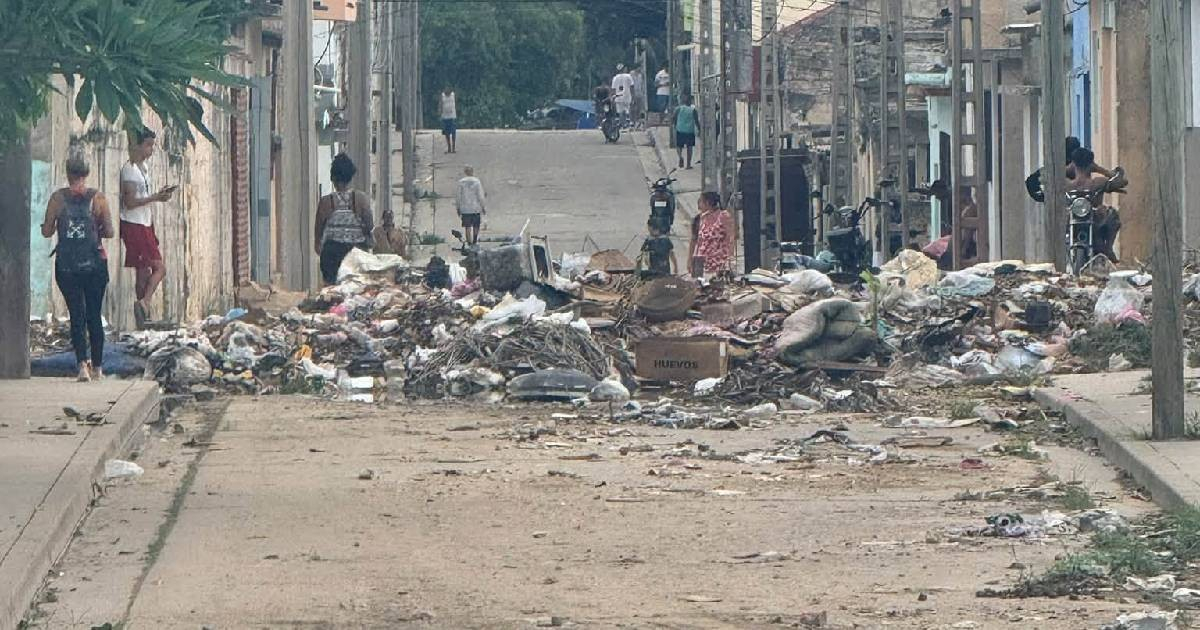
Over the weekend, a resident of Matanzas named Emilio Prieto Núñez took to Facebook to share images depicting a massive garbage dump at the corner of Embarcadero, Blanco, and Mujica streets, right in the heart of the city. This post triggered a wave of anger across social media platforms.
The trash heap—comprising mattresses, plastics, debris, cardboard, organic waste, and stagnant water with weeds thriving among the rubbish—completely obstructed vehicular traffic and stretched over 100 meters along Mujica Street.
The post garnered 554 reactions and fueled the frustration of locals, who questioned, "Where will this end?" Prieto Núñez himself was more forthright, asking, "Are our leaders blind?"
No response was issued by municipal authorities or the local waste management company.
Roots of the Garbage Crisis
This incident is far from isolated. The ongoing garbage collection crisis in Matanzas has been worsening for months, primarily due to a structural issue: the shortage of diesel fuel.
The Municipal Waste Management Company receives between 300 and 550 liters of fuel daily, while it actually requires over 2,700 liters to cover all its routes. As a result, only 11 of its 24 garbage trucks are operational, and out of an estimated workforce of 1,400, only about 930 are currently active.
In May, the municipal mayor, Michel León Rodríguez, admitted on TV Yumurí's Con Voz de Pueblo program, "We owe a debt to the city."
Series of Complaints in 2026
Throughout 2026, a string of complaints has painted a picture of ongoing collapse.
In April, an impromptu landfill overtook nearly the entire intersection of Levante and Solís, with residents having gone almost a month without regular garbage collection. In May, journalist Yirmara Torres Hernández reported a garbage dump mere meters from Eliseo Noel Caamaño Pediatric Hospital, amid outbreaks of hepatitis A, dengue, and chikungunya. It was only under social media pressure that authorities removed some of the waste near the hospital, albeit partially.
During August, rainstorms swept accumulated trash from streets and channels into the San Juan and Yumurí rivers and Matanzas Bay, causing direct environmental harm. In September, a garbage dump in Santa Marta, Cárdenas municipality, caught fire, leaving a container completely melted.
The provincial press bluntly described the situation as a "putrid tumor" teeming with rodents, flies, and mosquitoes.
Beyond Matanzas: A Broader Issue
The problem isn't confined to Matanzas. Earlier this year in Havana, only 44 out of 106 garbage trucks were operational, leaving up to 23,814 cubic meters of waste uncollected daily in the city.
As long as the regime fails to resolve the fuel crisis paralyzing municipal services, Matanzas residents continue to live amid piles of trash, constantly asking themselves, "Where will this end?"
Frequently Asked Questions About the Waste Crisis in Matanzas
What is causing the garbage crisis in Matanzas?
The crisis is primarily due to a severe shortage of diesel fuel, which is necessary for operating the garbage trucks needed to collect waste throughout the city.
How have local authorities responded to the waste issue?
So far, there has been no official response from municipal authorities or the waste management company regarding the growing trash problem in Matanzas.
Has this problem affected other areas besides Matanzas?
Yes, similar waste collection issues have been reported in Havana, where a significant portion of garbage trucks are also out of operation.