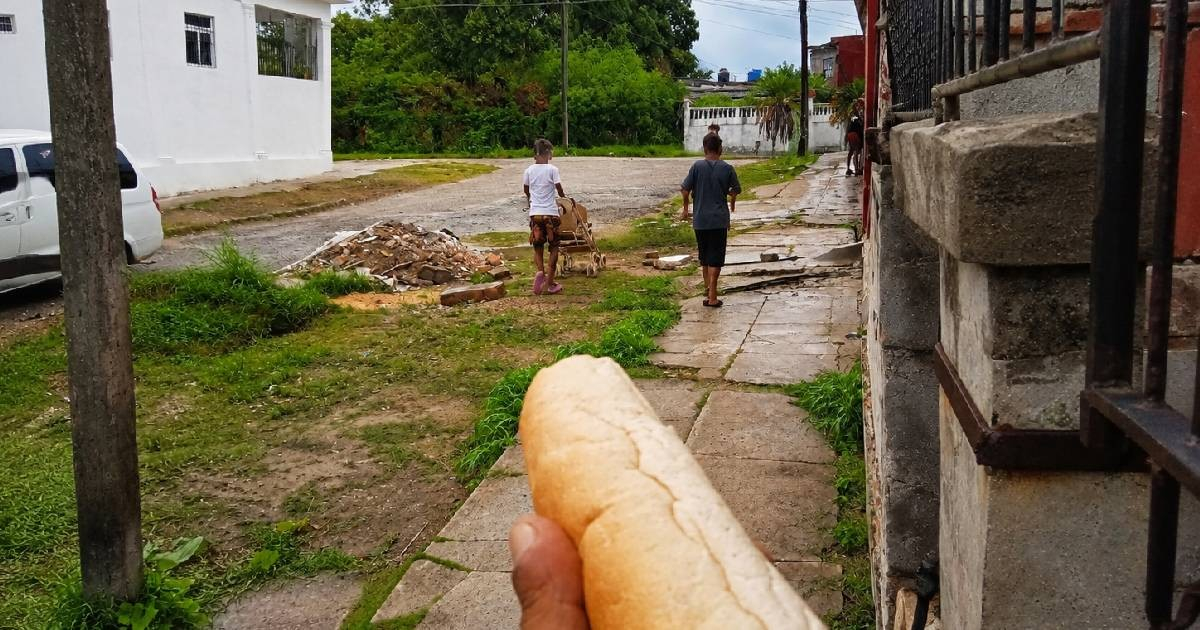
On Tuesday, the Cuban regime engaged in one of its most striking contradictions on the international stage. While children in Cuba endure one of the most severe food crises documented in the island's recent history, the Cuban mission in Geneva championed the adoption of a resolution on children's right to adequate nutrition at the UN Human Rights Council.
The Council passed Resolution L.32, titled "Improving Equitable Access of Children to Adequate and Nutritious Food," a proposal backed by Cuba alongside other nations. The resolution urges the avoidance of measures contrary to international law that could restrict children's access to nutritious food and calls for enhanced international cooperation and technology transfer.
Aimé Triana, second secretary of the Cuban mission to the UN in Geneva, defended the initiative with global statistics: 181 million children face severe food poverty, 150 million children under five suffer from stunted growth, and 43 million are wasting away.
"What was agreed upon will not be fulfilled. Hunger and malnutrition will not be eradicated by 2030. Not all children will have access to nutritious food," warned the diplomat at the organization.
Triana used the platform to blame the U.S. embargo for Cuba's food situation: "By imposing a criminal blockade on Cuba, the United States insists on depriving our children of their right to adequate and healthy nutrition. That country prevents more than 7,000 already purchased containers filled with food and medicine from entering Cuba."
The claim about the detained containers is not new: Deputy Premier Óscar Pérez-Oliva Fraga made it in July 2026, and Foreign Minister Bruno Rodríguez reiterated it at the UN in September, as part of a systematic diplomatic strategy by the regime to blame the food crisis solely on external sanctions.
What the Cuban diplomat failed to mention to the Council is that the food crisis in the island has deep, internal structural causes. Between 2018 and 2023, national production of pork fell by 95%, rice by 87%, beans by 70%, and milk by 58%, as a direct result of the centralized agricultural model that has collapsed production over decades.
The situation of Cuban children starkly contrasts with the regime's narrative in Geneva. In November 2025, UNICEF reported that about 9% of Cuban children suffer from severe food poverty. The Food Monitor Program estimated in April 2026 that 96.91% of the population lacks adequate food access, and 33.9% of households had at least one person go to bed hungry in the previous 30 days.
Even the Minister of the Food Industry, Alberto López Díaz, acknowledged in June 2026 that more than 100,000 children were not receiving their daily milk ration. Additionally, 48.5% of schoolchildren aged six to 11 do not receive either meals or snacks at their educational centers.
Deaths from malnutrition in Cuba increased from 43 to 75 between 2022 and 2023, representing a 74% rise, according to data attributed to the National Office of Statistics and Information.
Faced with the magnitude of the crisis, the UN had to intervene: the World Food Program activated an emergency project in July 2026 to feed 12,677 children in 74 educational centers across 19 municipalities in Cuba's five eastern provinces, while the WFP Executive Board approved a $116 million assistance plan for the island.
"No government should have a policy of causing hunger in other nations," Triana concluded before the Human Rights Council, with no one in the room pointing out that this statement could very well apply, perhaps even more fittingly, to the very government she represents.
Understanding Cuba's Food Crisis
What resolution did Cuba propose at the UN?
Cuba proposed Resolution L.32, which focuses on "Improving Equitable Access of Children to Adequate and Nutritious Food" at the UN Human Rights Council.
How has the food crisis affected children in Cuba?
The food crisis has severely impacted Cuban children, with reports indicating that about 9% suffer from severe food poverty, and over 100,000 do not receive their daily milk ration.
What are the internal factors contributing to Cuba's food crisis?
Cuba's food crisis is largely attributed to the centralized agricultural model, which has led to significant declines in the production of essential foodstuffs like pork, rice, beans, and milk.
How has the international community responded to Cuba's food crisis?
The international community, through the World Food Program, has intervened with an emergency project to provide food assistance to thousands of children across Cuba's eastern provinces.