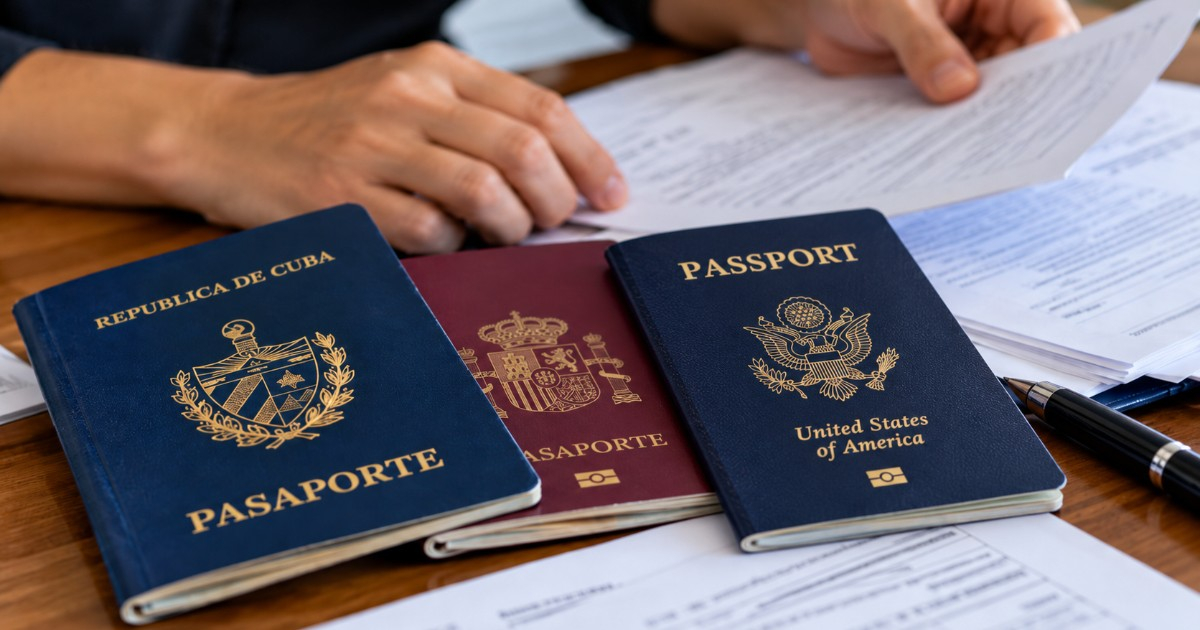
Starting November 1, 2026, Cubans residing outside the island will have the opportunity to formally apply for renunciation of their Cuban citizenship under a newly established procedure.
This opportunity is governed by the Citizenship Law 172/2024, which was published as part of the Official Gazette No. 39 Ordinary of 2026 on May 5.
However, giving up citizenship is not as simple as surrendering a Cuban passport or proving possession of another nationality. The law mandates several requirements, specific documentation, and awaits a formal decision from Cuban authorities.
Introducing New Consular Fees
As of October 1, a new consular fee structure has been implemented, which imposes two charges related to the process: $500 or €500 for the application, and an additional $500 for the renunciation certificate.
This measure is particularly significant for Cuban-Americans, Cuban-Spaniards, and other members of the diaspora who hold a second citizenship and wish to legally sever their ties as Cuban citizens.
Eligibility for Renouncing Cuban Citizenship
According to Article 46 of Law 172, five criteria must be met to apply for citizenship renunciation:
- Be at least 18 years old.
- Already possess another citizenship. The law ensures that the process does not render an individual stateless.
- Be located abroad, as the process is specifically designed to be initiated outside of Cuba.
- Have no monetary debts with the Cuban state or its institutions.
- Not be serving a prison sentence or be under any penal sanction, nor be pursued for any crime in Cuba or elsewhere.
Thus, having U.S., Spanish, or any other citizenship is essential but not solely sufficient to renounce Cuban citizenship.
Required Documentation for Application
Article 47 specifies that the application must be submitted in writing and include several documents:
- A sworn statement made before a public notary in which the applicant explicitly expresses their desire to renounce Cuban citizenship and declares the absence of debts with the state.
- Certification of citizenship from another country, issued by the relevant authority.
- A residency certification from the country where the consulate handling the request is located.
- Criminal records from both Cuba and the applicant's country of residence.
The written request must also identify the authority it is addressed to, the applicant's personal details and residence, the grounds of the petition, and provide a means of communication for notifications, along with the date and signature.
Application Submission Process
Law 172 specifies that the renunciation request must be submitted from abroad to the Cuban consular office where the applicant resides.
Unlike other citizenship procedures, this one cannot be initiated while residing in Cuba. Prior to submitting documentation, it is advisable to verify with the relevant consulate the specific requirements for submission, payment, legalization, and receipt of documents when the new procedure takes effect.
Cost of Renouncing Cuban Citizenship
The new Consular Tariff, established by Resolution 37/2026 of the Ministry of Foreign Affairs, effective October 1, involves two separate fees:
- Application for renunciation: $500 or €500.
- Issuance of renunciation certificate: $500 or €500.
In eurozone countries, the fee is in euros, while in other regions it is in U.S. dollars, or the equivalent in the local currency where the consulate is located.
The total cost is $1,000 or €1,000. This amount covers the specific fees for application and issuance of the renunciation and may not include additional expenses related to certifications, documents, translations, legalizations, or shipments.
Process is Not Automatic
This is a crucial aspect of the new law. Article 50 states that renunciation only becomes effective once accepted by the competent authority and a formal pronouncement is made.
Therefore, having another nationality, submitting documentation, and paying fees do not automatically make the individual a foreigner in the eyes of Cuban authorities.
Until a resolution or decree approving the renunciation is issued, the individual remains legally recognized as a Cuban citizen.
Decision-Making Authority
In most cases, the Ministry of the Interior is responsible for accepting the renunciation by resolution.
There is an exception for individuals who acquired Cuban citizenship through naturalization via a presidential decision. In such cases, renunciation must be accepted through a presidential decree.
Timeline for the Renunciation Process
The final version of Law 172 outlines timelines for different stages of the process:
- Once the petition is correctly submitted, the consulate has 20 business days to forward it to the Citizenship Office of the Ministry of the Interior.
- The instruction phase of the dossier has a 90-business-day deadline, which can be extended for another 90 days by the head of the Citizenship Office.
- If the application is incomplete, authorities may request the applicant to correct deficiencies within 15 calendar days. Failure to do so results in the case being considered abandoned and archived by resolution.
- If the decision lies with the Minister of the Interior, the resolution must be sent to the Citizenship Office within 30 calendar days for notification purposes.
- Once the resolution is received, the consulate has 15 calendar days to notify the applicant or their representative, either in person or electronically.
While the law sets timelines for various phases, the entire process could take several months, especially if the dossier's instruction is extended or if documentation needs correction.
Status During the Decision Waiting Period
Until the renunciation is accepted, the applicant remains a Cuban citizen and is subject to the rules of effective citizenship. Law 172 stipulates that acquiring another nationality does not automatically result in the loss of Cuban citizenship.
While in Cuba, a Cuban citizen with another nationality must abide by their Cuban status and cannot use their foreign citizenship to create legal effects with Cuban authorities.
This effective citizenship rule also applies to Cuban diplomatic and consular representations abroad.
Changes After Renunciation Approval
Once a favorable decision is made, the legal status changes significantly. The Migration Law 171 states that individuals who have renounced their Cuban citizenship and whose renunciation has been accepted are considered foreigners.
From that moment, they cannot identify themselves in Cuba as Cuban citizens and must present their foreign passport, adhere to visa requirements, and comply with other applicable travel documents to enter and exit the country.
If they hold multiple foreign citizenships, they must enter and exit Cuba using the same foreign passport used for entry.
The Citizenship Law also mandates that the Ministry of the Interior or consular representations cancel documents evidencing Cuban citizenship once renunciation is accepted. The decision is also recorded in the Citizenship Register.
Challenging an Unfavorable Decision
Yes, Law 172 permits appeals against administrative decisions in citizenship renunciation procedures.
The first option is the Reform appeal, followed by the Appeal in higher instances when applicable. When a decision is made directly by presidential decree, only the Reform appeal in the administrative route is available.
The law requires that these appeals be resolved and notified within 90 days upon receipt by the competent authority.
After exhausting administrative remedies, the applicant may approach the competent court.
Preparation Before November 1
Those considering this process can begin by reviewing their documentation: ensure they have a second citizenship, assess any potential debts with Cuban institutions, identify mechanisms to request criminal records, and consult with the relevant Cuban consulate about applicable formalities for notarial documents, certifications, translations, and legalizations.
It is also important not to confuse renouncing Cuban citizenship with changing migration status. A Cuban can permanently reside in the United States, Spain, or another country while still being a Cuban citizen. Renunciation involves severing that legal link, and once accepted, being treated as a foreigner by Cuba.
The new legislation provides a detailed procedure for the first time, but retains a decisive characteristic: citizenship does not disappear by the applicant's sole will; a formal state resolution accepting the renunciation is required.
Frequently Asked Questions about Renouncing Cuban Citizenship
What are the requirements to renounce Cuban citizenship?
To renounce Cuban citizenship, applicants must be at least 18 years old, possess another citizenship, reside abroad, have no debts with the Cuban state, and not be under any penal sanctions or pursued for crimes.
How much does it cost to renounce Cuban citizenship?
The cost includes $500 or €500 for the application and an additional $500 for the issuance of the renunciation certificate, totaling $1,000 or €1,000.
Can the renunciation process be initiated from within Cuba?
No, the renunciation process must be initiated from abroad, specifically at the Cuban consular office in the applicant's country of residence.
What happens if the renunciation is not accepted?
If the renunciation is not accepted, the individual remains a Cuban citizen, but they can appeal the decision through administrative channels and, if necessary, the competent court.