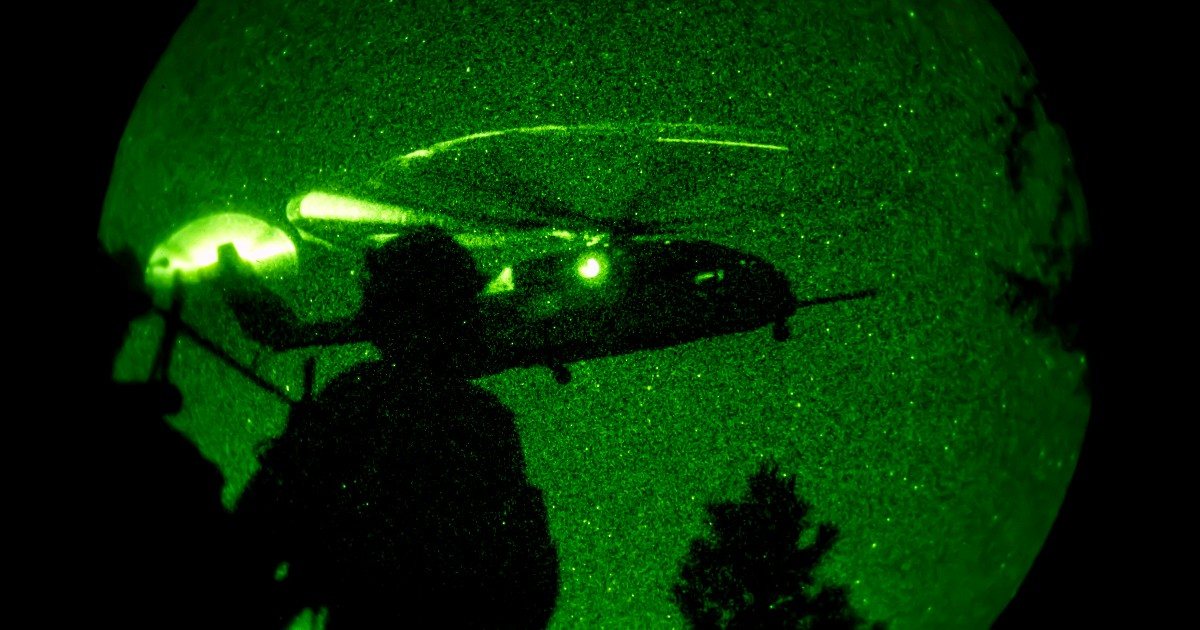
On Monday, the U.S. Department of Defense released images showcasing night raid exercises carried out by the 26th Marine Expeditionary Unit (26 MEU) at Camp Lejeune, North Carolina. These drills mirror the precise tactics used nine months ago during the operation to apprehend Nicolás Maduro in Venezuela.
According to the official release from the Department of Defense, the marines executed an air insertion from a CH-53K King Stallion helicopter, targeting objectives under low visibility using night vision equipment. Captured with these same devices, the images depict the entire sequence: disembarking from the aircraft and tactically entering structures in complete darkness.
The CH-53K is regarded as the Marine Corps' most capable heavy-lift helicopter, with the ability to transport up to 27,000 pounds within a 110 nautical mile radius. It is fully compatible with night vision and maintains hover precision of approximately one foot in low-light conditions, critical attributes for high-precision assault operations.
The Strategic Significance of Recent Drills
This exercise doesn’t occur in isolation. Operation "Resolute Resolution," executed on January 3, 2026, successfully captured Maduro through a night raid involving helicopters from the 160th Special Operations Aviation Regiment and Delta Force commands.
In preparation for that mission, the 22nd Marine Expeditionary Unit had operated in the Caribbean for nearly ten months, with the U.S. even constructing a mock-up of Maduro's residence to rehearse the assault.
Currently, the 26 MEU is nearing the final phase of its preparation cycle for a fall deployment with the Kearsarge Amphibious Ready Group, featuring the USS Kearsarge as its lead ship. The unit recently completed an amphibious landing drill with amphibious combat vehicles on September 16 and conducted live-fire mechanized training earlier that month.
Geopolitical Implications of Military Preparedness
The geopolitical landscape turns these exercises into more than just routine training. Throughout 2026, the Trump administration has maintained escalating pressure on the Cuban regime, implementing over 240 sanctions since January, blocking Venezuelan oil shipments, urging Mexico to reduce energy supplies, and deploying the USS Nimitz strike group to the Caribbean in May.
In June, Trump drew a parallel between the geographical proximity of Cuba and Venezuela, suggesting that a similar military action would be feasible. When asked about potential military action against Cuba in April, Trump ambiguously stated, "It depends on your definition of military action."
In August, reports from Bloomberg suggested that Washington had prioritized financial isolation over a special forces operation. Yet, on September 26, Trump publicly ruled out immediate military action against Cuba, leaving the possibility open.
The visible publication of the 26 MEU's night drills by the Department of Defense can be interpreted as a signal that the U.S. military continues to maintain and hone the capabilities necessary for such operations, regardless of the ultimate objective.
Understanding U.S. Military Exercises and Their Implications
Why are the U.S. Marines conducting night raid drills?
The drills are part of the 26th Marine Expeditionary Unit's preparation cycle, mirroring tactics used in past operations, such as the capture of Nicolás Maduro, to maintain readiness for potential future missions.
What is the significance of the CH-53K helicopter in these exercises?
The CH-53K is a critical asset for the Marine Corps, capable of heavy lifting and precision operations under low-light conditions, making it essential for high-precision assault operations.
How does the geopolitical context affect these military exercises?
The exercises align with the Trump administration's strategy of applying pressure on regimes like Cuba's, suggesting readiness to act if necessary, and showcasing military capabilities.