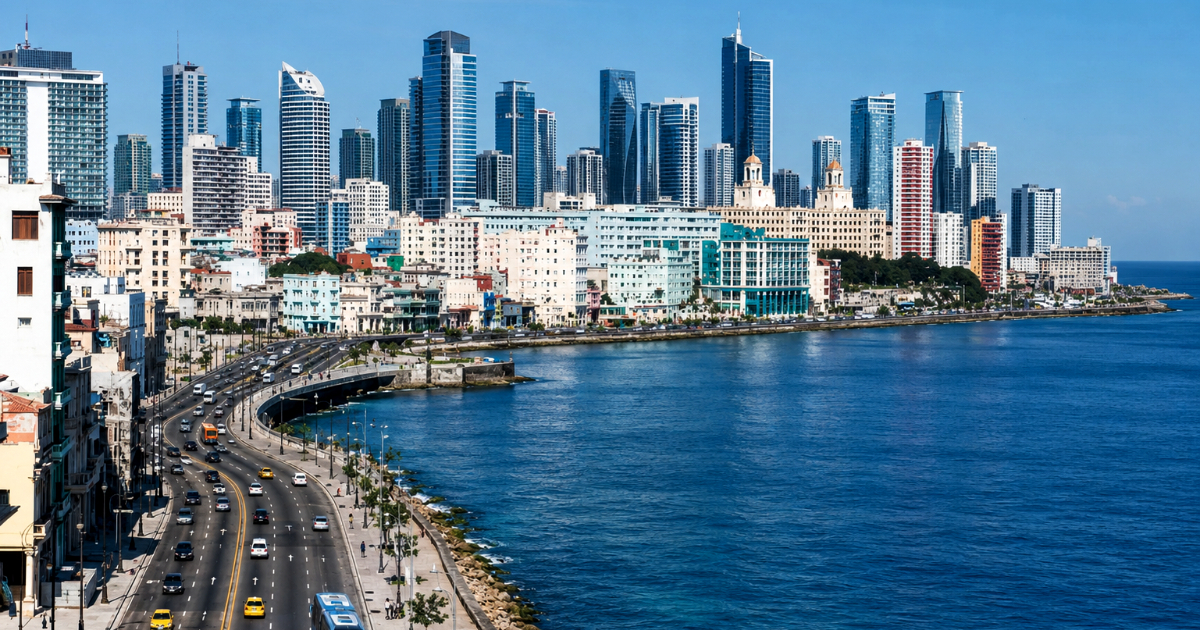
Last week, some of Florida's wealthiest Cuban American families convened at a luxurious Miami estate to strategize their return to Cuba as investors, firmly believing that the downfall of the regime is near.
This gathering marked the fourth meeting of the Cuban American National Chamber of Commerce (CANCC), an organization founded in June by exiled entrepreneurs with a clear mission: to be ready to operate in Cuba from day one after the collapse of the dictatorship.
The event, covered by the BBC, took place at the home of one of Miami's most renowned plastic surgeons, offering stunning views of Biscayne Bay. Among the attendees were prominent exiled Cuban names such as Bacardí and Babún.
A Bold Plan for Investment
Juan Omar Sixto, the 80-year-old president of the CANCC and a real estate mogul who left Cuba as a teenager, was forthright in stating the group’s mission: "The goal is to be in Cuba as soon as the regime falls."
Sixto emphasized that the organization has support in high places in Washington, including close ties to Secretary of State Marco Rubio. "Alongside delivering humanitarian aid and medical supplies, we plan to do business in Cuba right away," he stated.
The CANCC has made significant strides with a detailed agenda: it has drafted a proposal to establish a Stock Exchange in Havana and established committees focused on energy infrastructure and food security.
Property Claims and Economic Opportunities
The plan also includes reclaiming properties confiscated since 1959. Sixto recounted how his father lost five properties and a farm in Pinar del Río after the so-called "revolution."
"I worked on that farm for five years with my father, and it was taken from us. I want compensation or restitution. Even if it's just a small portion, I will accept it," he said, adding, "It's moral justice."
Similarly, Nicolás Gutiérrez, head of the National Association of Sugar Mill Owners of Cuba in exile, asserted, "Most of our sugar mills have been dismantled, but we will reclaim those lands and bring them back into production." Gutiérrez noted that the redevelopment could focus on ethanol, cogeneration, or solar energy.
Agricultural expert Hugo Orizondo acknowledged the current limitations: "Right now, Cuba is like a black hole; we don't know what's happening there. But we do know its potential for investment."
Changing Context for Cuban Exiles
While exiles have long planned for a post-communist Cuba, they insist that today’s context is distinct.
The Trump administration has implemented a policy of maximum pressure on the island: since January, secondary sanctions on oil supplies have exacerbated an energy crisis that has led to several national blackouts this year. Restoring Cuba’s deteriorating electrical grid could cost between $8 billion and $10 billion, according to estimates cited by the BBC.
The regime, in response, introduced a package of 176 economic liberalization measures that, according to Díaz-Canel, aim to "promote the defense of socialism, support, and expand social justice." However, CANCC members dismiss these measures as insufficient and lacking genuine assurances for investors.
Not everyone shares the exiles' optimism. Mike Bustamante, an associate professor of History at the University of Miami, cautions that expectations for imminent change have tempered.
"Right now, the high expectations created by the U.S. government that a 'day after' would soon arrive, or that Cuba would be 'next,' have been postponed," he remarked, referring to the conflict with Iran and the upcoming midterm elections in November.
As exiled entrepreneurs deliberated their plans, the reality on the island starkly contrasted: just hours after the meeting concluded, Cuba experienced another nationwide blackout. Most Cubans, facing shortages of food, water, fuel, and medicine, are simply hoping for improvements to their dire situation.
FAQ: Investing in Post-Regime Cuba
What is the CANCC's goal in Cuba?
The CANCC aims to be ready to invest and operate in Cuba immediately after the regime falls, focusing on establishing a stock exchange and addressing energy infrastructure and food security.
What challenges do Cuban exiles face in reclaiming property?
Cuban exiles face the challenge of reclaiming properties confiscated since 1959, seeking compensation or restitution for their lost assets, amidst a complex legal and political landscape.
How have U.S. policies affected the situation in Cuba?
U.S. policies, particularly under the Trump administration, have exerted maximum pressure on Cuba, with sanctions exacerbating an existing energy crisis and impacting the island's economy.