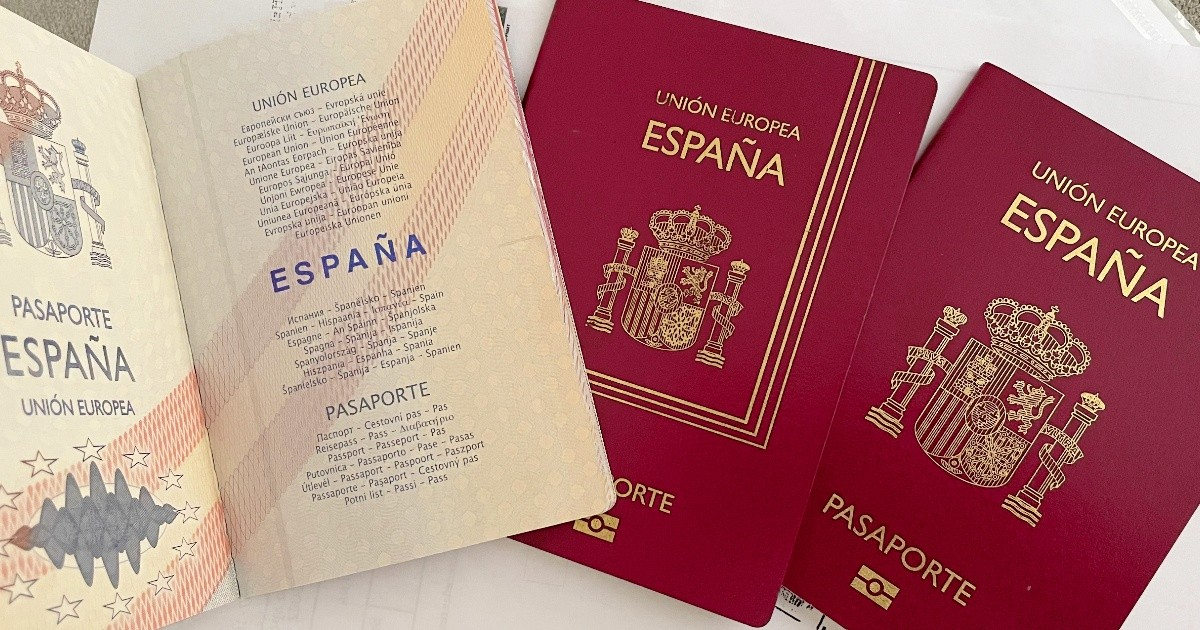
The Spanish Parliament is once again embroiled in a political and legal struggle over the so-called "grandchildren law," a measure that significantly impacts tens of thousands of Cubans who either hold Spanish citizenship or have applications in progress.
Political Maneuvering and Legal Challenges
The Spanish Socialist Workers' Party (PSOE) and Sumar have strategically introduced an amendment within an educational reform bill to elevate the "presumption of exile" to a statutory level. This notion has facilitated countless nationalizations at Latin American consulates, and the maneuver has now reached the Supreme Court.
Sumar's amendment, listed as number 63, was embedded in an amendment to the Organic Law of Education—focused on student-teacher ratios, teaching schedules, and teachers' working conditions—despite having no direct relevance to these topics.
The amendment seeks to solidify into law the directive signed in October 2022 by Sofía Puente, then the Director-General of Legal Security and Public Faith at the Ministry of Justice and sister to Minister Óscar Puente. This administrative rule established the presumption of exile for Spaniards who left the country between July 18, 1936, and December 31, 1955, without requiring individual proof.
Congressional and Judicial Reactions
In late September, legal advisors to Congress labeled the amendment "inadmissible" due to its lack of material connection to the educational project. They warned that accepting it might infringe upon Article 23 of the Spanish Constitution, which safeguards parliamentary involvement in the legislative process.
Despite this non-binding opinion, the Education Commission's Committee, dominated by PSOE and Sumar, accepted it for consideration on September 30.
The association Hazte Oír quickly responded by filing a motion with the Supreme Court's Administrative Litigation Chamber. Their document expanded on existing litigation by including the amendment and the dissenting opinion of four Electoral Board members, urging the court to address pending precautionary measures and preserve electoral census records.
In addition, Hazte Oír filed a lawsuit accusing Sofía Puente of misconduct; the 35th Investigating Court in Madrid has forwarded it to the Prosecutor's Office for an opinion within five days regarding its acceptance.
The Popular Party (PP) announced plans to challenge the amendment's acceptance, accusing the government of underhanded tactics. Vox bluntly labeled it a "pirate amendment."
Negotiations and Legislative Path
To advance their strategy, PSOE requires support from Junts and the Basque Nationalist Party (PNV), both of which had earlier submitted comprehensive amendments to the educational project, citing regional autonomy concerns.
According to sources cited by El Español, PSOE plans to negotiate with these parties by proposing changes to the educational content to ensure they do not obstruct the amendment related to the grandchildren law. The first notable event in these negotiations will be the working group meeting scheduled for October 14.
The bill is expected to pass in Congress during the first half of November, potentially becoming law before Christmas due to expedited processing.
With a PP majority, the Senate might amend or reject the text, but Congress can override such a veto with a simple majority.
Impact on Cubans
Understanding the ramifications for Cubans involves discerning what has been suspended and what remains unaffected.
The Supreme Court decided on September 8 to provisionally suspend the electoral effects of approximately 170,000 registrations in the Electoral Census of Absent Residents linked to Sofía Puente's directive, citing significant risks to the integrity of the electoral process.
This suspension, however, does not revoke any nationalities already granted, nor does it halt pending applications; the pivotal issue is the right to vote in the upcoming general elections on November 29, not Spanish citizenship.
As of July 1, 2026, 169,008 Spanish citizens residing in Cuba were registered in the external electoral census, positioning the island among the top five countries with the largest number of Spanish voters abroad.
By mid-year, the Consulate General of Spain in Havana had accumulated over 137,700 applications, and estimates suggest that between 300,000 and 350,000 individuals in Cuba initiated procedures since the directive was enacted in October 2022.
If Sumar's amendment succeeds and becomes law before November 29, it would legally endorse the presumption of exile, potentially nullifying the Supreme Court's provisional suspension, although the court has not yet ruled on the substantive issue.
The timeline is tight: in-person voting in consulates for residents in Cuba is scheduled from November 21 to 26.
The October 14 working group meeting will be crucial in determining whether the parliamentary move has sufficient support to meet the deadline.
FAQs on the Grandchildren Law and Its Impact on Cubans
What is the "grandchildren law" in Spain?
The "grandchildren law" refers to a legislative measure in Spain that impacts the nationalization process of descendants of Spaniards who left the country during the civil war era, facilitating their citizenship applications.
How does this legal change affect Cubans?
For Cubans, the amendment could protect their right to Spanish nationality and potentially restore voting rights that were suspended by the Supreme Court, depending on the legislative outcome before the next elections.
What are the next steps in the legislative process?
The next significant event is the working group meeting on October 14, which will gauge whether there is enough parliamentary support to pass the amendment in time for the upcoming elections.