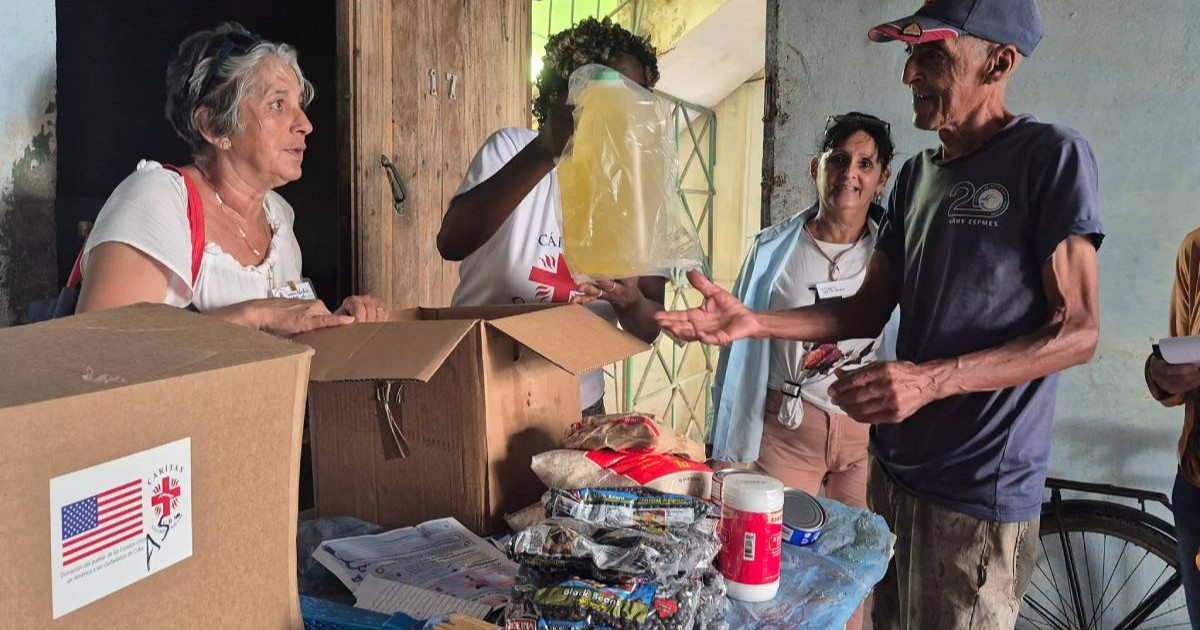
This week, volunteers from Caritas Camagüey distributed 300 humanitarian aid kits, funded by the United States, to vulnerable families in Lugareño, a rural community in the Minas municipality located in central Cuba.
According to the organization's social media posts, the shipment arrived at the Camagüey diocese on October 2, with distribution beginning two days later. In total, the province received 700 kits: 300 for Lugareño and an additional 400 earmarked for families in Nuevitas. Father Reynaldo, the parish vicar, was present during the distribution efforts.
Each kit is packed with essential food items such as rice, black beans, cooking oil, sugar, spaghetti, sardines, and tuna, along with hygiene products like soap, toothpaste, and toothbrushes.
The kits also include rechargeable flashlights and water storage buckets, crucial items given the frequent blackouts that plague Cuba.
Volunteers delivered the packages directly to homes, prioritizing elderly individuals living alone, people with disabilities, pregnant women, nursing mothers, and families with children under the age of five. To reach the more remote areas of this rural community, animal-drawn carts and cargo tricycles were utilized.
Community Support and Gratitude
“With local resources and volunteer support, the day unfolded in an atmosphere filled with gratitude. The simplicity and warmth of the countryside folk were evident as they opened their doors to those bringing relief for their most pressing needs in food, hygiene, and water storage,” described Caritas Camagüey.
Each box is marked with a label featuring the American flag and the Caritas logo, reading “Donation from the People of the United States of America to the Citizens of Cuba.”
This distribution in Camagüey is part of a $100 million humanitarian aid program announced by Secretary of State Marco Rubio in May 2026.
Excluding the Cuban Regime
Of the total funds, $60 million is channeled through Caritas Cuba and Catholic Relief Services (CRS), with the remaining $40 million distributed through other independent organizations. The program explicitly excludes the Cuban regime as an intermediary.
The program's first flight departed from Miami on July 21, 2026, carrying supplies for approximately 700 families in Havana. Since then, deliveries have proceeded in phases: Havana and surrounding municipalities in July, Villa Clara and Cienfuegos in September, and Camagüey in October.
CRS estimates that the $60 million managed by the Catholic network could assist nearly 200,000 households, impacting over half a million individuals.
The Cuban regime has maintained a contradictory stance toward the program: while accusing Washington of "political manipulation," Foreign Minister Bruno Rodríguez admitted that Cuba "does not typically reject foreign aid."
"This initiative ensures that 300 families in the Lugareño community benefit from this humanitarian aid, accompanied by the closeness and kindness that characterize the Caritas Camagüey volunteers," the organization concluded.
Frequently Asked Questions About U.S. Aid in Camagüey
What items are included in the aid kits distributed by Caritas Camagüey?
The aid kits include essential food items such as rice, black beans, cooking oil, sugar, spaghetti, sardines, and tuna, as well as hygiene products like soap, toothpaste, and toothbrushes. They also contain rechargeable flashlights and water storage buckets.
How many families are expected to benefit from the U.S.-funded humanitarian aid program in Cuba?
The humanitarian aid program, managed by Caritas Cuba and CRS, is expected to benefit nearly 200,000 households, impacting over half a million individuals across various provinces in Cuba.