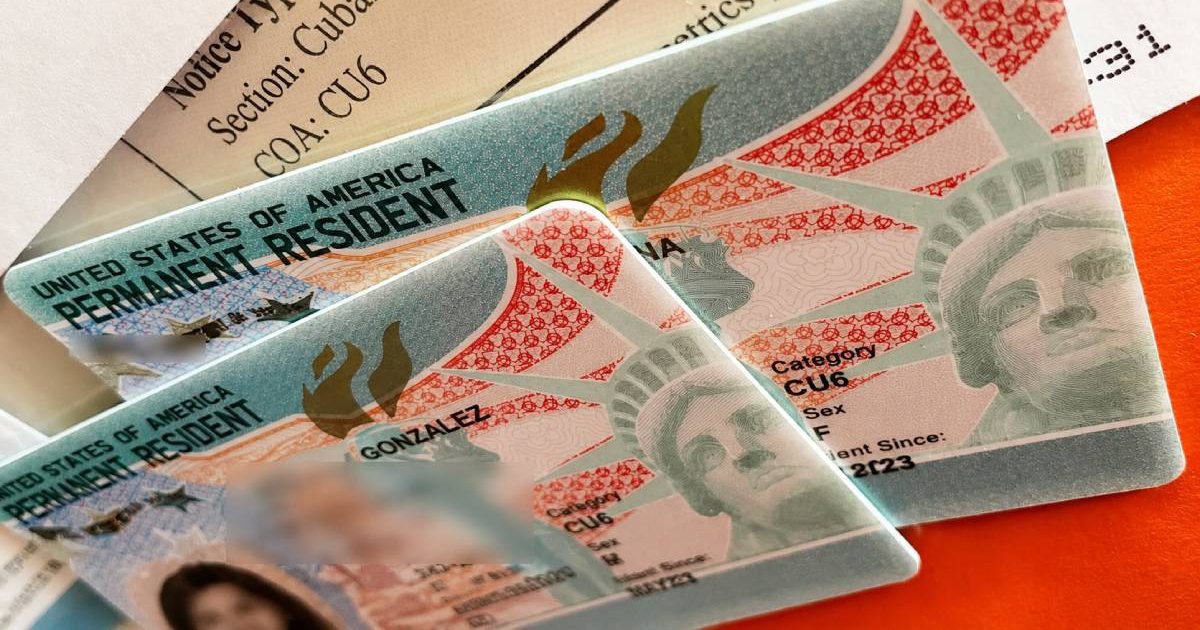
The wait to secure permanent residency through the Cuban Adjustment Act has significantly extended over recent years, now approaching a full year, according to the latest official data from the United States Citizenship and Immigration Services (USCIS).
In the fiscal year 2026, USCIS statistics indicate that the median processing time for the I-485 Form, based on the Cuban Adjustment Act, stands at 11.8 months. This data was gathered between October 1, 2025, and July 31, 2026.
This figure represents a substantial increase compared to previous years. In 2025, the median was 7 months; in 2024, it was 4.6 months; and in 2023, it was just 3.3 months. In essence, the median processing time has more than tripled since 2023.
Comparative Delays in Adjustment of Status
The trend outlined by USCIS also highlights that the process took 8.5 months in 2021 and 5.5 months in 2022.
These delays become even more noticeable when compared to other adjustment of status paths. During the same period, I-485 applications based on family relationships had a median processing time of 6 months, while those based on employment took 5.9 months. In contrast, the Cuban Adjustment Act process took nearly twice as long as both.
It’s important to note that not all Cubans will experience a wait of exactly 11.8 months. USCIS clarifies that this is a median derived from completed cases: half were resolved in this time or less, and the other half took longer.
Impact on Cuban Applicants
Furthermore, the 2026 data does not cover the entire fiscal year, which concludes on September 30. USCIS also warns that these historical statistics may change with future updates and should not be confused with the processing times shown in their tool for currently pending cases.
The increase in processing time has practical implications for thousands of Cubans awaiting residency. While the I-485 is pending, many rely on other documents to work or travel outside the United States.
USCIS allows certain applicants with a pending I-485 to request employment authorization through the I-765 Form and a travel document via the I-131 Form.
The agency also cautions that, except for certain immigration exceptions, leaving the country without obtaining advance parole (pre-approved travel permission) can result in the adjustment application being deemed abandoned.
Therefore, those who have been waiting for months must regularly check their case status, verify their work permit’s validity, and avoid international travel without first determining what documentation they need for their particular situation.
Understanding the Cuban Adjustment Act
The Cuban Adjustment Act allows certain citizens or natives of Cuba to apply for residency, provided they meet specific requirements, such as having accumulated at least one year of physical presence in the United States and having been inspected and admitted or paroled (granted conditional immigration release).
The situation for Cubans released with an I-220A is more complicated and should not be confused with those who received parole.
Previous immigration rulings have determined that certain forms of release from custody do not equate to the parole required by the Cuban Adjustment Act, meaning eligibility depends on the circumstances of each case.
The increased residency processing times coincide with a growing backlog of immigration cases.
This weekend, it emerged that over 727,000 citizenship applications remain pending with USCIS, while the median processing time for the N-400 Form has also increased.
Recent Changes and Their Implications
Additionally, changes in the interpretation of requirements may affect certain status adjustments. In September, the Board of Immigration Appeals ruled in Matter of Mendez Maldonado that admitting to the use or possession of a controlled substance can result in immigration inadmissibility even without a criminal conviction, a decision that has heightened scrutiny on responses given during immigration interviews.
The practical impact of this decision was recently addressed, explaining that admitting to drug use during an immigration interview could have consequences for a residency application.
There have also been concerns among Cubans about changes in the application of the Adjustment Act. In May, an immigration attorney explained the impact of new decisions on those attempting to regularize their status through this route.
Immigration processing times continue to evolve. Stay informed about everything affecting Cubans in U.S. immigration, from status adjustments to the latest developments from USCIS.
Key Questions About the Cuban Adjustment Act
What is the current median processing time for the Cuban Adjustment Act?
As of the fiscal year 2026, the median processing time for the Cuban Adjustment Act is 11.8 months.
How does the Cuban Adjustment Act processing time compare to other adjustment paths?
The processing time for the Cuban Adjustment Act is nearly double compared to family-based and employment-based I-485 applications, which have median times of 6 and 5.9 months, respectively.
What should applicants do if their I-485 application is pending?
Applicants should regularly check their case status, ensure their work permit is valid, and avoid international travel without the necessary documentation, such as advance parole.