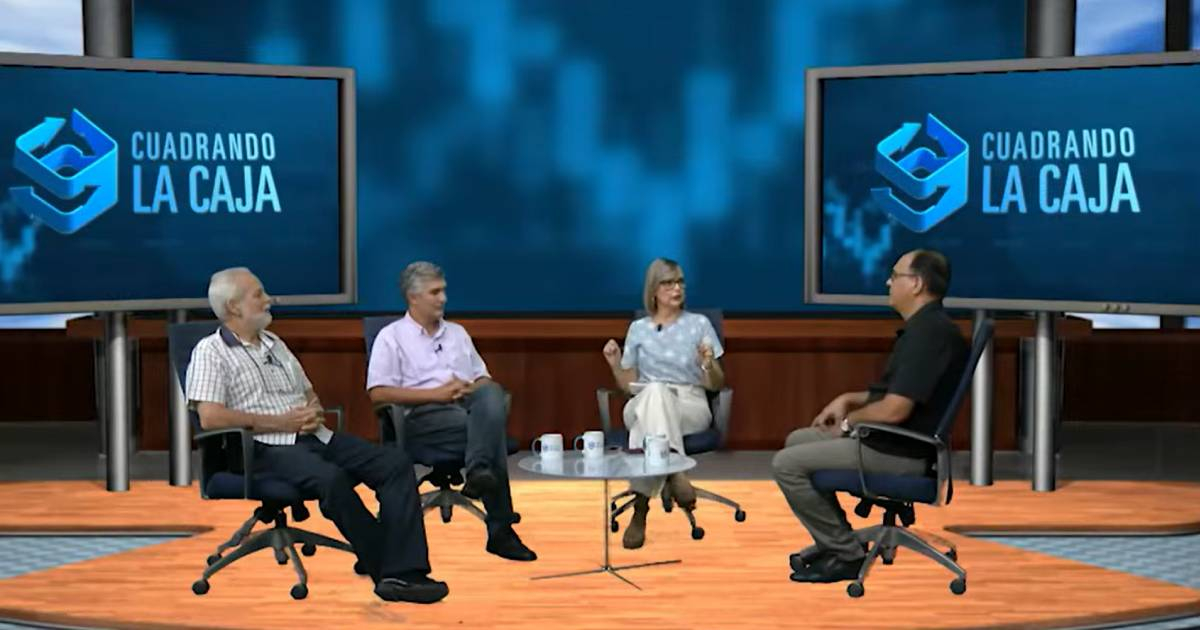
As economists and government officials engage in discussions on Cuban state television regarding the role of the market within the socialist framework, many Cuban citizens have posed a more straightforward question: "What can be planned if nothing is produced?"
This reaction was sparked by a recent episode of the program "Cuadrando la Caja" on Cubadebate, which focused on "The Market in Cuban Socialism: Farewell to Planning?" At a time when the government itself acknowledges the need for changes in a model long defined by centralization.
The discussion, led by Marxlenin Pérez Valdés, featured Adriano García Hernández from the Ministry of Economy and Planning; Rafael Montejo Véliz, director of the Center for Management Techniques Studies at the University of Havana; and Ayuban Gutiérrez Quintanilla, an economics professor at the same institution.
Shifting Towards Market Mechanisms
During the debate, the panelists acknowledged issues related to "excessive centralization" and the diminished role of the market in Cuba's economy, advocating for a greater use of market mechanisms within socialist planning.
García Hernández conceded that certain openings to the private sector have been driven more by necessity than by government preference. "There are certain sectors where we wouldn't want the private sector to have as much presence as it will now, but we have to do it, or we won't save the Revolution," he stated.
Montejo Véliz also predicted a significant shift in resource allocation: "The market is going to start playing a role it didn't have before and will have a much more active role than it has had so far."
Public Concerns Over Economic Realities
In response to the explanations, numerous critical comments emerged from Cuban users on social media, with many more concerned about shortages, wages, and prices than theoretical definitions of the economic model.
"All I can say is, I'm not sure how you want the market. But right now, a bottle of oil costs the minimum wage in Cuba," commented one user.
Another summed up their skepticism even more pointedly: "What can be planned if nothing is produced?"
A Cuban woman noted, "If we're already living under capitalism, we should be paid accordingly," referring to prices rising much faster than the earnings of most citizens.
Economic Challenges Amidst Reform
The debate occurs amid a significant downturn in key economic indicators. Official year-on-year inflation reached 25.19% in August, while food and non-alcoholic beverages saw a 36.01% increase.
The minimum wage remains at 3,210 Cuban pesos, an amount lower than the cost of some basic goods in the private market.
References were also made to former Economy and Planning Minister Alejandro Gil, who long advocated for centralized planning and was later sentenced in two trials: to life imprisonment for espionage and 20 years for economic crimes and corruption.
The debate on market and planning coincides with the implementation of the so-called Economic and Social Transformations approved in June. By the end of September, the government claimed to have implemented 158 of the 176 planned measures.
These include increased private sector participation, foreign trade changes, business modifications, and new pricing mechanisms, though Prime Minister Manuel Marrero acknowledged that "the most important" was still missing: that the results could be felt in the everyday economy.
A stanza from the popular poet El Gurú de Jatibonico, recited during "Cuadrando la Caja," captured the significance participants attribute to the change:
"From material plans, to financial plans: they seem like minor changes, but they are radical changes."
For many who commented on the debate, however, the immediate concern remains less theoretical: what to produce, how to increase supply, and how wages will cover current prices.
Exploring the Economic Shift in Cuba
What is the current economic debate in Cuba about?
The debate centers on how much the market should be integrated into the socialist model, with discussions about shifting from centralized planning to incorporating market mechanisms.
Why are Cuban citizens questioning the planning process?
Citizens are questioning the planning process because of the lack of production and the rising cost of living, wondering what can be planned when there's nothing being produced.
What changes are being proposed in Cuba's economic model?
Proposals include increasing private sector involvement, implementing new pricing mechanisms, and transitioning from material plans to financial plans.