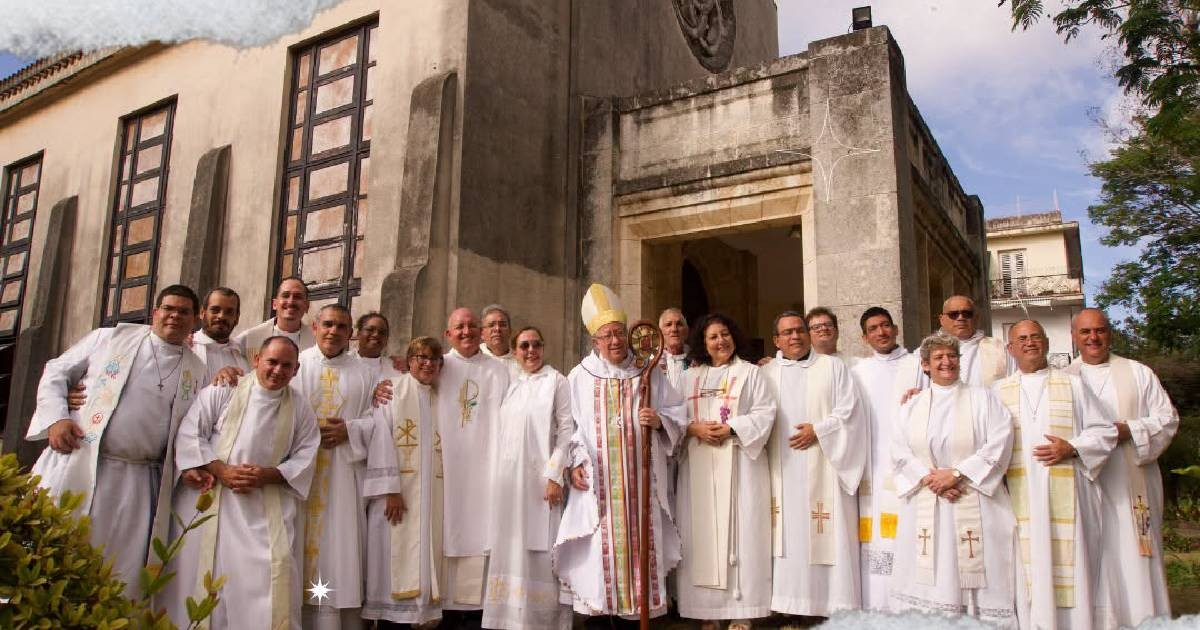
The Ninth Bishop of Cuba from the Episcopal Church, the Most Reverend Ángel Roberto Rivera Rodríguez, along with 21 clergy members from the Diocese of Cuba, issued a pastoral letter on Monday addressing both the Church and the Cuban people. In this open letter, they openly criticize the severe humanitarian crisis engulfing the island, express their solidarity with Ana Bensi and her mother, Caridad Silvente Laffita, and demand an end to police repression against those who exercise their right to free expression.
Dated October 4 and circulated through the diocese's official site and social media, the letter vividly outlines the harsh realities faced by Cubans: starvation, lack of medication, unbearable power outages, water shortages, and the near-collapse of health and education systems.
The document not only lists these issues but paints a stark picture of their impact: "the absence of bread on the table, patients left untreated, the younger generations without education, and mothers without hope."
This declaration follows a ruling by the East Havana Municipal People's Court three days earlier, which found Ana Bensi and her mother, Caridad Silvente, guilty, sentencing them to two years of restricted freedom. Their offense was recording and sharing a video on social media of a Ministry of the Interior agent delivering a state security summons to their home in Alamar.
The Episcopal Church's stance aligns it with a broad coalition of religious denominations that have already shown support for the case. This includes the Western Cuba Baptist Convention, the Evangelical Pentecostal Church (Assemblies of God), the Evangelical League of Cuba, the Methodist Church of Cuba, the Alliance of Unregistered Cuban Churches, the Conference of Cuban Religious (CONCUR), and the Congregation "Servants of St. Joseph," among others.
The Episcopal clergy were emphatic in their condemnation of police repression: "We also express our frustration and pain at the use of violence, intimidation, and harassment by police forces against those who choose to speak out and demand their rights, especially when such rights to expression are enshrined in our Republic's Constitution."
The message further warns the regime against silencing the youth: "Silencing the voice of young people is silencing the present and future of the nation. In light of all this, we say: Enough!"
However, the signatories frame their position as a call for understanding: "Our reflection is a call for attention to the authorities, not with the intent of confrontation but of dialogue," the letter states, urging the government to heed "the cries of this people, whom they are called to serve and protect, rather than asking for further sacrifices."
The letter was also sent to the Most Reverend Sean Rowe, Presiding Bishop of the House of Bishops of the Episcopal Church in the United States, lending the statement an international dimension.
This declaration is part of a broader trend in 2026: In January, the Conference of Catholic Bishops called for "urgent changes" and "genuine dialogue" in response to the crisis; in March, over 70 evangelical leaders issued a statement about "hunger, misery, and need"; and in September, Father Alberto Reyes Pías declared that Cuba is "infinitely worse" than during the Special Period.
The letter concludes with a pledge from the Episcopal clergy to stand by the people: "The Clergy of the Episcopal Church in Cuba is and will always be there to accompany and serve our people, with the faithfulness demanded by the cross of the Lord."
Cuban Episcopal Church's Stand Against Crisis
What issues does the Episcopal Church in Cuba highlight in their letter?
The letter underscores issues such as starvation, medication shortages, intolerable power outages, water scarcity, and the deterioration of health and education systems.
Who did the Episcopal Church express solidarity with in their message?
They expressed solidarity with Ana Bensi and her mother, Caridad Silvente Laffita, who were sentenced for sharing a video of a state security incident.
What is the international significance of the Episcopal Church's statement?
The statement was sent to the Presiding Bishop of the House of Bishops of the Episcopal Church in the United States, giving it an international perspective.