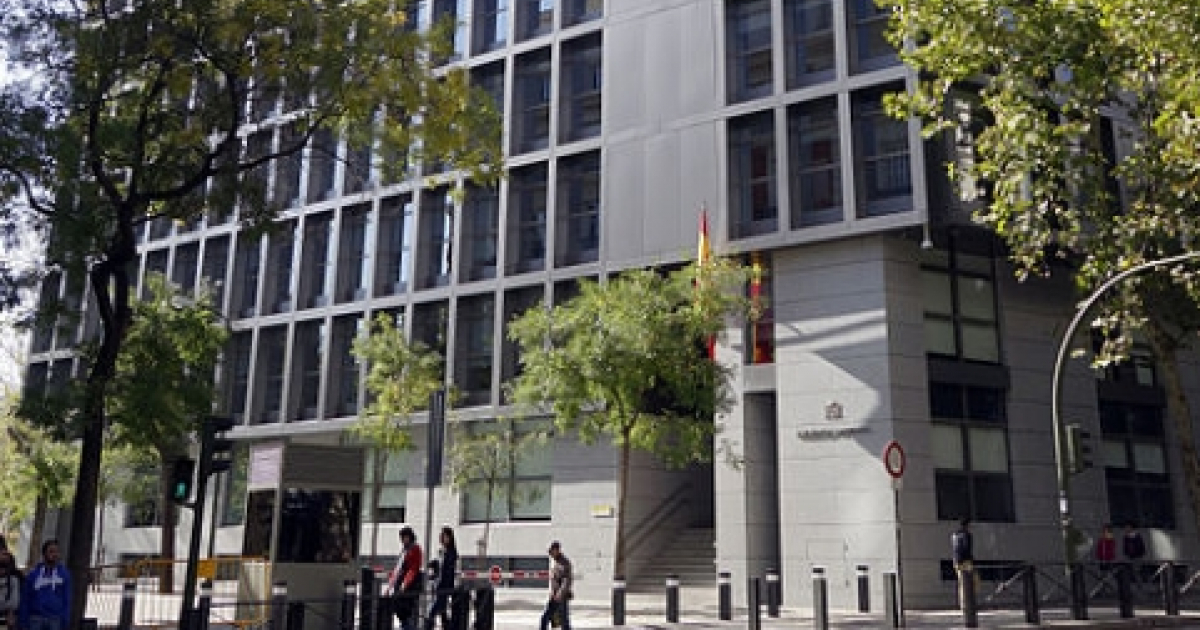
The National Court of Spain has dismissed the appeal of a Cuban family who were previously denied asylum and subsidiary protection by the Ministry of the Interior. Despite the family's claims of police threats, arrests, and reprisals following their requests for cancer medication for one of their children, the court upheld the denial.
On July 31, 2026, the Seventh Section of the Administrative Litigation Chamber ruled on cases 1980/2022 and 1990/2022. These cases involved four Cuban nationals challenging the Ministry's rejection of their international protection applications.
The family arrived in Spain on September 3, 2019, and sought asylum nine days later at the Provincial Brigade of Immigration and Borders in Madrid, according to the court's decision.
Claims of Harassment and Detainment
The father informed Spanish authorities that they lived in Havana, where one of his sons was diagnosed with cancer in 2012. He claimed that the medications given to his son caused adverse effects, prompting his request for alternative treatments.
Following these requests, the family experienced "coercion and threats, warnings, and sanctions," according to his testimony. He also stated that attempts to acquire alternative medications from various pharmacies were thwarted, culminating in accusations of public disorder.
Both parents were reportedly detained, with the mother spending three months in custody before being acquitted of public disorder charges. Another family member allegedly suffered a severe back injury after being pushed by a police officer while trying to purchase medication.
In a severe incident in March 2019, the father claimed that a local police chief sent criminals to kill him. Despite lodging complaints with police and health authorities, he received no effective response.
Legal Rationale and Concluding Decision
When asked about the persecution, the father did not attribute it to race, religion, political views, or membership in a protected social group under Spanish asylum laws. Consequently, the National Court concluded that the incidents described did not constitute persecution under the legal framework.
The court emphasized that the father's lack of identification as an active political dissident and the absence of claims of affiliation with anti-regime organizations were crucial in their decision. They deemed the incidents primarily related to Cuba's socio-economic conditions and public order issues, not political persecution.
While acknowledging Cuba's food and medicine shortages that could lead to governmental protests, the court ruled these conditions alone insufficient for asylum protection.
In a broader context, Cuban nationals face significant challenges obtaining asylum in Spain. In 2023, out of 3,082 applications, only 30 were granted refugee status, while 777 were denied, and 350 were archived, as per the Spanish Commission for Refugees (CEAR).
By August 31, 2025, Spain had approved asylum for only 36 Cubans while rejecting 152 applications. However, when a clear link between persecution and legally recognized asylum reasons is established, Spain has granted protection. For instance, in August 2026, journalist Luz Escobar and her family were recognized as refugees due to her political opinions and journalistic work.
The court also evaluated the possibility of granting subsidiary protection, which applies when there is a real risk of severe harm if returning to the home country. However, the court found that Cuba does not experience "indiscriminate violence" from an armed conflict.
The National Court asserted that Cuba does not face an armed conflict, maintaining a "monopoly on organized violence" without an armed opposition, thus not qualifying under European norms for certain subsidiary protection scenarios.
The court's ruling confirmed the Ministry's decisions denying asylum and subsidiary protection to the Cuban family. Additionally, the court imposed process costs on the appellants, capped at 1,000 euros, while noting the possibility of further appeal.
The resolution is anonymized, safeguarding the family's identity. Interestingly, the document mistakenly references "Colombian citizens" amid discussion about the Cuban family, likely a clerical error.
Understanding Asylum Denials for Cubans in Spain
Why did the Spanish court deny asylum to the Cuban family?
The court determined that the incidents described by the family did not constitute persecution under Spanish asylum laws, as they were not linked to race, religion, political views, or membership in a protected group.
What factors influence Spain's decision on asylum applications from Cubans?
Spain evaluates if there is credible evidence of persecution linked to recognized legal reasons, such as political beliefs or affiliations, rather than general socio-economic conditions or public order issues.
Has Spain granted asylum to any Cubans recently?
Yes, for example, journalist Luz Escobar and her family were granted asylum in August 2026 due to persecution linked to her political opinions and journalistic activities.
What is subsidiary protection, and why was it denied?
Subsidiary protection may be granted when there is a risk of serious harm if returning home. It was denied because the court found no evidence of indiscriminate violence or armed conflict in Cuba.