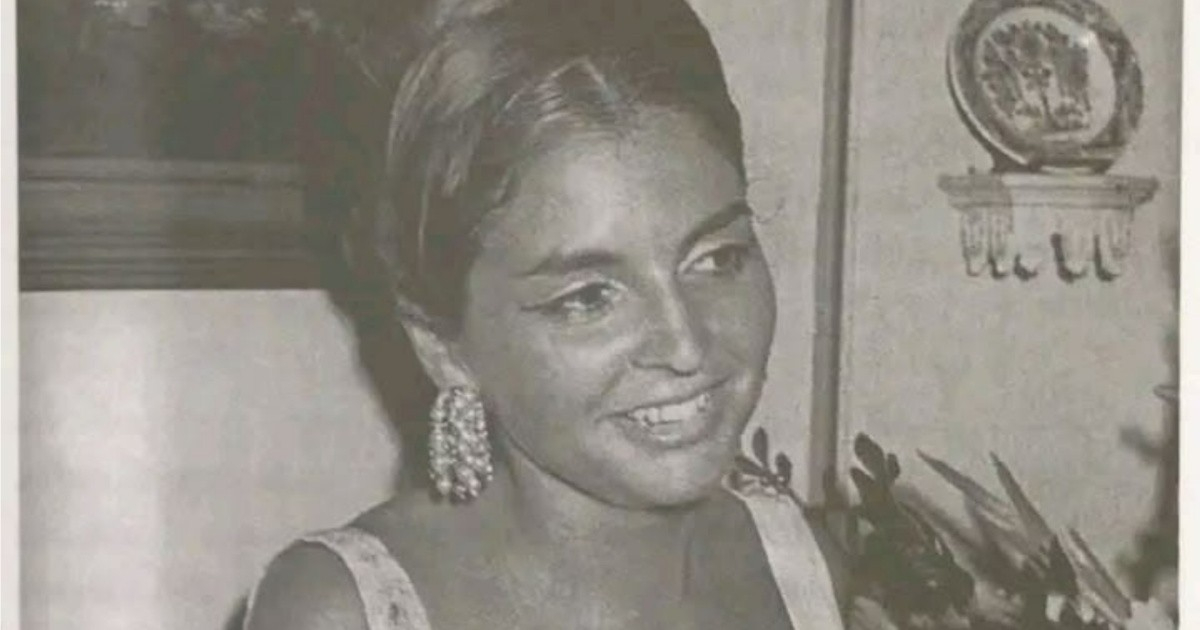
Annie Silva Pais, the rebellious daughter of the last head of Salazar's PIDE—Portugal's political police—arrived in Havana in October 1962 as the wife of a Swiss diplomat. She mingled at embassy parties and enjoyed access to goods that were beyond the reach of ordinary Cubans.
Just three years later, she abandoned it all to join Castro's regime and ended her days relying on the same ration book as any Cuban citizen. Her intriguing story is the focus of a special report by Portuguese outlet Observador, penned by Inês André Figueiredo.
The couple landed in Havana on October 12, 1962, just four days before the Cuban Missile Crisis, the most perilous event of the Cold War. Her husband, Raymond Quendoz, was tasked with decoding secret messages at the Swiss Embassy, which managed U.S. interests on the island in the absence of American diplomatic representation. "Those were very tense moments," he would later admit.
They settled in the Country Club, Havana's most exclusive area, home to nearly all embassies. Alfredo Duarte Costa, a former Portuguese ambassador to Havana, vividly described the stark divide between diplomats and the general populace: "We could shop in stores where we paid with dollars and had access to everything: seafood, wines, sparkling drinks. Cubans, of course, didn't have the money to shop in those foreign currency stores."
Annie, fluent in five languages, quickly ingratiated herself within diplomatic and revolutionary circles. From early on, she developed a growing fascination with Che Guevara, attending his speeches, meeting him at a National Bank of Cuba reception, and even mimicking his hairstyle. Her husband described this obsession as a "sick cult." The Swiss Embassy became a meeting spot for regime figures like René Vallejo, Fidel Castro's doctor and secretary, and José Abrantes Fernández, a member of the Cuban political police.
In September 1965, Annie traveled to Mexico under the guise of a short vacation, which stretched to over a month. Journalist Rui Ferreira, a friend of Annie, revealed to Observador that the trip served as a "planned exfiltration" for espionage purposes, orchestrated with the complicity of high-ranking regime figures, including Fidel Castro. On October 25, 1965—her fifth wedding anniversary—Raymond went to Havana's airport to meet her. Annie disembarked and left with Communist Party representatives, never returning to her former life.
She surrendered her Swiss diplomatic passport, renouncing her privileged status, and became dependent on ration books like any ordinary Cuban. The irony of her life path is stark: the daughter of the PIDE director—who oversaw the surveillance, arrest without judicial oversight, and torture of Salazar's opponents—embraced another dictatorship with its own repressive apparatus, one whose agents were regular visitors to her home. She served as an official interpreter for the regime and even Fidel Castro himself, working with organizations like ICAP and OSPAAAL, proudly donning the militia uniform.
Her father, Fernando da Silva Pais, was arrested and imprisoned following the Carnation Revolution in April 1974. Annie traveled to Portugal in an attempt to secure his release, returning to Cuba in 1981 after his death.
Annie died of cancer in Havana in July 1990, at the age of 54, having postponed surgery for a work trip to North Korea. She is buried in an unmarked grave at the Colón Cemetery, just as Cuba was on the brink of the Special Period, the most severe economic crisis since the Soviet collapse.
The Life of Annie Silva Pais: Key Questions Answered
Who was Annie Silva Pais?
Annie Silva Pais was the daughter of the last head of Portugal's PIDE political police. She moved to Cuba in 1962 with her Swiss diplomat husband, eventually joining Castro's regime.
How did Annie Silva Pais become involved with the Cuban regime?
Annie became fascinated with Che Guevara and the revolutionary circles, eventually renouncing her diplomatic immunity and joining the Cuban regime, working as an interpreter.
What was the significance of Annie's move to Cuba during the Cold War?
Annie's move to Cuba happened just before the Cuban Missile Crisis, a key point in the Cold War, highlighting the political tensions and her shift from Western to communist influence.