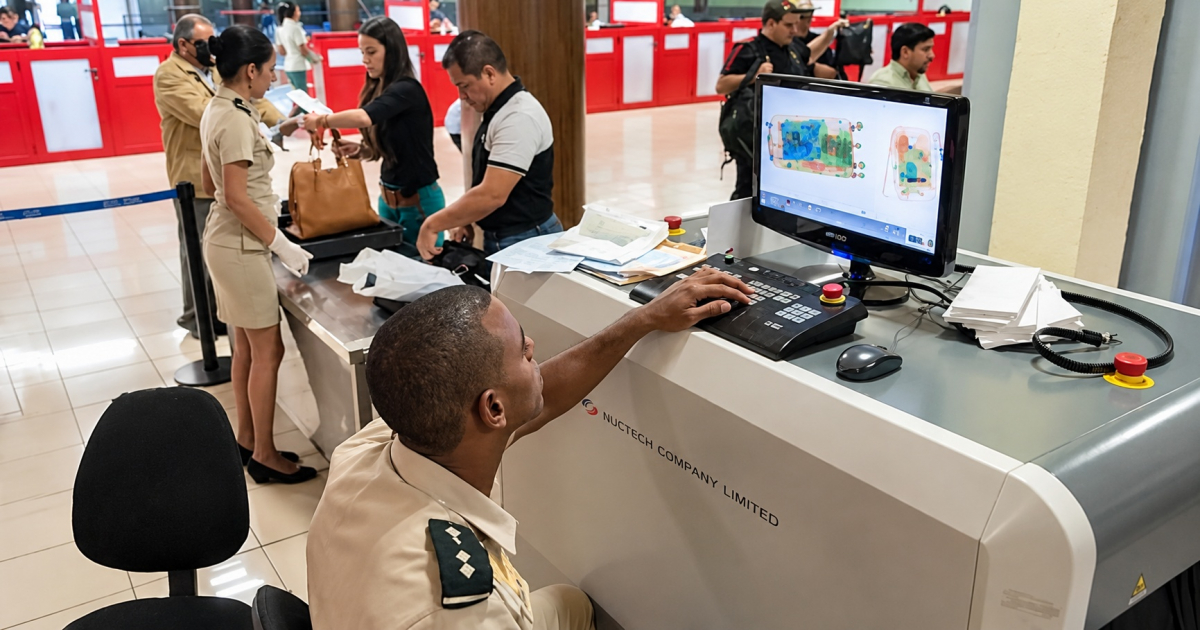
On August 26, 2026, the General Customs of the Republic of Cuba issued Resolution 340/2026, a regulation that sets forth new guidelines for non-commercial imports by individuals in Cuba. This regulation was published on Monday in the Official Gazette No. 83 Ordinary of 2026, spanning pages six to 26.
The resolution clarifies that non-commercial imports are those conducted occasionally by citizens for personal, family, or household use through luggage, shipments, household items, or other authorized loads.
According to the resolution, "the customs authority considers as non-commercial imports those performed occasionally by individuals for personal, family, or household use, via luggage, shipments, household goods, or other authorized cargo."
One of the notable technical aspects is the alternative valuation method for miscellaneous items imported by travelers: it sets a weight-value equivalence of one kilogram being equal to 10 US dollars (USD) as the basis for calculating the taxable amount at customs.
The regulation also introduces a "Reference Value List" — included in Appendix II — for frequently imported products by individuals. As stated in Article Five, this list "serves as a guideline for calculating the customs duties to be charged."
The customs authority approves imported items when four conditions are met: the import must be non-commercial; items must be declared transparently and in varied quantities; the import must comply with current legislation; or, if items exceed established limits or are identified as commercial, the owner can choose to pay customs duties and services in USD, following the applicable tariff and technical-productive rates.
If Customs determines an item has a commercial nature due to its quantity, the allowed amount is permitted for import, and the procedure detailed in Appendix III, titled "Common Provisions for Determining the Commercial Nature of Non-Commercial Imports," is applied to items exceeding that threshold.
The resolution is structured around three appendices: Appendix I contains general rules for non-commercial imports; Appendix II, the reference value list; and Appendix III, the common provisions to determine the commercial nature of goods.
Resolution 340/2026 repeals and replaces Resolution 175/2022 of the General Customs, which had been amended twice: by Resolution 170/2024 and by Resolution 312/2026. The previous regulation governed non-commercial imports by individuals as passengers and through shipments, along with the reference values of goods.
Its main legal foundation is Decree-Law 108 "On Customs," issued on June 11, 2025, and effective since April 21, 2026, whose Article 14 empowers the head of the General Customs to set the conditions, terms, and deadlines for customs controls and update the reference value list.
The Gazette No. 83 also published two other regulations from the same regulatory package alongside Resolution 340/2026: Decree-Law 132/2026 of the Council of State, which amends Decree-Law 22 concerning Customs Tariffs for non-commercial imports, and Resolution 197/2026 from the Ministry of Finance and Prices, issued on August 25, 2026, which sets tariff and technical-productive rates and the currency type for payment of goods not eligible for non-commercial importation.
The resolution itself justifies the new regulation as "the result of the study on the application of Resolution 175, of 2022" and the "implementation of measures to apply the economic and social transformations that the country demands," making Resolution 340/2026 the central regulatory instrument of the new Cuban customs framework for personal imports.
FAQs on Cuba's New Customs Regulations
What constitutes a non-commercial import in Cuba?
A non-commercial import in Cuba is an import made occasionally by individuals for personal, family, or household use through authorized means such as luggage, shipments, or household items.
How does the new resolution affect the valuation of imported goods?
The new resolution introduces an alternative method of valuation for miscellaneous items, setting a weight-value equivalence where one kilogram is equivalent to 10 US dollars for customs tax calculation.
What happens if an item is deemed commercial by Cuban Customs?
If an item is considered commercial due to its quantity, the permitted amount is allowed for import, while the excess is subject to the procedure outlined in Appendix III, which deals with the commercial nature of non-commercial imports.