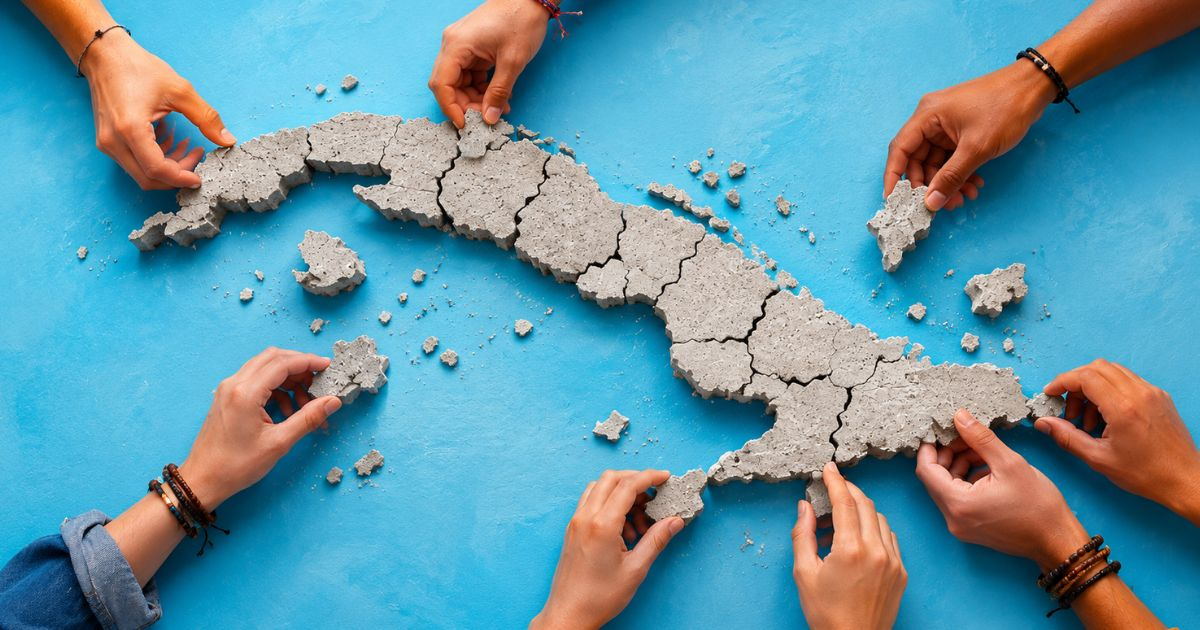
Ivette García González, a historian and PhD in Historical Sciences who once served as a full professor at the University of Havana, shared an insightful analysis on her Facebook page this past Sunday. Her post urges opposition groups in Cuba to set aside ideological labels and instead focus on forming a united front for democracy and human rights.
Her essay, provocatively titled "What Defines Us? What Do We Support? The Anti or the Pro?", addresses a pressing issue she sees as critical: "It's concerning that, at this crucial juncture for Cuba, we are consumed by being 'ANTI' left/right/communist, etc."
García González argues that identifying oneself primarily by what is opposed rather than what is advocated is a politically weak and strategically hazardous position for Cuba's democratic movement. She insists, "We are not in a position to choose allies. Everyone who supports the cause, whether inside or outside Cuba, Cuban or foreigner, is valuable and necessary, even if they become an adversary tomorrow."
Challenges of Ideological Divisions
Her analysis stems from deep reflections, noting, "The debate over being anti is confusing, but especially the left versus right divide separates us, pits us against each other, and misleads us. WARNING: It's a loss for us and a gain for the dictatorship."
García González highlights the trap of "anti" rhetoric with an example targeting the regime itself: "Many dictatorships, like Cuba's, claim to be 'anti-imperialist' yet support Russian imperialism, attracting anyone who confronts the USA, which is their real goal."
Personal Experience and Broader Implications
To bolster her argument, García González draws on her experience leading Cuba en Familia, an organization founded in late 2021 to support the freedom of political prisoners and their families. She recounts that by mid-2024, the organization nearly collapsed, with only two Cuban women left to sustain it: "News flash! One is widely recognized as right-wing, the other as left-wing. And yet we persist!"
She also recounts how a civic project aimed at helping political prisoners was rejected by a jury because, according to the left-leaning jury, "it appears right-wing": "It was civic and for political prisoners, but for that jury, opposing the Cuban government is inherently right-wing. Such is the extent of the contamination and confusion."
Prioritizing Unity Over Ideology
García González's appeal is not to disregard ideological differences but to subordinate them to the current urgent need. She proposes four questions that should guide the debate: what it means today to be left or right; whether Cuba's central issue is ideological or about democracy and human rights; if being anti-communist automatically equates to being pro-democracy; and what the real priority is in Cuba's democratic struggle.
This analysis is part of a series of reflections the academic has published throughout 2026. In August, she argued that crises alone do not lead to political change, and in September, she emphasized that protests must translate into organized strategy. Her latest piece extends this line of thought to tactical unity.
The backdrop for these reflections is one of worsening conditions. Prisoners Defenders recorded 1,339 political prisoners in Cuba by the end of August 2026—a historic high. The Cuban Conflict Observatory documented 1,415 protests, complaints, and critical expressions in July 2026 alone, the highest monthly figure recorded by the organization, with 72 being in-person protests.
The economy has shrunk by more than 15% since 2020, and according to ECLAC, Cuba's GDP is expected to contract by over 10%, marking the worst economic decline projected for Latin America in 2026.
Key Questions About Cuba's Democratic Movement
Why does Ivette García González argue against ideological labels?
She believes that defining the democratic movement by what it opposes rather than what it supports weakens its political stance and strategy. She advocates for unity based on common goals rather than divisive labels.
What is the significance of unity in Cuba's democratic struggle?
Unity is crucial for effectively challenging and overcoming the current regime. The idea is to focus on shared objectives like democracy and human rights, rather than allowing ideological differences to fragment the movement.
How has the Cuban economy been affected recently?
The Cuban economy has faced a significant downturn, contracting by more than 15% since 2020, with a projected GDP decline of over 10% for 2026, making it the worst economic crisis in Latin America.