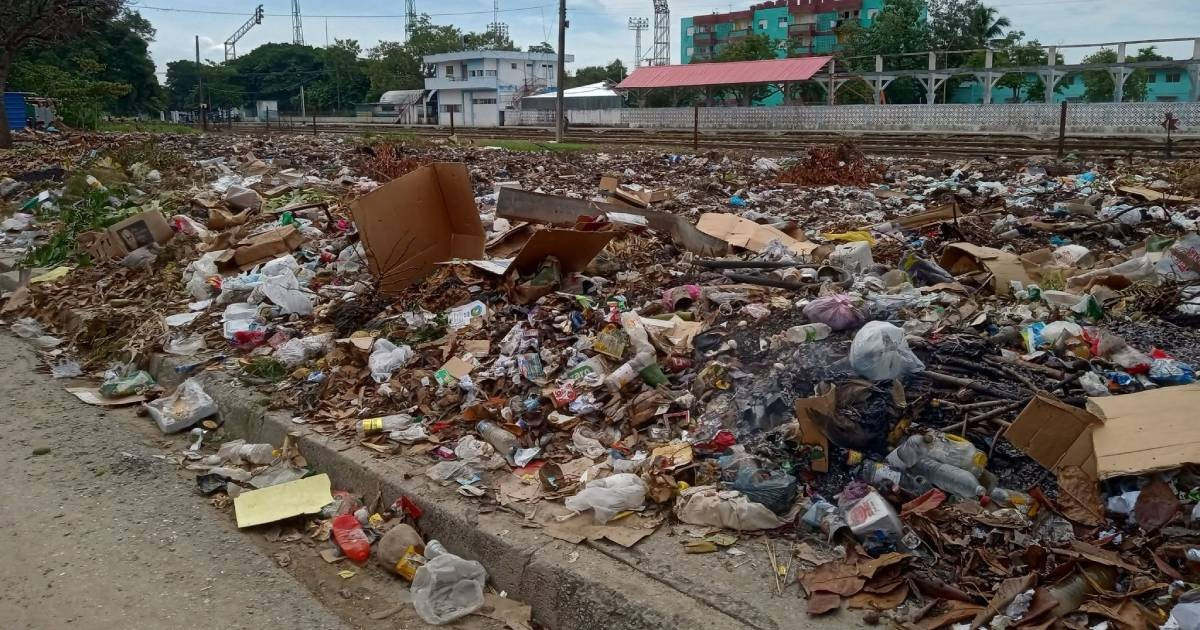
On September 26, Las Tunas celebrated 230 years since its founding, but the occasion was overshadowed by residents' urgent calls for action against the mounting piles of trash, solid waste, and illegal dumpsites plaguing various parts of the city.
The official newspaper "26" conducted a survey amongst locals to identify the most pressing issue needing resolution for a more appealing city. The overwhelming response published on Sunday highlighted the severe decline in urban cleanliness.
One resident expressed a longing for Las Tunas to regain its status as "the cleanest city in Cuba" and lamented its current state as a "gigantic trash heap."
Another participant emphasized the need for street cleaning and described the city as "a living dump on every corner."
Public Frustration and the Extent of the Problem
Reports show that the issue is widespread. One local mentioned a 15-meter-wide dump in front of their building, accompanied by foul-smelling water and mosquitoes.
Another notorious dumpsite was identified at the intersection of 2 de Diciembre Avenue and Primero de Enero Street, which a resident noted was engulfing the entire road by eight in the morning and was on fire two hours later.
"How long will we continue to disrespect our city and its inhabitants?" questioned one survey participant, as the city marked what should have been a commemorative anniversary.
Challenges and Proposed Solutions
Local authorities acknowledged that the fledgling state of the Communal Services Company and the fuel shortage are major hurdles. However, they noted that economic reforms initiated in June offer potential solutions.
Despite these challenges, residents are not just voicing complaints. Suggestions from Las Tunas' citizens included reinstating door-to-door waste collection with horse-drawn carts, sorting waste, penalizing offenders, and installing solar lighting on main avenues.
One reader pointed to the private sector for inspiration: "In Holguín, there's an excellent initiative. A small business takes care of that problem," they noted.
Private Initiatives and Historical Context
In August, the small enterprise Asfaltunas S.U.R.L. began voluntarily collecting waste due to the shortcomings of state services, while the Raw Materials Recovery Company launched projects like "Recycle My Neighborhood" and "Recycle More."
This 230th anniversary also coincides with the 150th anniversary of the fire ordered by Major General Vicente García (1833-1886) on September 26, 1876, when he chose to burn the city rather than surrender it to Spanish forces during the Ten Years' War. This historical symbolism adds to the bitterness of the current situation.
"There can be no better tribute than that," a reader remarked, referring to restoring urban cleanliness.
Earlier this year, the Communist Party's official publication in the eastern region acknowledged that Las Tunas was dotted with "hundreds of illegal dumps," transforming the city into a "foul-smelling" landscape, with trash accumulating near schools, clinics, and homes.
At that time, the province required 657 waste collectors but had only 229; in the capital city, just over 60 were active. Although wages increased to 15,000 pesos monthly, inflation and taxes made waste collection an unattractive job.
In September, a mountain of trash blocked the Havana-Guantánamo train in the Aguilera neighborhood, forcing passengers to disembark with improvised shovels to clear the tracks.
Days later, residents took to social media to denounce a massive dumpsite next to the railroad, with reports indicating that in some areas, trash had not been collected since October 2025.
Addressing the Trash Crisis in Las Tunas
What are the main challenges causing the trash crisis in Las Tunas?
The primary challenges include the underdeveloped state of the Communal Services Company and a fuel shortage, which hinder efficient waste management.
What solutions have residents proposed to tackle the waste problem?
Residents have suggested reinstating door-to-door waste collection, sorting waste, penalizing offenders, and installing solar lights on main avenues.
How does the trash issue affect the historical significance of Las Tunas?
The 230th anniversary of Las Tunas coincides with the 150th anniversary of a significant historical event, making the current trash situation more poignant and bitter for residents.