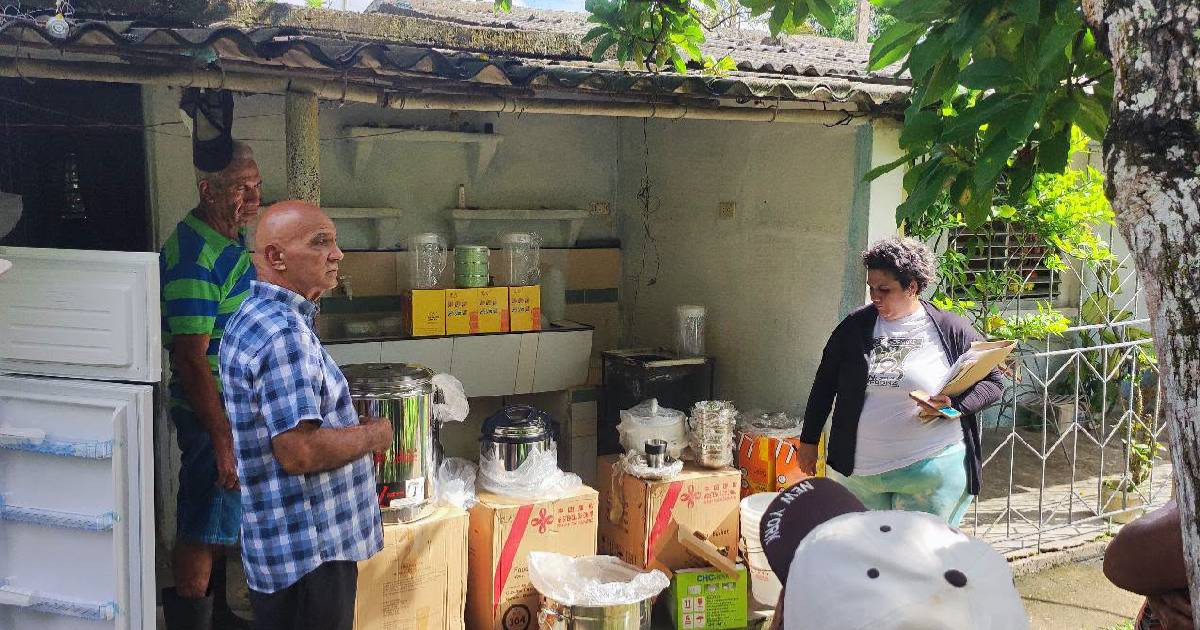
In a bid to address the ongoing food scarcity, the Cuban government is leveraging private residences and self-employed workers to provide meals to vulnerable populations across five rural communities in Isla de la Juventud. Despite these efforts, many residents still face limited access to adequate nutrition.
The initiative, known as Community Feeding Homes, has been launched in the communities of La Mina, La Melvis, La Isabel, La Tumbita, and Ciro Redondo. These centers aim to support elderly individuals without family assistance, people with disabilities, vulnerable families, and pregnant women in need of nutritional aid, as reported by the official newspaper Victoria.
Leonardo Cruz Cabrera, the special municipal mayor, visited these communities and praised the initiative for its "significant social impact." This move is part of a broader set of 176 economic and social reforms announced in June.
Repurposing of Resources for Immediate Needs
While the government promotes this model as "innovative," it has previously been implemented in other areas. In February, the official Granma newspaper disclosed plans to establish 325 such homes nationwide, with at least 29 already operational in Guantánamo, Holguín, and Santiago de Cuba.
In August, the province of Ciego de Ávila opened its first community feeding home, managed by the self-employed project "Los Ramones." This framework enables an individual, chosen by the local government, to cater to up to ten beneficiaries within an authorized private residence.
Logistical and Economic Challenges
Meals are offered at affordable prices, and when beneficiaries are unable to travel due to health reasons, food delivery to their homes is provided at no cost, according to official statements.
In Isla de la Juventud, the program's launch was marked by distributing equipment to those managing the homes, including refrigerators, pots, rice cookers, plates, and pitchers.
This effort is backed by the Council of Ministers' Agreement 10418 and the Ministry of Domestic Trade's Resolution 14/2026, which authorize the involvement of small and medium enterprises (SMEs), self-employed individuals, and other non-state entities in providing these services. The selection of beneficiaries remains under the jurisdiction of local social policy structures.
The Ministry of Domestic Trade contributes five staple products—rice, grains, oil, sugar, and salt—based on availability. Additional ingredients and main dishes must be sourced through partnerships with cooperatives and other local economic actors.
Struggles to Sustain the Family Support System
This expansion of community feeding homes comes amid governmental acknowledgment of financial struggles to maintain the Family Support System (SAF), with beneficiaries increasing from approximately 59,000 in 2023 to around 67,000 by mid-2025.
In September, a complaint about an SAF dining facility in Santiago de Cuba portrayed the meals provided to the elderly as "nothing more than cilantro and leek water."
The food crisis poses a significant challenge to a program specifically aimed at those most in need of nutritional support. In April, the Food Monitor Program released a report titled "Economic Stagnation and Food Survival in Cuba," highlighting critical levels of food insecurity in Havana, Matanzas, Cienfuegos, Guantánamo, and Santiago de Cuba.
Compounding these issues is the economic plight of older adults, with the minimum pension stuck at 4,000 pesos monthly, while independent economists estimate the basic basket of goods costs around 96,000 pesos a month.
Key Questions About Community Feeding Homes in Cuba
What are Community Feeding Homes in Cuba?
Community Feeding Homes are initiatives to support vulnerable populations by providing meals to elderly individuals, people with disabilities, and families in need across several communities in Cuba.
How do Community Feeding Homes operate?
These homes are managed by individuals selected by local authorities, who provide meals to beneficiaries. The service is typically offered at low cost, with free delivery available for those unable to travel due to health issues.
What are the main challenges faced by Community Feeding Homes?
The primary challenges include securing adequate food supplies, logistical issues in delivering meals, and financial constraints in sustaining the program amidst Cuba's broader economic difficulties.