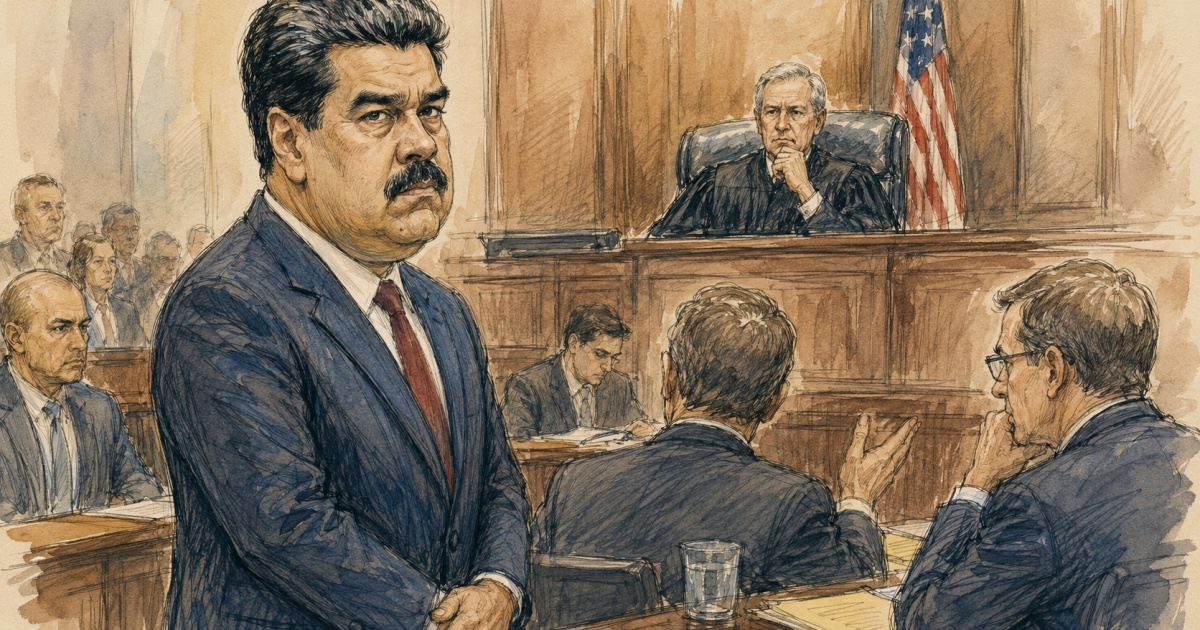
Jason Richman, formerly a co-chief of the National Security Unit at the U.S. Attorney's Office for the Southern District of New York, vacated his position on September 25, as reported by Bloomberg. The reasons behind his departure remain undisclosed, impacting the high-profile case against Nicolás Maduro.
Manhattan's federal prosecutor, Jamie McDonald, informed Judge Alvin K. Hellerstein—who is overseeing the proceedings—about Richman's exit through a court filing. McDonald noted that the attorney "will no longer be employed by the U.S. Attorney's Office as of September 25, 2026."
Richman requested to be formally removed from the case file and refrained from commenting on his resignation, as per Bloomberg. There is also no information regarding his future career plans.
This development occurs just under nine months before the trial is set to commence on June 1, 2027, marking a significant loss of seasoned expertise for the prosecution in one of the most scrutinized criminal cases in recent years.
Impact on the Prosecution Team
Richman was regarded as a pivotal asset to the prosecution team due to his extensive background in high-profile narcoterrorism and national security cases, including those involving former Honduran President Juan Orlando Hernández and his brother Juan Antonio "Tony" Hernández, also handled in New York.
Maduro and his wife, Cilia Flores, face charges of narcoterrorism conspiracy, conspiracy to import cocaine into the United States, and related weapons offenses. The original indictment dates back to 2020 and was updated following Maduro's capture in Caracas on January 3, 2026. Both pleaded not guilty at their initial court appearance before Judge Hellerstein.
Defense Strategies and Upcoming Hearings
Maduro's defense team, led by attorney Barry Pollack—widely recognized for his representation of Julian Assange in the WikiLeaks case—has attempted to halt proceedings through claims of sovereign immunity, challenges to the legality of Maduro's capture, and motions to dismiss. Judge Hellerstein denied a dismissal in March 2026, though the defense renewed similar arguments in September.
A pre-trial hearing is scheduled for November 17, 2026, to address these outstanding motions, including the claims of sovereign immunity.
Challenges Ahead for the Prosecution
Richman's departure presents several challenges. The prosecution must appoint another attorney with comparable experience to oversee the case, though the learning curve for such a complex matter is steep. The defense may attempt to capitalize on this change as an indication of weakness or disorganization within the prosecution.
Meanwhile, Cilia Flores has repeatedly requested bail, citing heart issues and weight loss. The prosecution has consistently opposed these requests, warning that she faces the possibility of life imprisonment if convicted.
The U.S. Attorney's Office for the Southern District of New York has a strong track record of managing high-profile international cases and typically adapts to personnel changes without derailing proceedings. However, analysts quoted by Bloomberg suggest that the prosecution's ability to regroup without losing momentum will be crucial for the trial's progression next year.
Key Questions About the Maduro Case
Why did Jason Richman resign from the Maduro case?
The reasons for Jason Richman's resignation have not been disclosed, leaving many questions surrounding his departure from the high-profile case against Nicolás Maduro.
What are the main charges against Nicolás Maduro?
Nicolás Maduro faces charges of narcoterrorism conspiracy, conspiracy to import cocaine into the United States, and related weapons offenses.
How is the defense team trying to stop the trial?
Maduro's defense team is attempting to halt the trial by arguing sovereign immunity, questioning the legality of his capture, and filing motions to dismiss the charges.