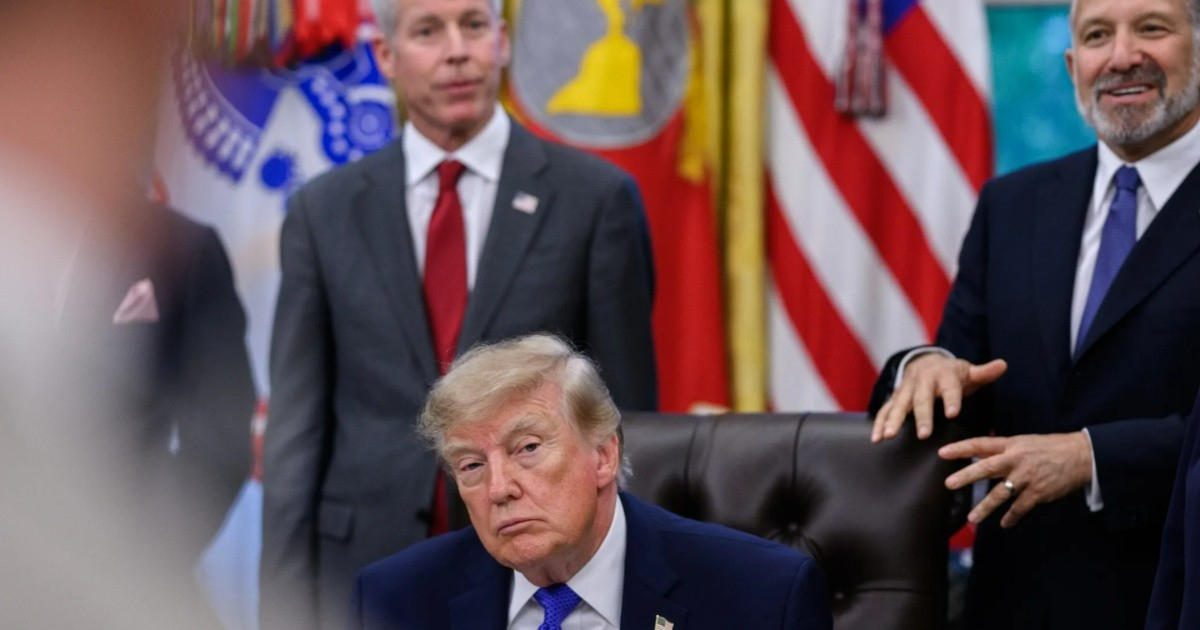
On Saturday, Donald Trump took to his social media platform, Truth Social, to disclose the personal cell phone number of Republican Senator Tom Cotton from Arkansas, urging the state's residents to directly pressure him into voting for a bill aimed at abolishing the biannual clock change in the United States.
Trump pointed fingers at Cotton on Truth Social, labeling him as the sole barrier preventing the bill's progress in the Senate. "For some reason, Tom is blocking the bill in the Senate," wrote the former president, emphasizing that the senator's vote is the only one needed for the initiative to move forward.
In the same post, Trump encouraged "everyone in Arkansas" to call Cotton "on his cell" and included the full number in the message. He highlighted Arkansas as a state where he has consistently won by a large margin, signaling clear political pressure on his fellow Republican.
The strategy had an immediate impact: the voicemail for the disclosed number was overwhelmed within minutes. The Associated Press attempted to reach the number without success, and Fox News reported that the line —bearing a Dardanelle, Arkansas area code— went unanswered. Cotton's team did not immediately respond to the presidential post.
Contentious Sunshine Protection Act
The legislation in question, known as the Sunshine Protection Act, aims to make daylight saving time permanent, currently observed from March to November, thus eliminating the twice-yearly clock adjustment. Trump advocates for it, arguing that "having sunlight in the evening is better than in the morning," citing examples like PGA tournaments and golf enthusiasts. "Almost everyone wants the Sunshine Protection Act to pass, except Tom Cotton," he declared.
Cotton, who chairs the Senate Intelligence Committee, has steadfastly opposed the bill. His primary concern is that permanent daylight saving time would result in "absurdly late" winter sunrises —potentially as late as 8:00 a.m. or later in Arkansas— leaving children and workers commuting in darkness. He also reminded that Congress previously approved similar legislation but repealed it when the public encountered these issues.
The Sunshine Protection Act passed the House of Representatives on July 14 with 308 votes in favor and 117 against, a significant majority that has not been mirrored in the Senate. The bill has been stalled for months in the Senate, where Cotton has threatened to use the filibuster to block it entirely.
This is not the first time the proposal has advanced so far. In March 2022, the Senate unanimously approved an earlier version of the law, spearheaded by Senator Marco Rubio, but the House of Representatives never voted on it, and it did not become law.
Internal Republican Rift
The clash between Trump and Cotton underscores an unusual division within the Republican Party, with the former president willing to mobilize public opinion in Arkansas against one of his own senators to force a legislative outcome.
Understanding the Sunshine Protection Act and Its Implications
What is the Sunshine Protection Act?
The Sunshine Protection Act is a legislative proposal seeking to make daylight saving time permanent across the United States, eliminating the need to adjust clocks twice a year.
Why does Senator Tom Cotton oppose the Sunshine Protection Act?
Senator Tom Cotton opposes the Sunshine Protection Act primarily because it would lead to very late sunrises during winter, potentially causing safety concerns with children and workers commuting in the dark.
Has a similar law been passed before?
Yes, Congress previously passed a similar measure, but it was repealed after the public experienced the consequences of late winter sunrises.